
Last updated November 15, 2026
 Wrought iron
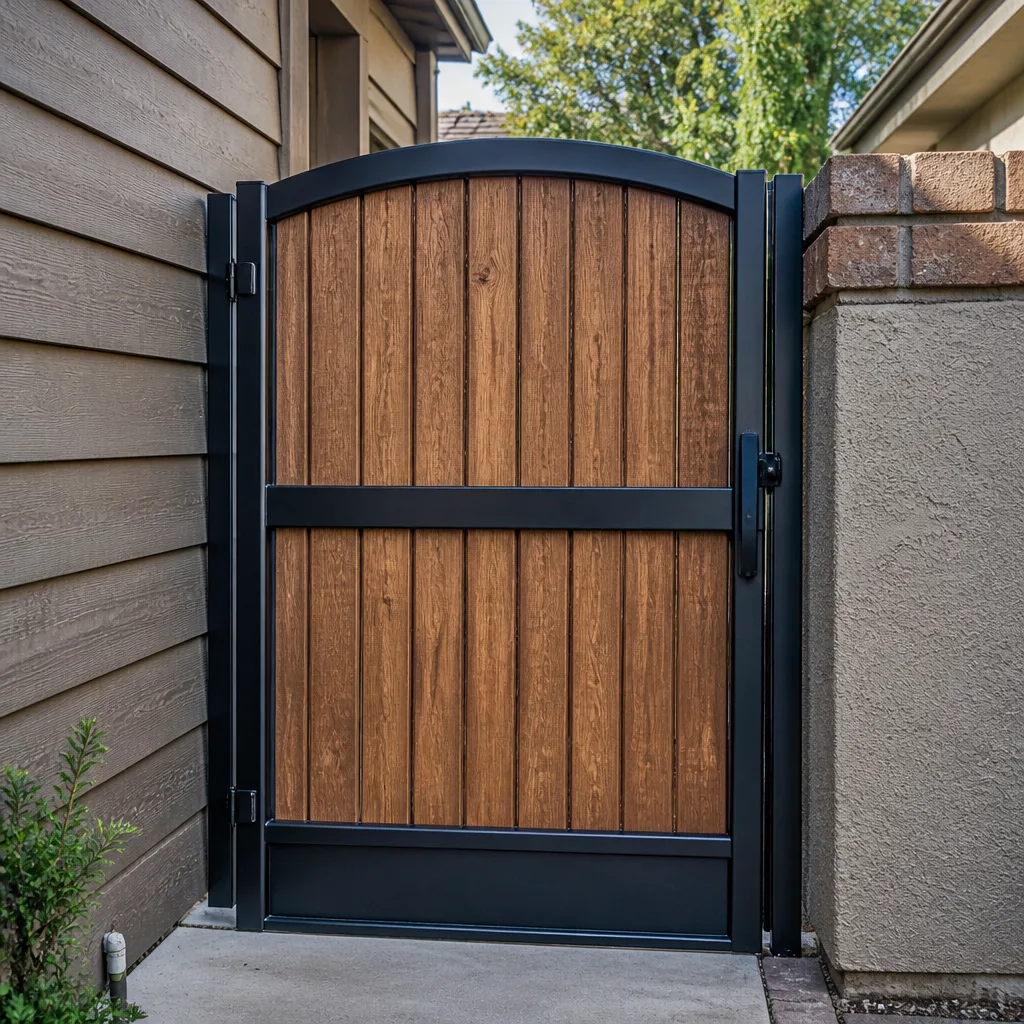 Wood & steel frame
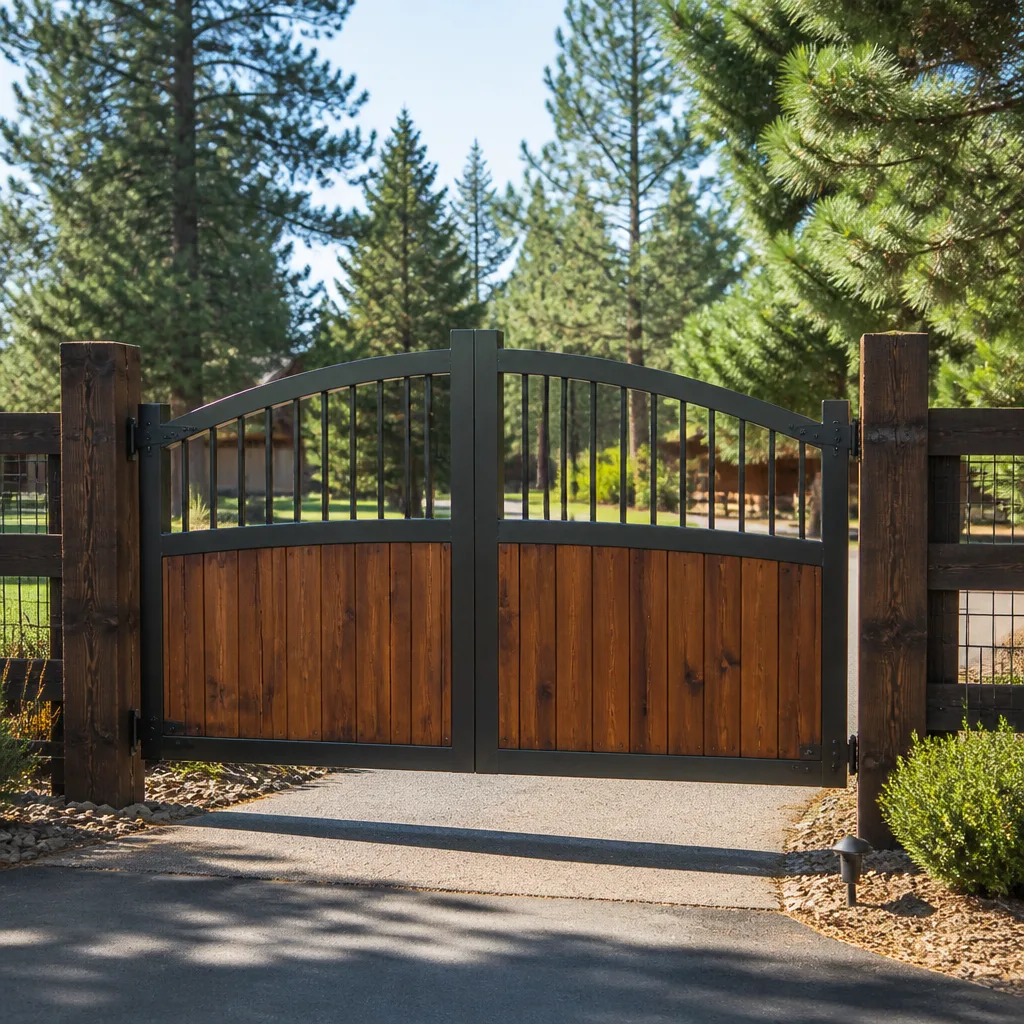 Farm & ranch
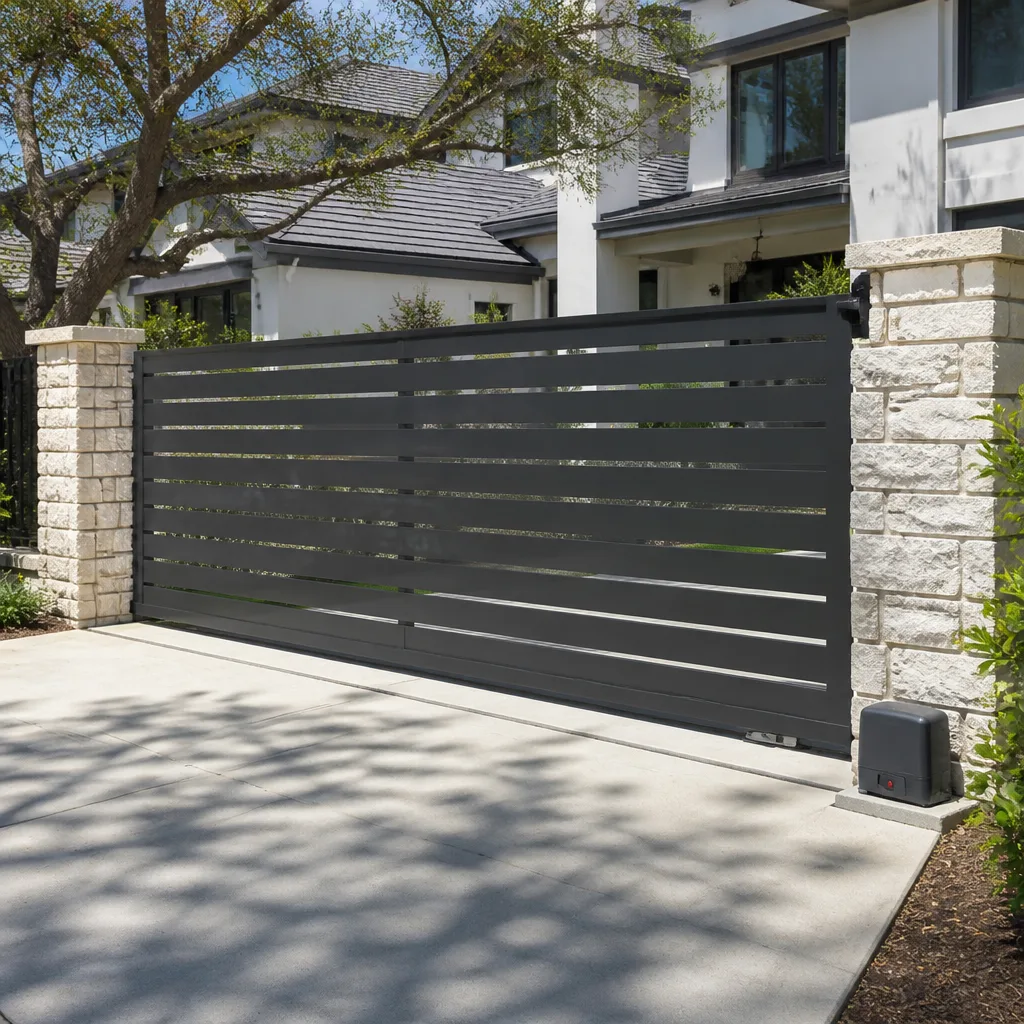 Sliding driveway gates
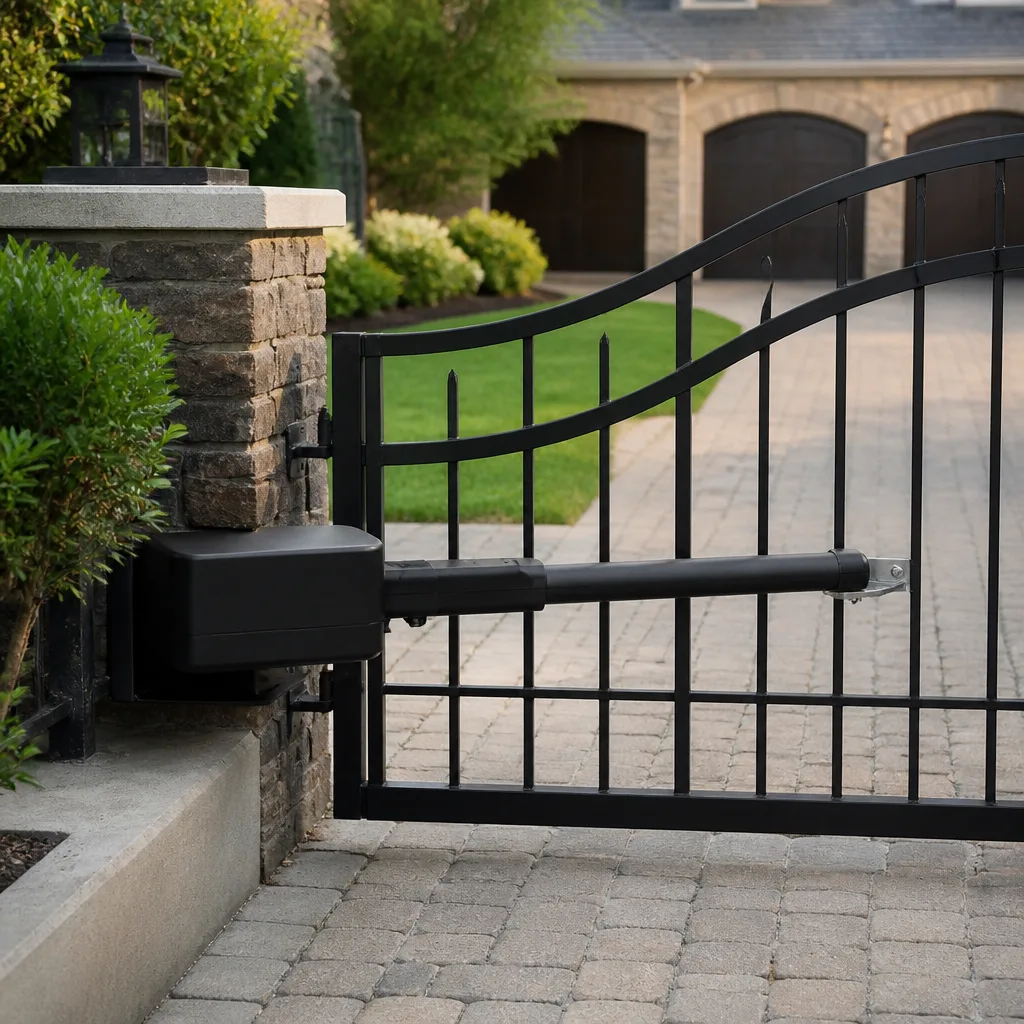 LiftMaster operators
Free on-site gate assessment - hinges, posts, and your LiftMaster or Nice gate operator checked before anything is quoted
The assessment is free and the quote is the invoice.
Get your free estimateThe Complete Guide to Gate Repair in Jersey City
Most gate repair guides are written for wide suburban driveways in dry, sunny places. Jersey City gates live a different life. They fight salt drift off the Hudson, they take a beating from dense sidewalk traffic, and many of them sit close enough to the PATH line to feel the trains rumble past. A gate that lasts fifteen years in a quiet inland town can develop hinge play, stuck latches, and finicky operators far sooner here. This guide maps the failures we see most often in Jersey City to the local conditions that cause them, so you can walk outside, look at your gate, and understand what’s likely wrong before you call anyone.
Quick Answer
Gate repair in Jersey City usually comes down to a handful of predictable problems: corrosion on hinges and electrical contacts, freeze-thaw loosening of posts and fasteners, sagging from soil movement, and electric operator faults on automated systems. Most manual gate repairs are straightforward once the cause is diagnosed. Electric gate repair needs a technician who works on the specific brand and operator, because motor, control board, and safety-edge faults don’t fix themselves and guessing wastes money. Diagnose before you quote, and the repair is usually simpler than it first looks.
Styles & brands we work with
- Wrought iron
- Wood & steel frame
- Farm & ranch
- Sliding driveway gates
- LiftMaster operators
Table of Contents
- How Jersey City Conditions Affect Your Gate
- Mapping Failure Modes to Local Causes
- Brownstones, Rowhouses, Condos, and Commercial Gates
- PATH Train Vibration and Fastener Loosening
- Manual vs. Electric Gate Repair: A Decision Tree
- Triage: What Can Wait a Week vs. What Can’t Wait Today
- Why Brand Knowledge Matters for Your Operator
- Repair or Replace? How to Decide
How Jersey City Conditions Affect Your Gate
A gate is a mechanical system exposed to weather every day of its life. In Jersey City, that weather is not mild. Winters swing between freezing nights and daytime thaws, which works moisture into every joint and then expands it. Summers run humid. The Hudson sits right there, and the air carries a fine salt drift that settles on metal and quietly begins its work. None of this destroys a gate overnight. It wears one down in specific, predictable places, and knowing those places is half the diagnosis.
Here’s what the local climate does to a gate over a typical year:
- Freeze-thaw cycles open hairline cracks in concrete footings and loosen the anchors that hold posts plumb. A post that shifts a fraction of an inch throws the whole gate leaf out of alignment, and the latch stops catching.
- Salt drift off the Hudson accelerates corrosion on hinges, latch mechanisms, and the exposed electrical contacts inside operator housings. Inland gates corrode too, but gates near the waterfront and low-lying neighborhoods show it first and worst.
- Humidity keeps metal damp for longer stretches, which speeds rust on painted surfaces once a chip exposes bare steel.
- Ground movement from wet and dry seasons shifts soil around posts, especially in older neighborhoods where footings weren’t poured to modern depths.
The practical takeaway: inspect hinges, latches, and electrical contacts more often than a generic guide would suggest. If your property sits near the waterfront, treat corrosion as a standing maintenance item, not a surprise. We work on gates across Jersey City, and the corrosion pattern tracks the geography closely enough that we can often guess a gate’s neighborhood from the rust alone.
Mapping Failure Modes to Local Causes
When a gate stops working, owners tend to describe the symptom: it drags, it won’t latch, the remote does nothing. The useful question is what caused it. Here’s how the most common failures in Jersey City line up with their likely local trigger.
- Sagging gate leaf – usually loose or rusted hinges, or a post that has shifted from freeze-thaw and soil movement. In older rowhouse blocks, it’s often both.
- Gate won’t latch – alignment drift from a shifted post, a worn latch, or a striker plate that moved with the gate. Corrosion in the latch mechanism makes it stick partway.
- Dragging on the ground – a hinge worn past tolerance or a post out of plumb. Left alone, it grinds the gate leaf and the pavement.
- Operator won’t open or close – dead remote battery, misaligned safety sensors, a tripped control board, or a motor that has finally given out. Freeze-thaw alignment problems can also make an operator strain against a gate that’s no longer square.
- Gate reverses mid-travel – a safety edge or photo-eye that’s dirty, misaligned, or corroded at the contact. Common on electric gates near the water.
- Squealing or grinding hinges – corrosion and grit. Early-stage, cheap to address. Left long enough, it wears the hinge pin and eventually the gate.
- Loose fasteners everywhere – vibration, which we’ll get to shortly.
That mapping is why we diagnose before we quote. If an owner tells us the gate “sticks,” the fix could be a five-minute hinge adjustment or a control board replacement, and the two are nothing alike. The symptom alone doesn’t tell you which. For a focused look at the repair side, our gate repair page breaks down what a service visit involves.
Brownstones, Rowhouses, Condos, and Commercial Gates
Jersey City’s housing stock shapes its gates. The brownstone and rowhouse blocks in neighborhoods like Hamilton Park and Van Vorst Park have narrow, deep entries where the gate is a pedestrian door more than a driveway barrier. Those gates take a different beating than a wide commercial slide gate, and the failures differ accordingly.
Brownstone and rowhouse gates
These are usually tall, narrow pedestrian gates, often ornamental iron or steel, hinged to a masonry or brick pier. The pier itself is the weak point. Brick and older mortar absorb moisture, and freeze-thaw cycles crack and spall the surface. When the pier moves, the gate’s alignment follows. Latch and hinge problems on these gates are frequently footing and pier problems in disguise, and fixing the hinge without addressing the pier means the repair won’t hold. These gates also sit right at sidewalk level, so pedestrians lean on them, push through them, and occasionally force them.
Condo and apartment building gates
Multi-unit buildings tend to have electric gates and door operators: parking area gates, trash enclosure gates, and pedestrian access gates with keypads or intercoms. These systems fail on the electrical side as often as the mechanical side. Safety edges, photo-eyes, and control boards are the usual suspects, and they need brand-specific knowledge to diagnose properly. An electric gate repair call on a condo gate is a different job from a manual gate adjustment.
Commercial and industrial gates
Slide gates and heavy swing gates at commercial properties carry more weight and more cycles. Rollers, tracks, and operator gear take the load. In Jersey City’s dense commercial corridors, these gates also face constant vehicle and foot traffic, so a gate that’s out of alignment becomes a real hazard fast. Slide gates that come off their track are a safety concern, not just an inconvenience.
PATH Train Vibration and Fastener Loosening
This is the part most guides skip. The PATH train runs under and through Jersey City, and the vibration from passing trains travels through the ground for a good distance around each station. Within roughly a half-mile radius, gates on buildings near the line pick up a low, constant shudder. It’s not dramatic. You may not even notice it standing in your yard. But vibration is one of the most reliable loosening mechanisms there is, and over months it works bolts, anchors, and hinge screws loose.
Here’s how to check for vibration-driven loosening on your own gate:
- Wiggle test. Grip the gate and try to rock it gently. Any movement at the post base or hinge plates that you can feel is a sign fasteners have backed off.
- Visual check of anchors and bolts. Look at the bolts holding hinges to the gate and the gate to the post, and at the anchor bolts in the footing. A bolt that’s backed out shows a gap or a washer sitting proud.
- Check latch alignment. If the latch has started catching at the top or bottom of its slot rather than dead center, the gate has shifted, and loose fasteners are a likely cause.
- Listen while trains pass. If your gate rattles or buzzes when a train goes by, it’s already loose enough to move.
Vibration loosening is easy to catch early and annoying to deal with late. A gate that’s worked itself loose for months wears its hinge plates and can shear an anchor bolt outright. If you’re within a few blocks of a station, put fastener checks on your regular inspection list. Our Gate Repair Jersey City team handles these checks as part of a diagnostic visit.
Manual vs. Electric Gate Repair: A Decision Tree
Not every gate problem needs the same response, and knowing which kind of gate you have narrows things down quickly. Use this decision tree to sort your situation before you call.
- Does the gate have a motor or operator? If no, it’s a manual gate. Skip to step 4.
- If electric, does the gate move at all when you trigger it? If the operator runs but the gate doesn’t move, the problem is mechanical: the gate is binding, the gear or chain has failed, or the gate is out of alignment. If the operator is silent, the problem is electrical: power, control board, remote, or safety circuit.
- If the operator runs and the gate moves partway then reverses or stops, suspect a safety edge, photo-eye, or limit switch. These are the most common electric faults we see, and they’re usually a fast fix once diagnosed.
- If manual, is the gate hard to move or stuck? Hinge corrosion, a shifted post, or ground contact are the usual causes. If it moves freely but won’t stay closed, it’s a latch or alignment issue.
- If the gate is electric and the fault is on the electrical side, that’s a job for a technician with brand knowledge. Don’t open an operator housing yourself. The wiring and stored energy inside can hurt you, and a wrong guess can finish off a control board that was still serviceable.
On the mechanical side, most repairs are straightforward, but you still want to diagnose properly. A gate that’s out of alignment because a post moved needs the post addressed, not just a hinge tightened. On the electric side, our recommendation is simple: don’t DIY the electrical. We handle both the mechanical and electronic sides of powered gates, and it’s worth saying that a single visit to diagnose both is cheaper than two visits to fix each half of the problem.
Triage: What Can Wait a Week vs. What Can’t Wait Today
Some gate problems are cosmetic. Some are inconvenient. Some are security or liability exposure that needs attention the same day. Here’s how to sort urgency in Jersey City conditions, where a gate left open at a building entrance isn’t a small matter.
Can usually wait a week
- A squeaky hinge or a gate that’s slightly stiff to move
- A cosmetic rust patch on a painted surface
- A gate that latches but needs a firmer push
- A remote with a weak battery (try a new battery first)
Needs attention within days
- A gate that sags and drags on the ground, which wears the gate and pavement
- A latch that catches only sometimes, or a gate that won’t stay closed reliably
- An electric gate whose safety edge or photo-eye is misbehaving
- Loose bolts or anchors you’ve spotted during an inspection
Address today
- An electric gate stuck open at a building entrance or parking area, because that’s an access and security exposure
- A slide gate that’s come off its track, which is a hazard to anyone nearby
- A gate panel that’s loose on its hinges and could fall
- Any exposed wiring on a powered gate
When in doubt, err toward calling sooner. A gate stuck open in a dense neighborhood is a security gap you don’t want to leave overnight. Call (855) 701-9639. We answer 24/7. Fast dispatch from 7am to 7pm, Sunday through Friday, and we’re closed Saturday, so a gate failure on a Saturday is booked for Sunday. Estimates are free, and the price is quoted and agreed before any work starts.
Why Brand Knowledge Matters for Your Operator
Electric gate repair lives or dies on brand knowledge. Control boards, limit switches, safety edges, and remote programming all differ by manufacturer, and a technician who doesn’t know your system is guessing. We work on LiftMaster, FAAC, BFT, and Linear operators, among the brands we cover, and the difference shows up in diagnosis time. On a LiftMaster swing operator, a reversing gate often traces to a safety sensor alignment issue. On a FAAC or BFT slide system, the same symptom can point to a limit switch or an encoder fault. A Linear operator has its own control logic entirely.
Working across competing brands builds something a single-brand shop never develops: pattern recognition. When you’ve diagnosed the same symptom on four different manufacturer systems, you stop guessing and start ruling things out in order. That’s why we recommend based on the system and its condition, not on which brand we happen to be most comfortable with.
It also means you’re less likely to hear “we don’t work on that brand.” If you have a LiftMaster gate at a condo entrance and a FAAC operator at the parking gate, the same technician can handle both. Our technicians have up to 15 years of experience, and that breadth is the point. For a closer look at the automation side, see our Jersey City coverage.
Repair or Replace? How to Decide
Owners ask this sooner or later, and the honest answer depends on a few concrete factors rather than age alone.
- Repair when the gate frame and posts are sound and the fault is isolated: a hinge, a latch, a safety edge, a control board, a single operator component.
- Repair when the gate is older but the bones are good. Ornamental iron gates can outlive several operators.
- Replace when the post or footing has failed badly enough that alignment can’t be held with adjustment.
- Replace when an operator is obsolete and parts are unavailable, or when repeated electrical faults point to a control system at end of life.
- Replace when the gate has rusted through structurally, not just on the surface.
Corrosion is the deciding factor most often in Jersey City, and it’s worth getting a professional opinion before you write a gate off. What looks like structural rust sometimes turns out to be surface corrosion over sound steel. When replacement is the answer, we handle installation too, so you’re not sourcing a separate company partway through. And when it’s a repair, we diagnose the cause first so the fix holds rather than returning in a season.
Common Mistakes to Avoid
- Greasing a gate that needs adjustment. Oil quiets a squeak for a week but does nothing for a gate that’s out of alignment. Fix the alignment and the squeal goes away for good.
- Ignoring a post that’s moved. Tightening the hinge on a gate whose post has shifted from freeze-thaw movement buys you a few months. Address the footing and the repair lasts.
- Loosening corroded electrical contacts with a screwdriver. Powered gate wiring holds a real shock hazard. Leave the inside of the operator housing to a technician.
- Replacing a remote when the control board is the problem. A remote that “doesn’t work” is sometimes a dead board or a safety sensor overriding the system. Check the simple things, then call.
- Assuming a brand-agnostic handyman can handle an electric gate. Motor and control board faults need brand-specific knowledge. A generalist guessing at your LiftMaster or BFT board can cost more than the repair.
- Skipping fastener checks on gates near the PATH line. Vibration loosens bolts quietly. A gate near a station needs a periodic look, not a once-a-decade one.
- Leaving a gate stuck open “just until the weekend.” In a dense Jersey City neighborhood, an open gate is a security exposure from the moment it stops working.
See the difference
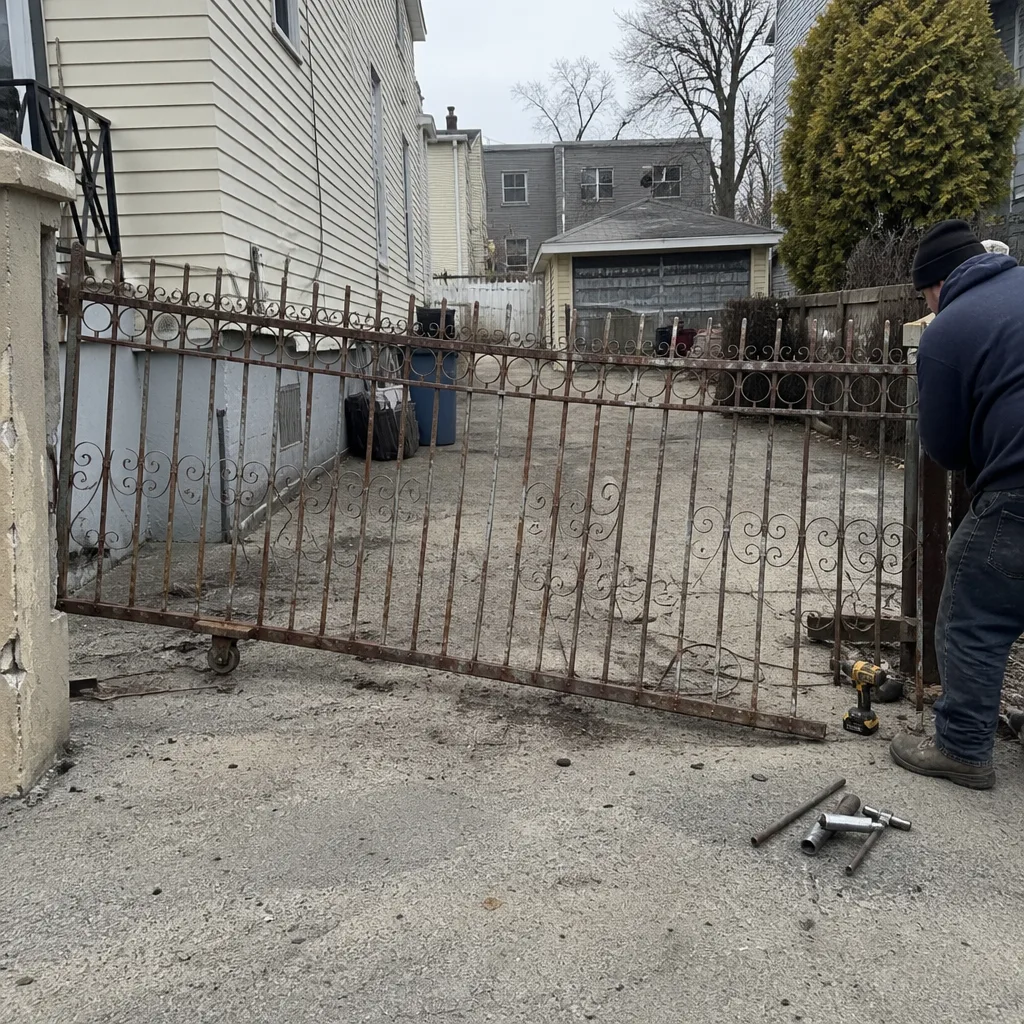 Before
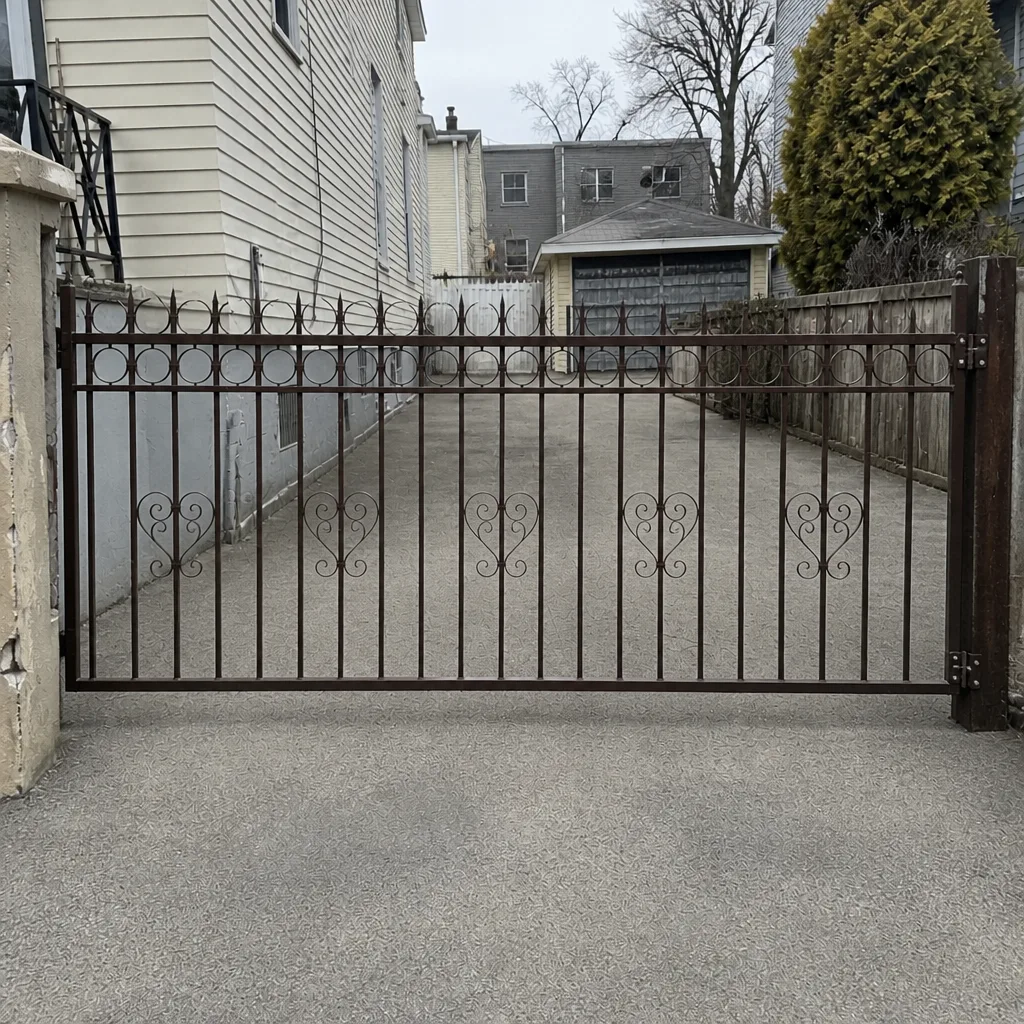 After
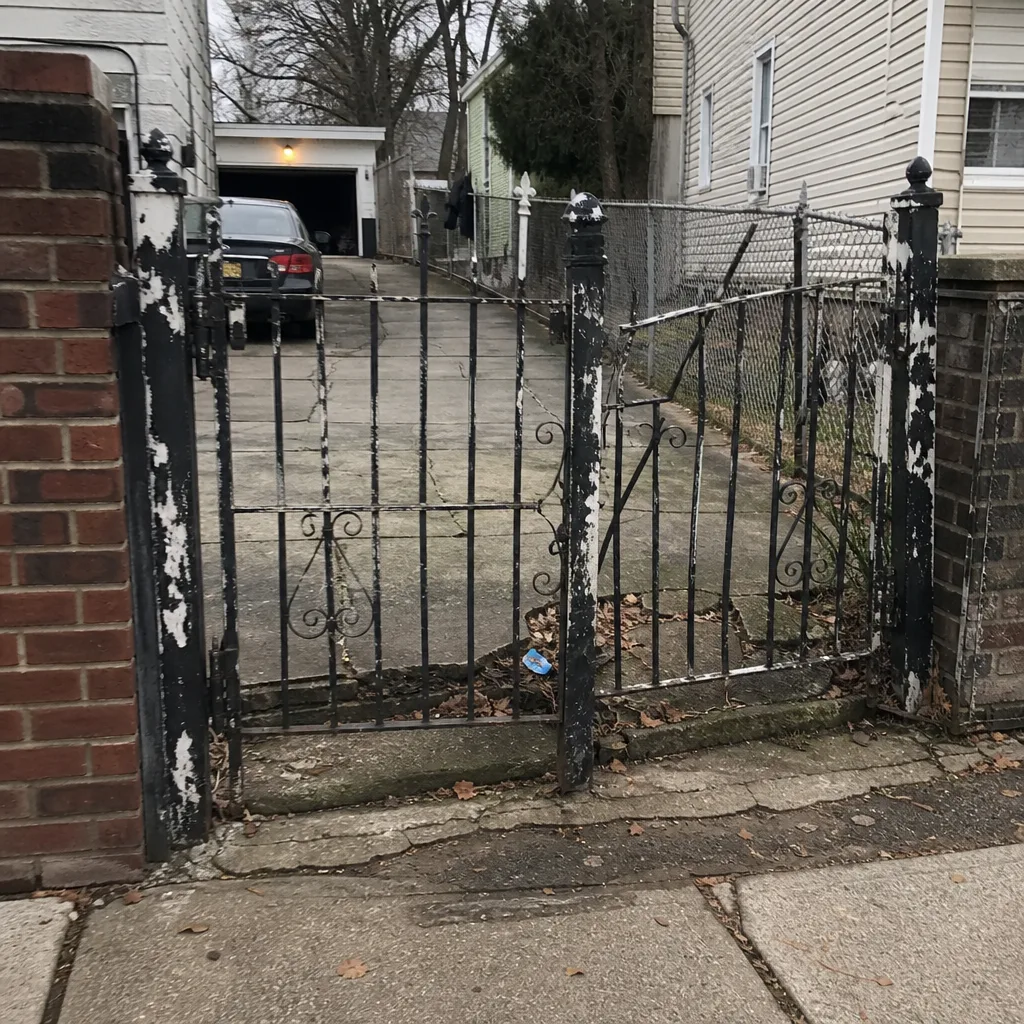 Before
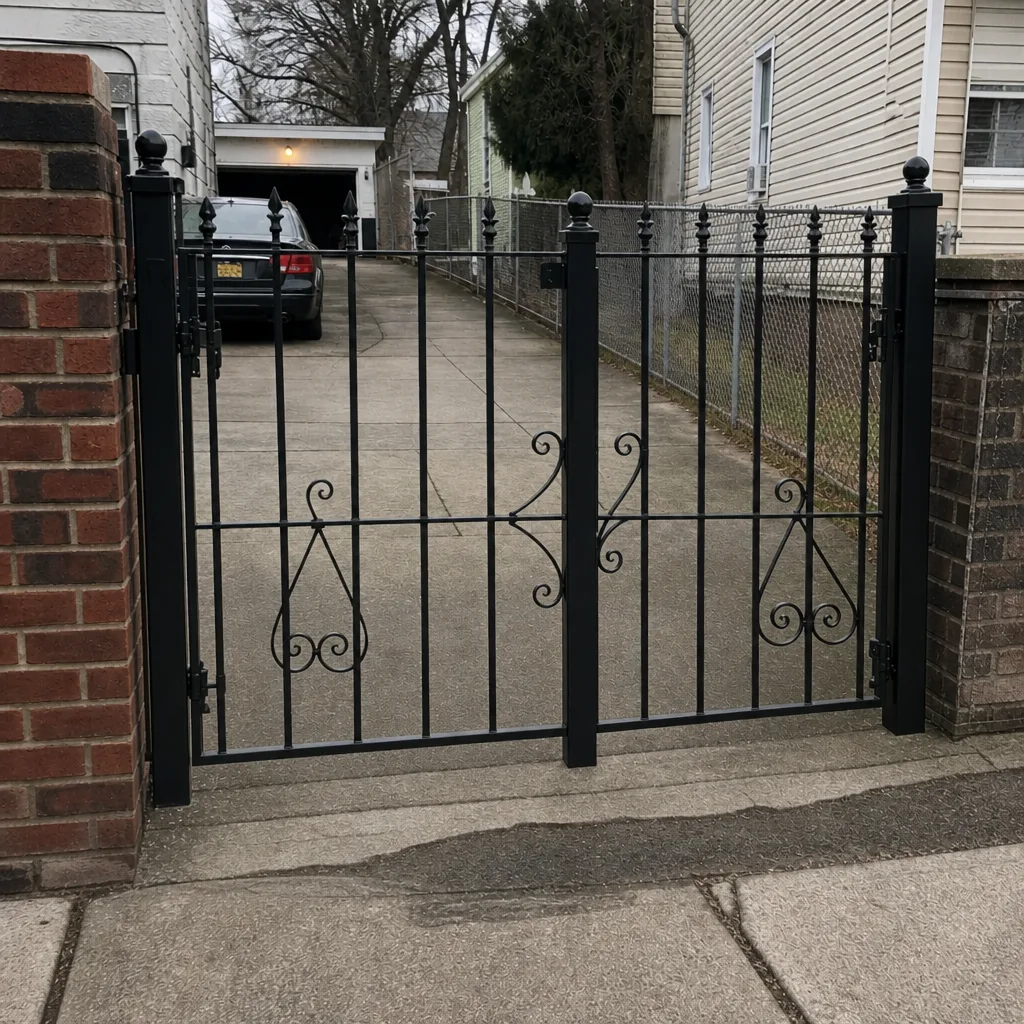 After
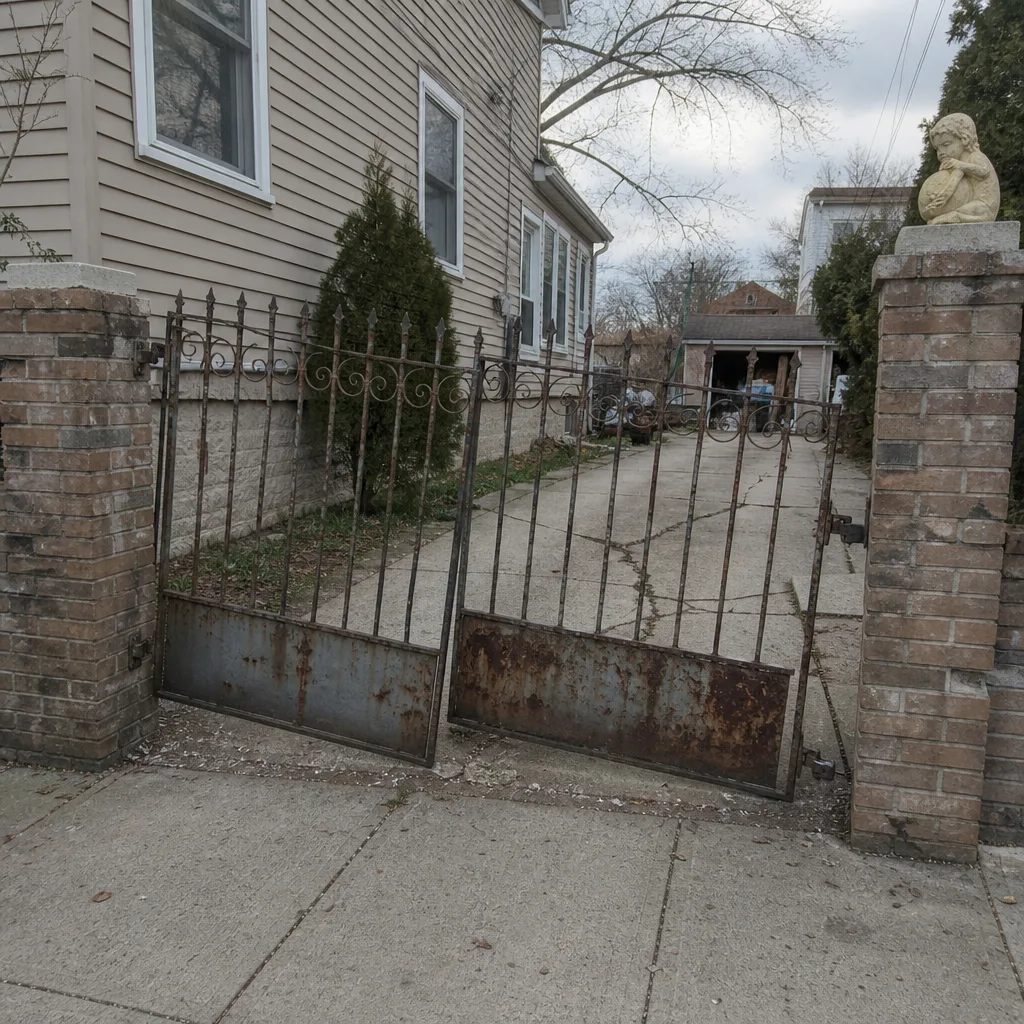 Before
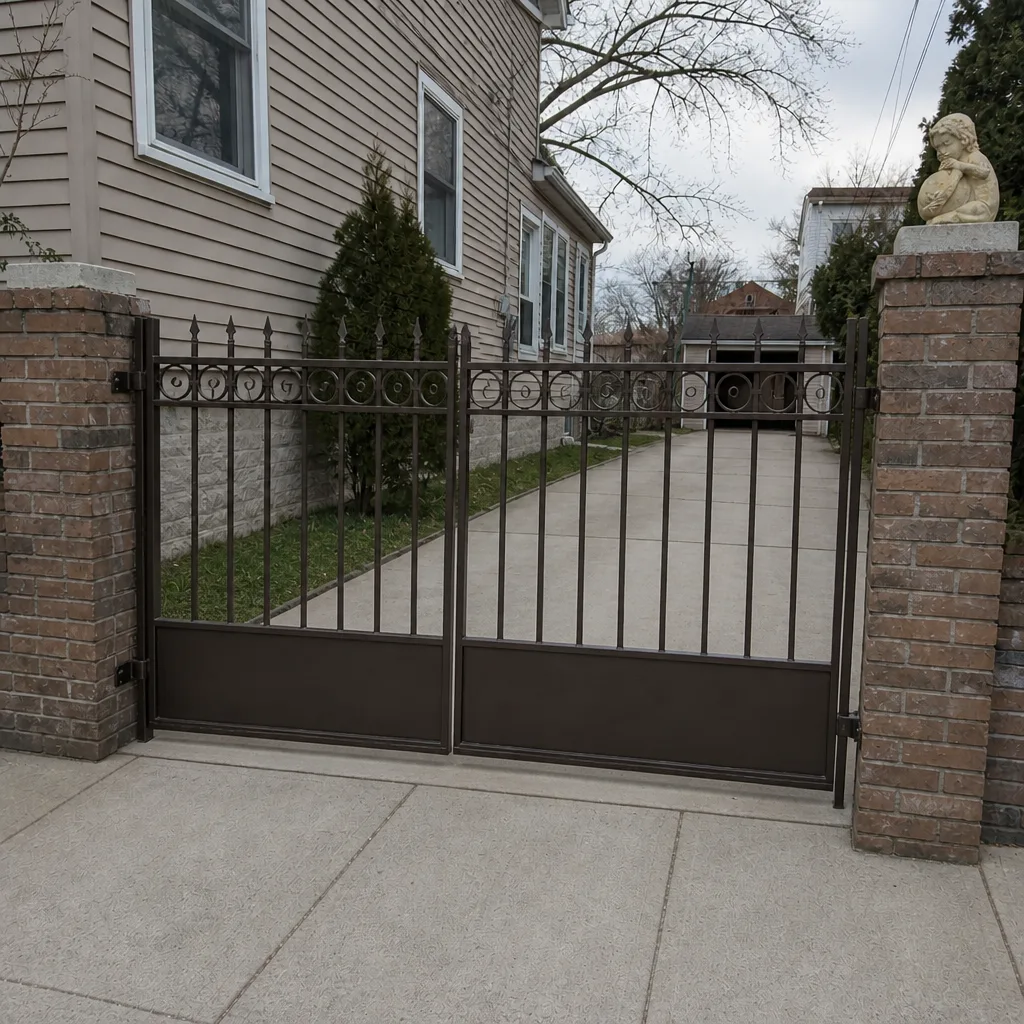 After
When to Call a Professional
Call a professional when the problem is electrical, when a post or footing has moved, when a slide gate has come off its track, or when you’ve tried the simple fixes and the gate still misbehaves. Call immediately if a powered gate is stuck open at a building entrance, if you see exposed wiring, or if a heavy gate panel feels loose on its hinges. Those are liability and safety issues, not maintenance items. For manual gates, a stubborn latch or a sagging leaf is usually a quick repair once the cause is found, and finding the cause is the whole job. Gate Repair Jersey City offers free estimates in Jersey City. Call (855) 701-9639. We answer 24/7, and fast dispatch runs from 7am to 7pm.
Frequently Asked Questions
Gate repair in Jersey City is priced per job by a written estimate, and the estimate itself is free. Small fixes like a hinge adjustment or latch realignment sit at the low end, while electric gate repair involving a control board or operator component runs higher. The written estimate sets the final price, and the price is quoted and agreed before any work starts, so there’s no surprise on the invoice. Call (855) 701-9639 for an exact quote.
We work on LiftMaster, FAAC, BFT, Linear, Viking, Ghost Controls, DoorKing, Elite, and Mighty Mule systems. That broad coverage means you’re unlikely to be told we don’t work on your brand. If your operator is one of these, we can diagnose and repair it. Call (855) 701-9639 and tell us the brand and model if you know it.
Yes. Electric and automated gate repair is a core service, not an add-on, so we cover both the mechanical side (hinges, alignment, tracks) and the electronic side (motors, control boards, safety edges). That matters because most electric gate failures sit on one side or the other, and a single diagnostic visit catches both. Call (855) 701-9639 for a free estimate.
Often, yes, depending on the fault and parts. A dead remote battery, a misaligned safety sensor, or a tripped control board can sometimes be sorted in a single visit. A failed motor or a control board that needs ordering may take longer. Call (855) 701-9639 and describe the symptoms, and we’ll tell you what to expect.
Vibration from passing trains loosens bolts and anchors over time, and gates within a half-mile or so of a station pick up enough of it to matter. A wiggle test and a visual check of the anchors and hinge bolts will tell you if yours is affected. If it is, a technician can re-torque the fasteners and check the alignment. Call (855) 701-9639 for a diagnostic visit.
In most cases, yes. Jersey City generally requires a permit for new fence and gate installation, and the specific requirements depend on the property and the gate’s height and location. Ask the city’s building department before you order, and we can walk you through what the installation involves so your questions are answered. Call (855) 701-9639 for a free estimate.
The Bottom Line
Gate repair in Jersey City follows predictable patterns once you know the local causes. Salt drift accelerates corrosion on hinges and electrical contacts. Freeze-thaw cycles shift posts and open up alignments. Vibration near the PATH line loosens fasteners quietly. The right approach is the same in every case: identify the cause before you reach for a fix. Manual gate repairs are usually quick once diagnosed, electric gate problems need brand-specific knowledge, and the triage question (can this wait a week or is it a security exposure today?) should guide how fast you move. Diagnose before you quote, and most repairs turn out simpler than they looked.
If your gate needs a look, call Gate Repair Jersey City at (855) 701-9639 for a free estimate. We answer 24/7. Fast dispatch from 7am to 7pm, Sunday through Friday, and we’re closed Saturday.
Written by the team at Gate Repair Jersey City.