
Last updated November 15, 2026
 Wrought iron
 Wood & steel frame
 Farm & ranch
 Sliding driveway gates
 LiftMaster operators
Free on-site gate assessment - hinges, posts, and your LiftMaster or Nice gate operator checked before anything is quoted
The assessment is free and the quote is the invoice.
Get your free estimateGate Repair Permits, Codes & Inspections in Jersey City, NJ: What You Need to Know
Homeowners picture a gate project going wrong in one of two ways: the motor dies, or the gate falls off its track. Permits rarely make the list. That’s the gap this guide fills. In Jersey City, some gate work is routine maintenance that needs nothing more than a wrench and an afternoon. Other gate work, especially motor replacements and anything structural, crosses into permitted improvement territory, and the paperwork trail follows the property, not the person who arranged it. We’ll walk through where that line sits, what electrical code means for an operator, how the Jersey City Division of Building and Housing handles these applications, and what to ask a contractor before you pay.
Quick Answer
In Jersey City, NJ, a gate repair that swaps parts or restores an existing gate usually needs no permit, but installing a new electric gate operator, adding an electrical circuit to power one, or replacing a gate post or structural frame typically does. Electrical work on a gate operator falls under the New Jersey electrical code and needs an electrical permit and inspection, and multi-unit properties usually need condo board or HOA sign-off on top of the municipal approval. Get the permit question answered before work starts, not after.
Styles & brands we work with
- Wrought iron
- Wood & steel frame
- Farm & ranch
- Sliding driveway gates
- LiftMaster operators
Table of Contents
- Where the Permit Line Falls in Jersey City
- Gate Work That Doesn’t Need a Permit
- What New Jersey Electrical Code Requires for Gate Operators
- How the Jersey City Division of Building and Housing Handles Gate Permits
- What an Inspection Actually Involves
- HOA and Condo Board Approval for Multi-Unit Properties
- What Documentation to Request Before Final Payment
- Common Mistakes to Avoid
Where the Permit Line Falls in Jersey City
The threshold is simpler than most people expect. Ask one question: are we repairing an existing gate or changing the property? Repair keeps the gate it already has. Change adds something new to the property record, and that’s where permits come in.
Here’s how the split usually plays out for properties around Jersey City.
- No permit typical: replacing a hinge, roller, latch, or damaged panel; adjusting an arm that drags; swapping a remote or receiver board; tracing a fault in an existing circuit that stays as it is.
- Permit likely: installing a new electric gate operator where none existed; running a new electrical circuit or outlet to feed a gate; replacing a gate post, anchor footing, or structural frame; widening or raising an opening; replacing a manual gate with an automated one.
- Ask the city directly: swapping one operator for a new one on the same circuit, or replacing a gate leaf with a lighter or heavier one. The answer can depend on whether the load on the circuit or the footprint changes.
That middle category is where disputes happen. A homeowner in a Downtown Jersey City townhouse replaces a Linear operator with a heavier unit on the same wiring and assumes nothing has changed. Sometimes nothing has. Sometimes the load on the dedicated circuit does. The safe move is a two-minute call to the city before the work is booked, not a surprise at closing.
Our rule of thumb as a gate-only specialist: if the work involves a wire pulled to a new location, a new concrete footing, or a component that changes how the gate attaches to the property, treat it as permitted work until the city says otherwise. For everyday repairs that stay inside the existing system, our gate repair work proceeds without permits because nothing about the property changes.
Gate Work That Doesn’t Need a Permit
Most gate service calls in Jersey City never touch a permit. Routine maintenance, mechanical repairs, and electronic troubleshooting on an existing system stay in the same category as fixing a door lock: the property is unchanged, so no paperwork follows it.
Work that typically needs no permit includes:
- Replacing worn hinges, rollers, bearings, guides, or latches.
- Straightening a bent arm or adjusting a sagging gate back onto its track.
- Repairing or replacing a control board, receiver, or remote on an existing operator.
- Troubleshooting a gate that won’t open, reverses immediately, or ignores the remote, when the fault is in the existing wiring.
- Replacing a rusted panel or picket with a like-for-like part.
- Lubrication, travel-limit adjustment, and general tuning of a gate that’s working but needs care.
This is where the bulk of our work sits, and it’s what most people mean when they search for electric gate repair. A Ghost Controls operator that won’t respond is usually a receiver, wiring, or battery fault, not a new installation. A Viking arm that stalls mid-travel is usually binding or a limit setting. Neither touches the property record.
One caution: “no permit needed” is not a license to skip diagnosis. A gate that reverses without warning is a safety problem, and a technician who replaces parts without finding the cause will charge you twice. We diagnose before we quote, so you’re paying for the actual fault, not a guess.
What New Jersey Electrical Code Requires for Gate Operators
Automated gate operators are electrical equipment, and in New Jersey the electrical portion of a gate installation is subject to the state’s electrical code and permit process. The mechanical side of the gate is one thing. The 120-volt circuit that feeds the operator is another, and the second one is where inspections live.
What an inspector is checking, broadly:
- A dedicated circuit. The operator should have its own circuit, not be tapped off an outdoor outlet that also runs lighting.
- Proper protection. Overcurrent protection sized to the operator, and grounding and bonding done correctly.
- Conduit and burial depth. Wiring to the operator run in appropriate conduit, and underground runs buried to the depth the code requires. This is a code detail, not a single number, so verify with your electrician and the city.
- Disconnect means. A way to shut off power to the operator for service.
- Safe routing. No exposed splices, no wiring run through areas where the gate movement can catch it.
- Safety devices working. Entrapment protection, photo eyes, and reversing behavior are checked because they affect whether a person or vehicle can be struck.
That last item is the one we see skipped most. On Jersey City properties where a gate opens onto a shared driveway, photo eyes and safety edges are not accessories. They are what stops the gate from closing on a child on a bike. We treat them as part of the electrical system, because that’s what they are.
The right order: a licensed electrician handles the circuit and the permit. A gate specialist handles the operator and the gate. If one company claims it will “do the electric” and can’t produce an electrician, that’s your signal to slow down.
How the Jersey City Division of Building and Housing Handles Gate Permits
Applications for gate-related work go through the Jersey City Division of Building and Housing, which administers building and electrical permits for the city. Because this touches the electrical side as much as the structural side, an installation often needs more than one permit type: a building permit for the post or footing work, and an electrical permit for the operator circuit.
How the process usually runs:
- Confirm the permit type. Call the Division before applying. Ask which permits your specific scope requires, and whether the operator swap alone triggers one.
- Prepare the scope. Plans or drawings for structural work, and the electrical details for the operator circuit. Vague scopes get questions, and questions add weeks.
- Submit the application. The permit application goes in with the supporting material. The city’s turnaround varies with workload and with how complete the submission is.
- Schedule the inspection. After approval, the work proceeds, and the city inspects at the points its permit specifies. Electrical inspections typically happen before the circuit is covered or energized, so the electrician needs to be aware of that timing.
- Close the permit. A final inspection passes, the permit closes, and the record attaches to the property.
We don’t quote permit timelines because they depend on a city office’s schedule, not ours. But we’ve seen enough Jersey City projects to say the friction almost never comes from the city. It comes from an incomplete application or from electrical and structural work submitted as if they were one thing. Treat them as two tracks running at the same time.
For a property on The Heights or in Greenville with a manual gate being automated, plan for the whole sequence before you buy the operator. Buying the unit first and sorting paperwork second is the most common way a two-week project becomes a two-month one.
What an Inspection Actually Involves
An inspection is not an adversarial event. It’s a checklist. Understanding what the inspector looks at makes the visit a formality instead of a negotiation.
For the electrical side, expect the inspector to verify the dedicated circuit, the grounding and bonding, the overcurrent protection, the disconnect, and the wiring method and depth. For the gate side, they’ll look at the post and footing, how the gate hangs and moves, and whether the safety devices on the operator perform correctly. On automated gates, the reversing test is standard: the gate should stop and reverse when it meets an obstruction. If it doesn’t, you fail, and you fix it before the permit closes.
What we tell homeowners before an inspection:
- Make sure the gate is clear to operate, nothing stored against it and no vehicles blocking travel.
- Confirm the remote and any keypad are available so the cycle can be demonstrated.
- Have the permit and any drawings on hand.
- Expect the gate to be cycled multiple times. That’s normal.
- If the inspector flags something, the fix is usually small and specific, not a re-do.
One thing we hear from property managers in Jersey City: the inspection catches a binding gate or a misaligned photo eye that the operator had been compensating for. That’s a good outcome. You’d rather the inspector find it than have a tenant’s car find it.
HOA and Condo Board Approval for Multi-Unit Properties
If your gate serves more than one unit, the city permit is only half the approval. Most condo associations and HOAs in Jersey City have their own process for anything that changes a shared structure or a shared electrical system, and that process often runs slower than the city’s.
What to expect:
- Board review. Many associations require board approval before work on shared structures begins. Bring the scope, the contractor’s credentials, and the permit plan.
- Architectural review. A gate visible from the street may need a design review, especially if the replacement changes material, color, or height.
- Access logistics. If the gate is the vehicle entrance, you need a plan for how residents get in during the work. Board approval usually covers that too.
- Documentation. Keep the approved minutes and the contractor’s written scope. When the property changes hands or a new board takes over, that file is what answers questions.
The sequencing matters. Board approval often runs in parallel with the city permit process, not after it, because the board usually wants to see the permit plan before approving. Start both early. For a multi-unit building, the gate specialist, the electrician, and the board should be talking before the operator is ordered.
What Documentation to Request Before Final Payment
This is the part that saves homeowners the most trouble, and it takes ten minutes. Before you release final payment, ask for a small set of documents. A gate specialist who knows the code will have these ready. A generalist often won’t.
- The permit, with the final inspection sign-off. If permits were required, the closed permit is proof the work passed. No sign-off, no final payment.
- The electrical sign-off or electrician’s certificate. This can be the same permit, or a separate document from the licensed electrician who did the circuit.
- The operator’s installation manual and warranty paperwork. Every major brand, from BFT to Linear, ships with documentation that names the model and the warranty terms. Ask for it.
- A written scope of what was installed. Brand, model, and serial number on the operator, and a description of the structural work. This is what you hand the next person who works on the gate.
- The contractor’s proof of insurance and licensure. Even where a license isn’t required for a repair, insurance matters, and a specialist can produce it without drama.
We keep this documentation with every job because it protects the customer. Our technicians have up to 15 years of experience, and every one of them knows that a gate that’s installed well but papered badly is still a problem for the owner.
See the difference
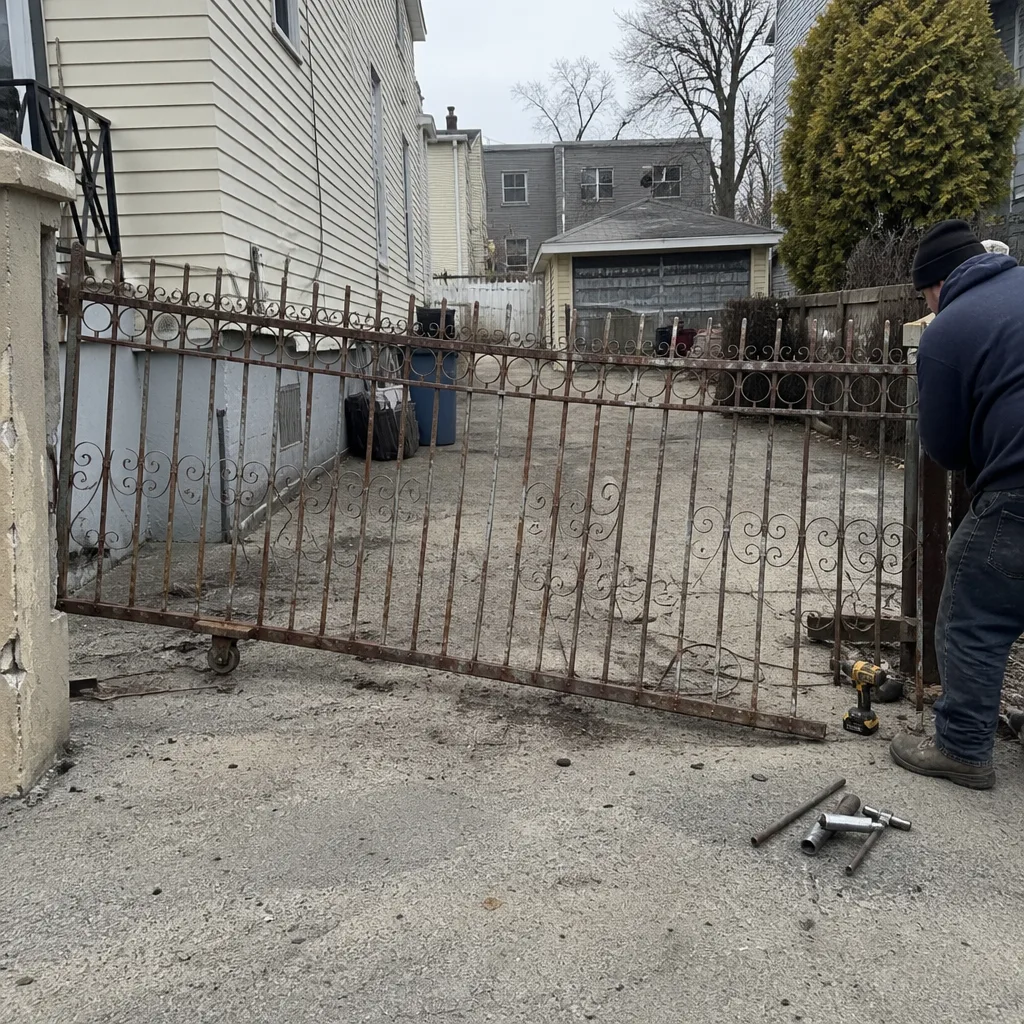 Before
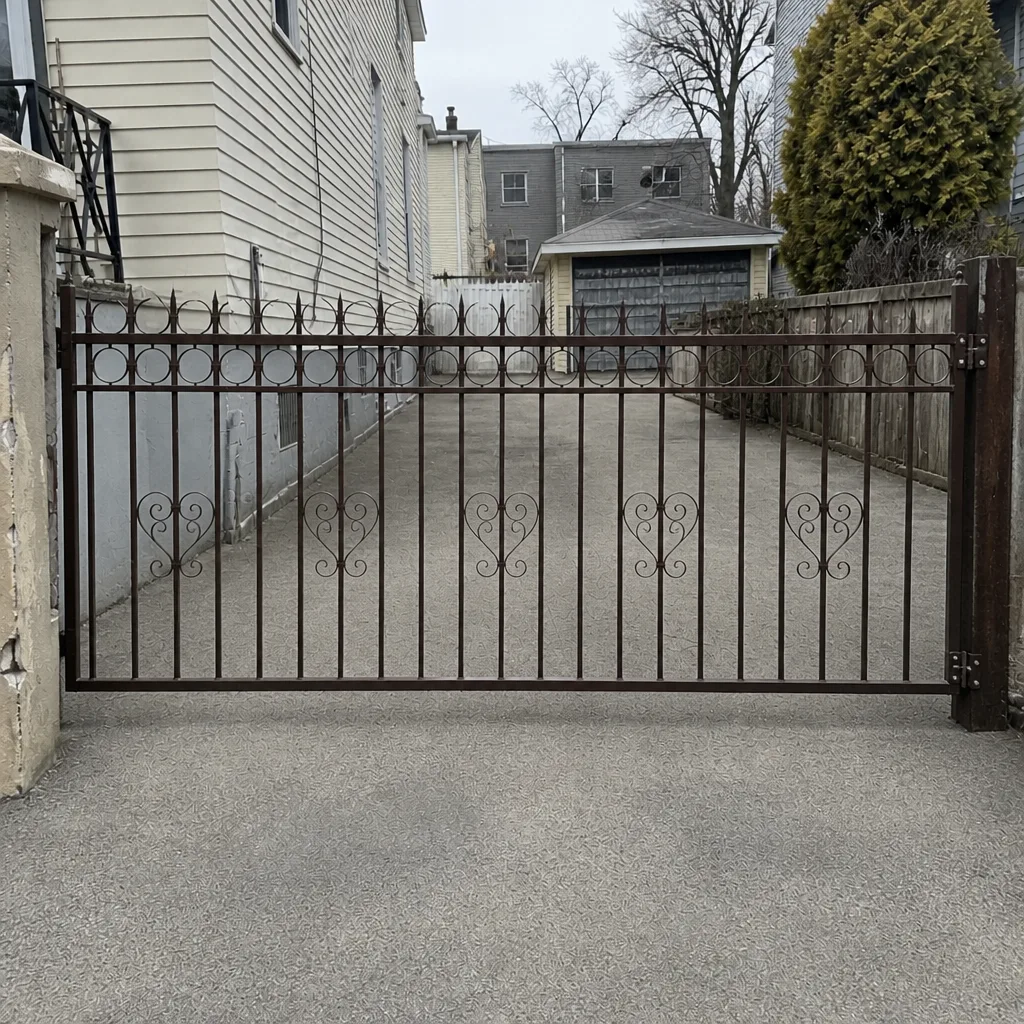 After
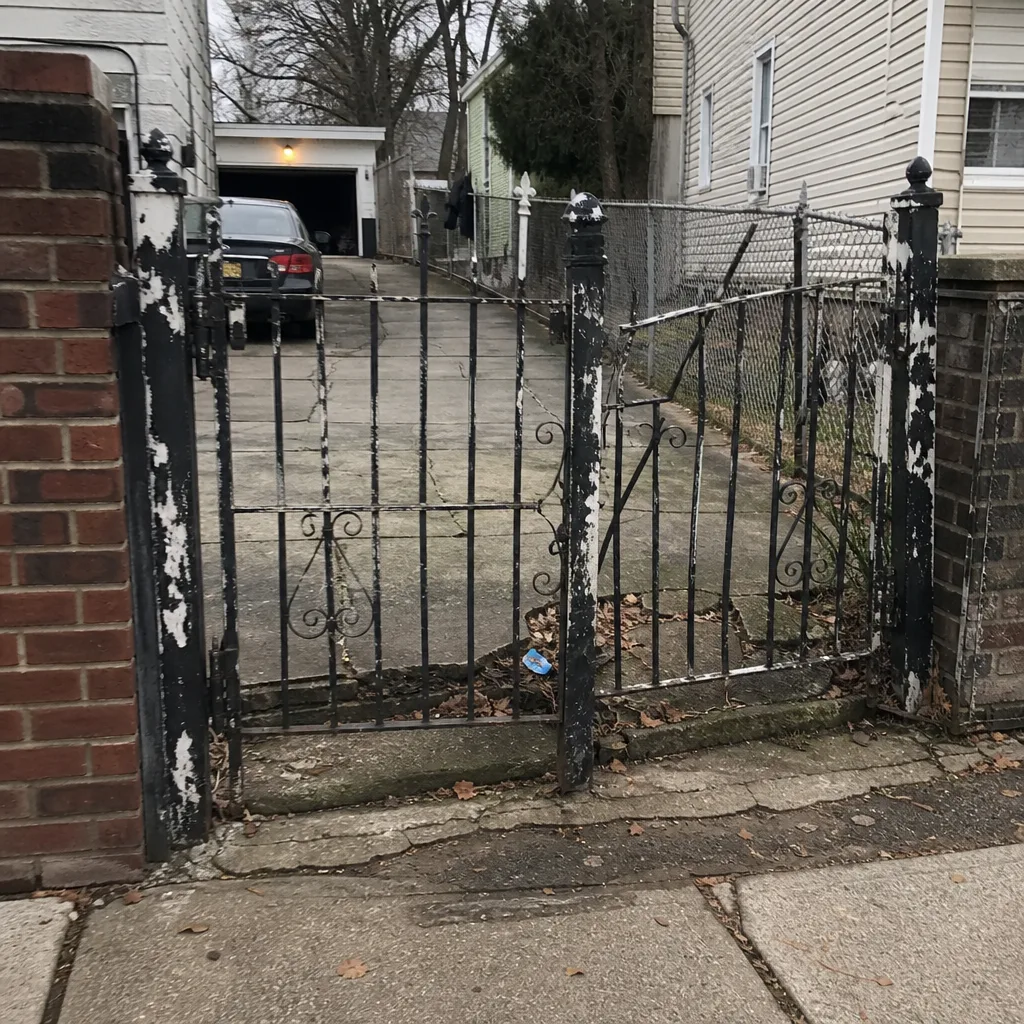 Before
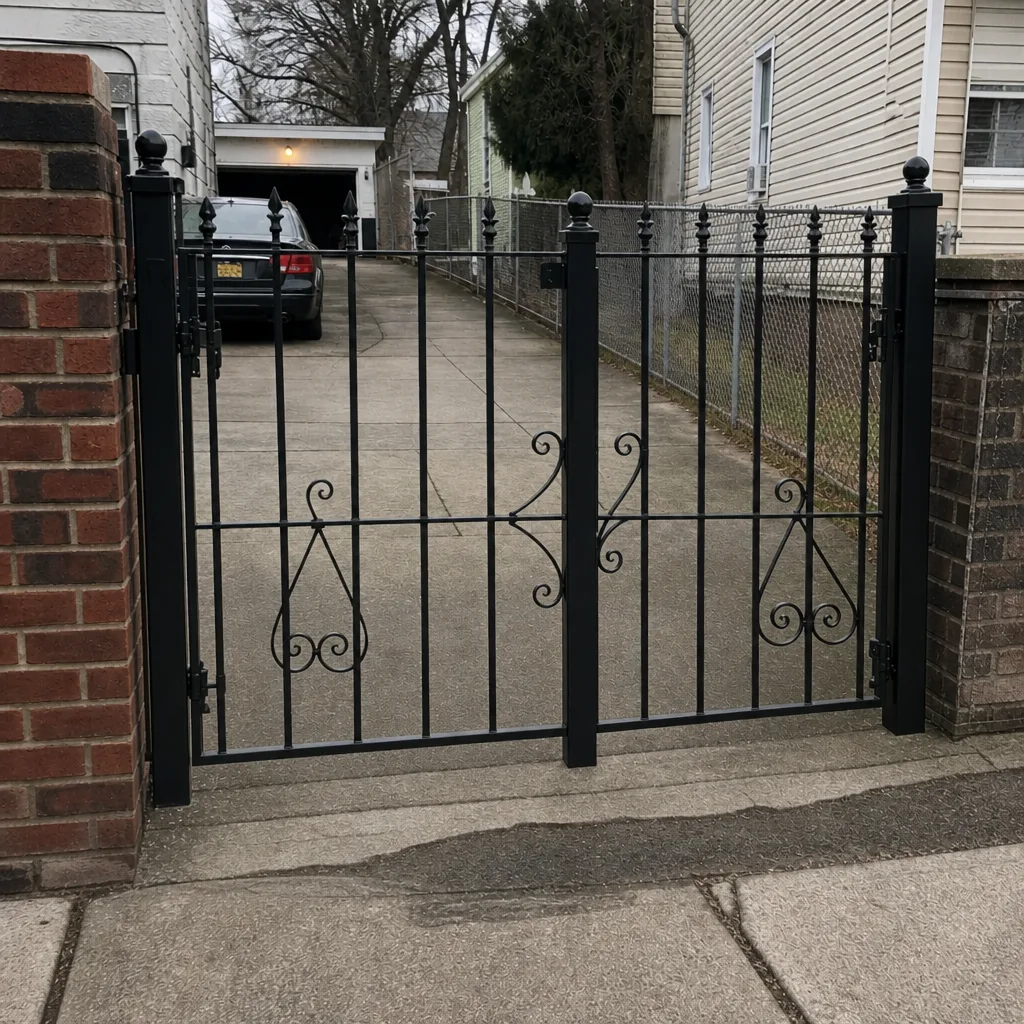 After
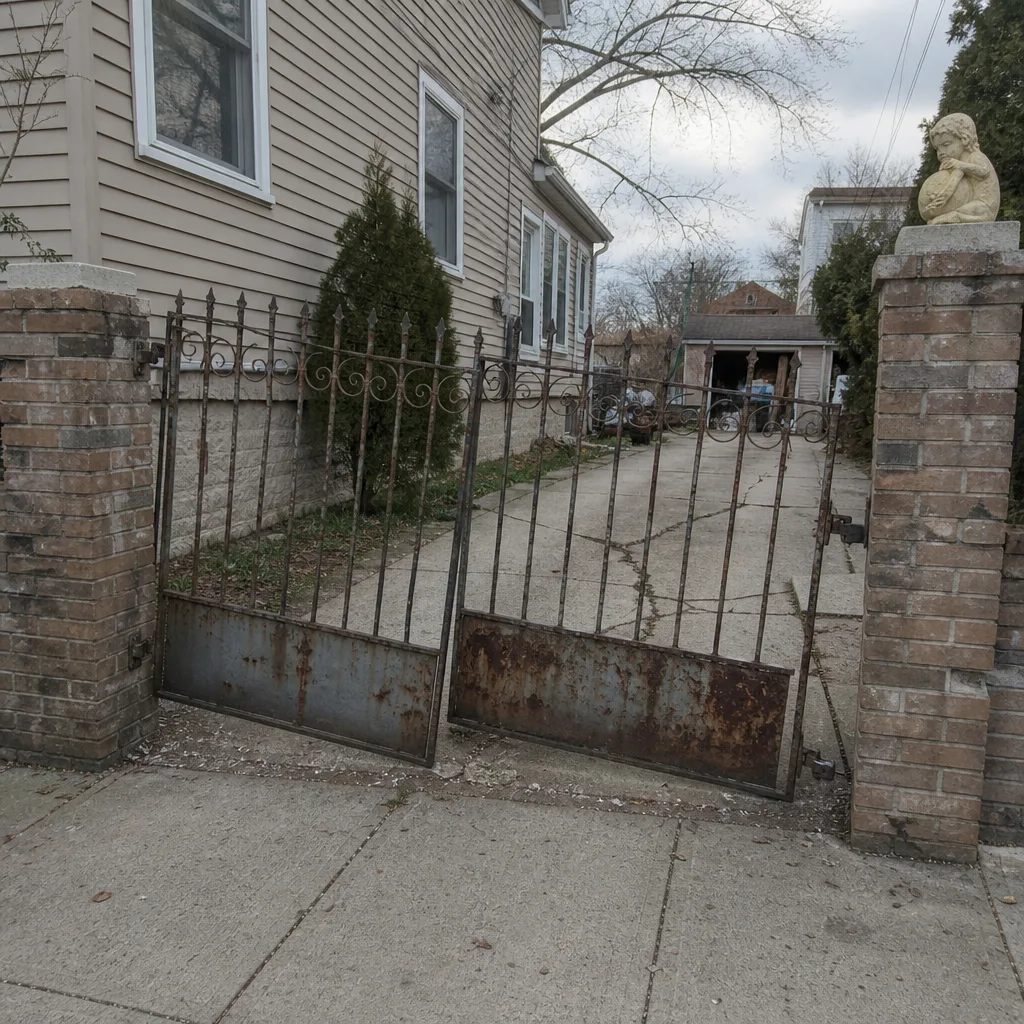 Before
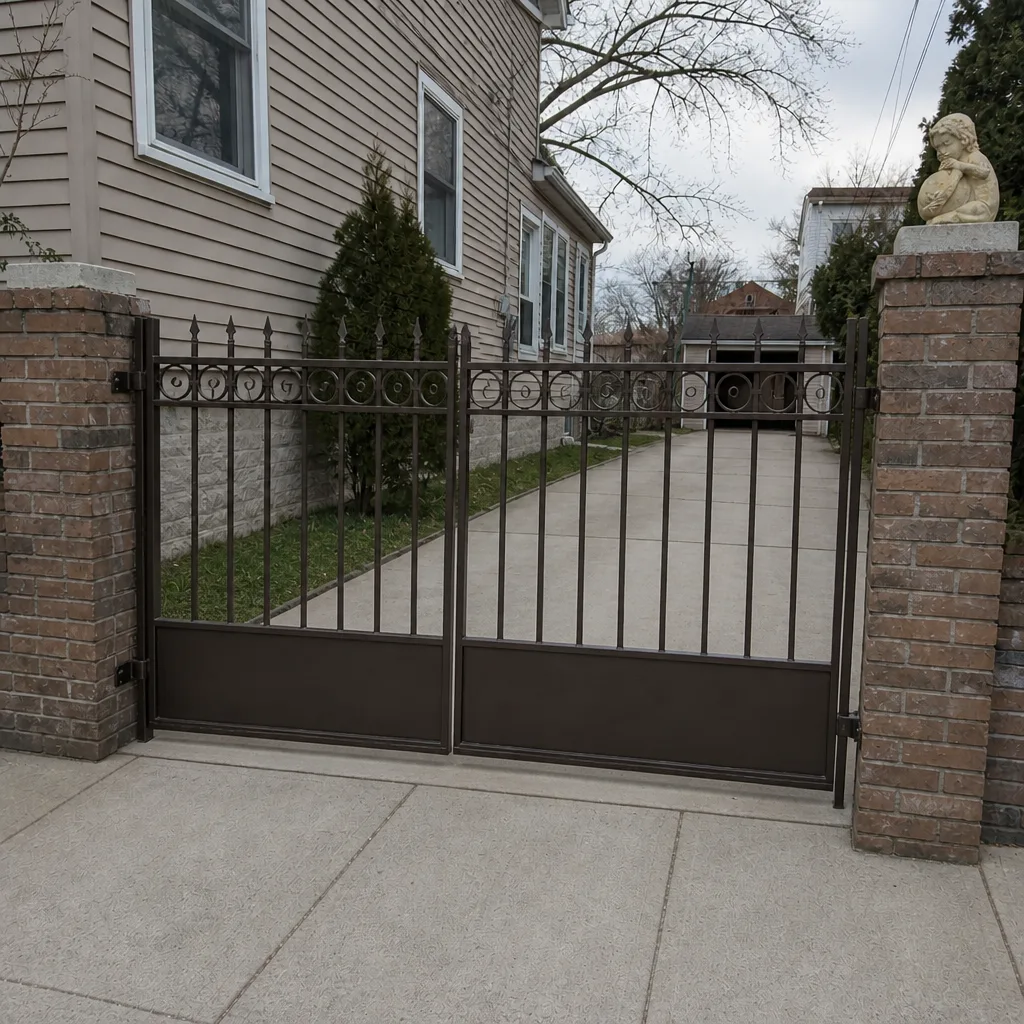 After
Common Mistakes to Avoid
- Assuming all gate work is permit-free. Mechanical repairs usually are. Electrical and structural work usually aren’t. If you’re not sure, ask the city before ordering parts.
- Skipping the permit because the work “looks small.” A new operator circuit is small on paper and real on the property record. The permit is inexpensive compared to the paperwork of selling a home with unpermitted electrical work in Jersey City.
- Letting a generalist do the electrical. Gate installation and electrical work are two licenses in many cases. Hire the electrician, and keep the gate specialist on the gate.
- Ignoring the condo board. On shared gates, the city permit doesn’t supersede the association. Both approvals matter and both belong in the project plan.
- Paying in full before seeing the inspection sign-off. The final inspection is the proof. Hold the last payment until the paper is in hand.
- Ordering the operator before checking the wiring. A heavier operator can overload a circuit. Have the electrician review the existing wiring before you buy.
- Treating safety devices as optional. Photo eyes and safety edges are part of the system, and they’re part of what gets inspected. Skip them and the gate fails, or worse, doesn’t stop.
When to Call a Professional
Call a professional when your gate won’t operate consistently, when a repair keeps coming back, when you’re considering a new operator or a structural change, or when the paperwork question is the one you can’t answer. A gate is heavy, and an automated gate carries stored energy in its springs, arms, and motors. Diagnosis and adjustment are not tasks to improvise with a ladder and a friend. Electrified gate wiring in particular should never be handled by anyone without training.
We work on gates and only gates. That focus means we’ve diagnosed the same fault across BFT, Linear, Viking, and Ghost Controls systems enough times to recognize it quickly, and we can tell you whether the fix is a repair or a replacement, and whether either needs a permit. Gate Repair Jersey City offers free estimates in Jersey City. Call (855) 701-9639. We answer 24/7. Fast dispatch from 7am to 7pm, Sunday through Friday.
Frequently Asked Questions
Usually not, if the repair keeps an existing gate working with the parts and wiring it already has. Repairs that add or change something on the property, like a new electrical circuit, a new operator where none existed, or a replaced gate post, typically do need a permit through the Jersey City Division of Building and Housing. When the scope is unclear, ask the city before the work begins. Call (855) 701-9639 for an exact quote on the gate work itself; estimates are free.
Yes, in most cases. A new circuit to power a gate operator is electrical work covered by the New Jersey electrical code, and it needs an electrical permit and inspection. The mechanical installation of the operator is a separate piece of the job. A licensed electrician should handle the circuit while a gate specialist handles the operator and the gate. Call (855) 701-9639 to talk through your system; estimates are free.
There’s no fixed answer, because turnaround depends on the city’s workload and how complete your application is. A clean submission with drawings and electrical details moves faster than a vague one. The realistic advice is to start the permit process before you order the operator, and to treat the structural and electrical applications as two tracks running at once. Call (855) 701-9639 for help scoping the gate and electrical work; estimates are free.
Unpermitted work can create problems when you sell, and it can complicate an insurance claim. The city can require the work to be corrected and inspected after the fact, and a buyer’s lender may flag it during closing. The fix is usually a permit application for work already done, followed by inspection, but the process is easier the sooner you address it. Call (855) 701-9639 to confirm what your gate system has and what it needs; estimates are free.
If the gate serves more than one unit, almost certainly yes. Many condo associations and HOAs in Jersey City require board approval for anything that changes a shared structure or electrical system, often alongside architectural review. The board process usually sits on top of the city permit, not in place of it, so start both at the same time. Call (855) 701-9639 to get the gate scope in writing for your board; estimates are free.
In most cases you need a separate licensed electrician for the circuit and its permit. A gate specialist handles the operator, the gate mechanism, and the mechanical installation, but the electrical work that runs to the operator belongs to the electrical trade. Our Gate Repair Jersey City service covers the gate side end to end, and we’ll tell you plainly when you need an electrician so the project doesn’t stall. Call (855) 701-9639. We answer 24/7. Fast dispatch from 7am to 7pm, Sunday through Friday.
The Bottom Line
The permit question for gate work in Jersey City comes down to one distinction: repairing an existing gate versus changing the property. Mechanical repairs, part swaps, and electronic troubleshooting on a system you already have usually need no permit. New operator circuits, structural post work, and anything that changes the footprint need one, and the electrical side needs a licensed electrician and an inspection. Multi-unit buildings add a condo or HOA layer on top. Get the paperwork settled before the work is scoped, keep the documentation, and hold final payment until the permit closes. For gate repair, electric gate repair and installation, and a straight answer about what your system needs, the team at Gate Repair Jersey City is ready. Call (855) 701-9639 for a free estimate.
Property owners across Jersey City rely on us for gates and only gates, from lifting a sagging manual gate back onto its track to commissioning a new automated system with all the paperwork in order. If the work needs a permit, we’ll tell you. If it doesn’t, we’ll tell you that too, and we’ll diagnose before we quote so the recommendation is based on your system rather than on what parts happen to be easy to find.
Written by the team at Gate Repair Jersey City.