
Last updated November 15, 2026
 Wrought iron
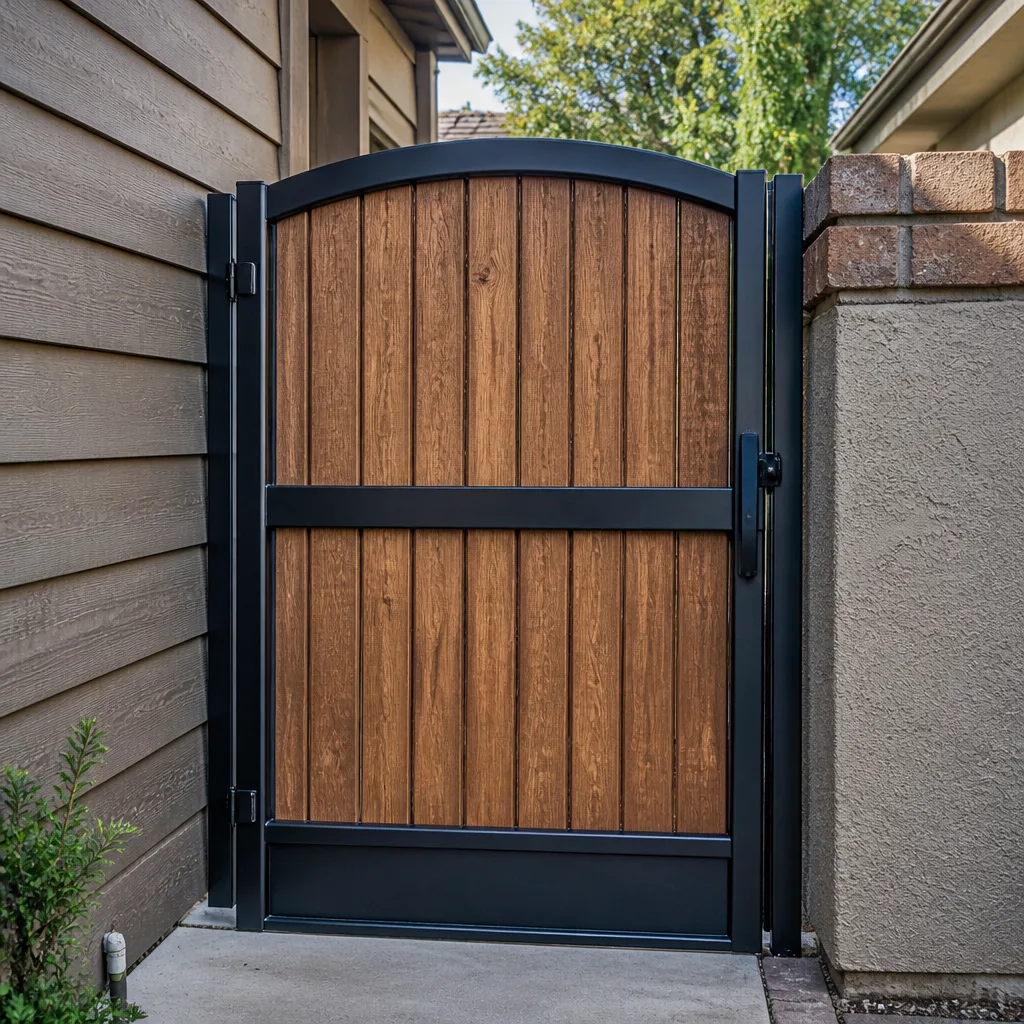 Wood & steel frame
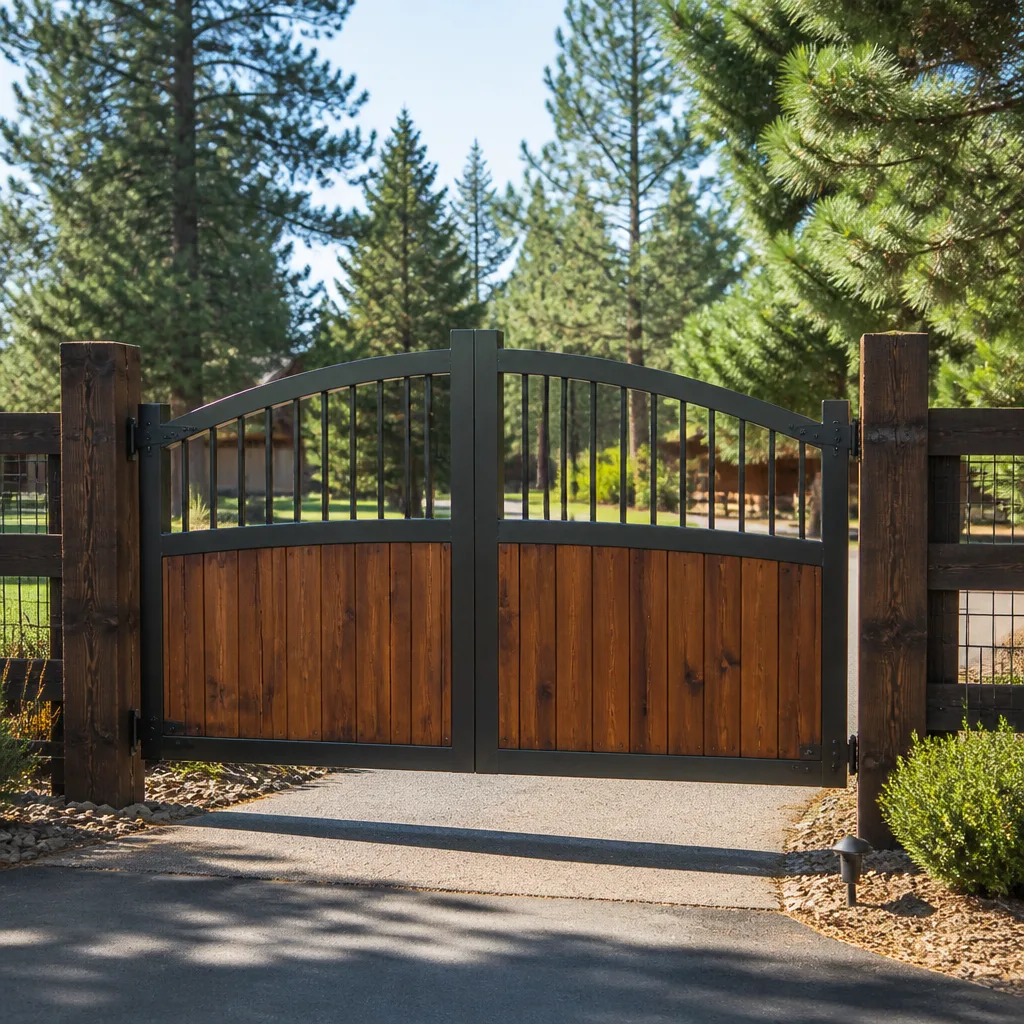 Farm & ranch
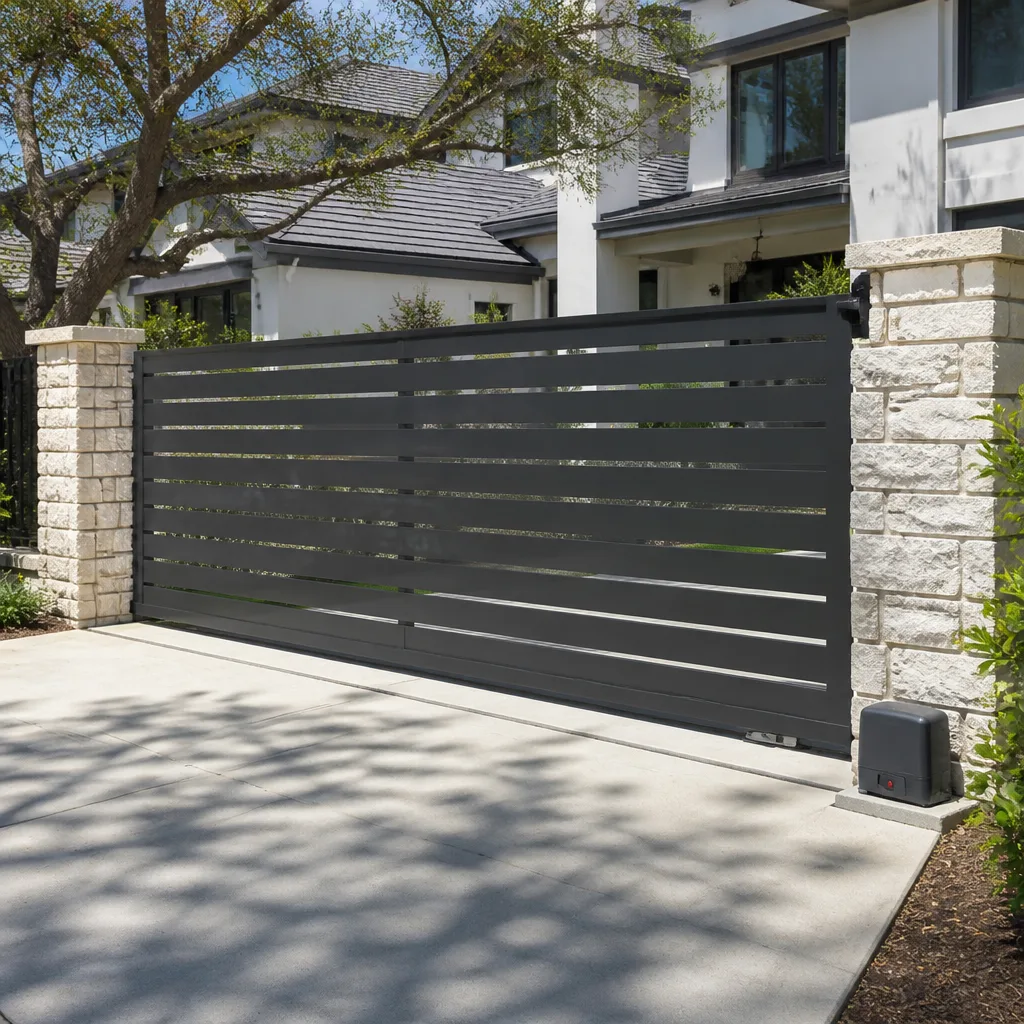 Sliding driveway gates
 LiftMaster operators
Free on-site gate assessment - hinges, posts, and your LiftMaster or Nice gate operator checked before anything is quoted
The assessment is free and the quote is the invoice.
Get your free estimateGate Repair Troubleshooting in Jersey City: Common Problems and How to Fix Them
A gate that reverses before it closes isn’t broken. It’s communicating. Something broke the safety beam, a hinge is binding, or the operator’s control board is deciding the path isn’t clear, and the reversal is the message. The problem is that most people, and a lot of general repair services, treat the symptom instead of reading the signal. They adjust the close limit, the gate reverses again a day later, and the real fault is still sitting there waiting. This guide is about reading those signals properly. We’ll walk through the five most common gate failure modes in Jersey City, show you which ones you can safely check yourself and which ones you shouldn’t touch, and explain how to describe a problem to a specialist so the diagnosis is fast and the quote is accurate.
Quick Answer
Most gate problems in Jersey City fall into five predictable categories: unwanted reversal, grinding or binding, slow or delayed response, partial opening, and a gate that’s dead on command. Each symptom traces back to a small set of likely causes, usually the safety sensors, the control board, a limit switch, the drive mechanism, or the power supply. Working from symptom to cause, in the right order, is what separates a five-minute diagnosis from a thirty-minute one. You can safely check obstructions, sensor alignment, and visible physical damage yourself; anything involving the control board, motor, or wiring needs a trained technician.
Styles & brands we work with
- Wrought iron
- Wood & steel frame
- Farm & ranch
- Sliding driveway gates
- LiftMaster operators
Table of Contents
- The Five Failure Modes and What They Mean
- Symptom: The Gate Reverses Before Closing
- Symptom: Grinding, Squealing, or Binding
- Symptom: The Gate Responds Slowly or Not at All
- Symptom: The Gate Opens Partway and Stops
- Control Board vs. Limit Switch: Telling Them Apart
- How Jersey City Conditions Affect Gate Hardware
- What You Can Safely Check and What You Shouldn’t Touch
- How to Describe Your Gate Problem for a Fast Diagnosis
The Five Failure Modes and What They Mean
Gate systems fail in patterns. Across the automated operators we work on, the same five symptoms come up again and again, and each one narrows the list of likely causes almost immediately. Learning to recognize the pattern is the single most useful troubleshooting skill a property owner can develop.
Here’s the map. Keep this in mind as you read the rest of the guide:
- Reversal before closing. The gate moves, then stops or reverses without touching anything. Usually the safety sensors, a binding hinge, or a limit setting.
- Grinding or squealing. Metal-on-metal noise during travel. Usually a worn hinge, a dry or damaged track roller, or debris in the guide rail.
- Slow or delayed response. The gate opens fully but sluggishly, or there’s a long pause after the command. Usually the motor, battery backup, or control board.
- Partial opening. The gate stops partway through the cycle. Usually a limit switch, a jammed roller, or an obstruction the system detects mid-travel.
- Dead on command. Nothing happens at all. Usually the power supply, a tripped safety device, the receiver, or the control board itself.
Each symptom is a fork in the road. When an electric gate repair technician hears “it reverses,” the diagnosis tree is different than it is for “it grinds,” and the technician can start working the tree immediately instead of re-interviewing the property owner. That’s the whole point of learning to read the chains. A gate is a mechanical system with a computer in it, and the two halves fail on different timelines. The mechanical failures usually announce themselves with noise or friction. The electronic failures usually happen silently, which is why they’re harder to diagnose from the outside.
The most useful question you can ask yourself when a gate misbehaves is: did the behavior change suddenly or gradually? Sudden changes usually point to electronics, a safety device, or physical damage. Gradual changes usually point to mechanical wear, corrosion, or a limit switch slowly drifting out of adjustment. Answering that one question before you call anyone gives the technician a real head start on a gate repair in Jersey City or anywhere else.
Symptom: The Gate Reverses Before Closing
Reversal is the symptom property owners call about most, and it’s also the one with the widest set of likely causes. The gate is telling you it detected an obstruction, and the obstruction might be real, might be a misaligned sensor, or might be a binding mechanical part the system is misreading as resistance. These three possibilities are very different to fix.
Here’s how we’d walk through it, in order:
- Look for actual obstructions. Leaves, branches, toys, or a slightly sunken driveway lip will trigger a reversal on a gate with a resistance sensor. Clear anything touching the gate or the path. On a LiftMaster or FAAC operator with photoelectric eyes, walk the beam line and confirm nothing is blocking it.
- Check sensor alignment. Photoelectric safety sensors need to face each other squarely. If the gate post has shifted slightly (which happens more often than you’d think on older Jersey City properties), the beams go out of line and the gate stops. A visual check is safe and takes a minute.
- Test with the safety beam manually. Wave a hand through the beam while the gate is closing. If the gate doesn’t reverse, the sensor may be dead or bypassed and the reversal is coming from a different source. If it does reverse, the sensors are working and the problem is elsewhere.
- Check the mechanical path. A binding hinge, a dry track, or debris in a slide gate’s guide rail can simulate an obstruction. The gate hits resistance, and the operator reads that resistance as an obstacle.
- Check for a drifted limit. If the gate reverses at the exact same point in the cycle every time, a limit switch is likely misreading the position and the operator thinks it’s past its endpoint.
Notice that steps one through four are safe to do yourself and step five is where a trained eye helps most. The most common mistake we see is a property owner cranking up the force setting on the operator so the gate “pushes through” resistance. That works for a week, then the hinge fails completely and the gate doesn’t move at all. The reversal was a warning, and the force setting was the mute button. If a revirsal appears at random points in the cycle, electronics are more likely involved. If it’s consistent at one point, mechanical.
Symptom: Grinding, Squealing, or Binding
Noise is the most honest symptom a gate produces. A grinding or squealing gate has a mechanical problem, and unlike electrical faults, you can often see where it is. That’s good news, because mechanical problems usually fail on a predictable timeline. If you catch noise early, you’re dealing with a hinge or a roller; if you let it run, you’re dealing with a bent track or a strained motor.
The places to look, in priority order:
- Hinges and pivots. On swing gates, every hinge carries the gate’s weight. Worn bushings or rusted pivot pins produce a squeal at the start of travel and a grind at the end. This is the most common source of gate noise, full stop.
- Rollers and tracks. On slide gates, a worn v-groove roller will rumble across the track. Debris caught in the guide rail adds to it. Look for flat spots on the rollers.
- The operator motor and gearbox. A grinding that comes from inside the operator housing and doesn’t match the mechanical noise of the gate is different. That’s internal wear, and it needs a technician.
- The chain or drive arm. On chain-drive operators and articulated arms, slack or misalignment produces a rhythmic clunk or grind that tracks the motion exactly.
One thing to understand about a grinding gate: the noise is the symptom but the friction is the disease. Something is being asked to do more work than it’s designed for. On a Mighty Mule or BFT swing operator, the arm is only rated to push a gate up to a certain weight and resistance. When a hinge starts to bind, the arm now has to push harder. If the friction goes unaddressed, the operator’s gearbox is the part that pays the price. This is the clearest example of the failure chain in this guide, and it’s why we say the diagnosis matters more than the repair. Fixing the grind means finding the friction source, not just silencing it with lubrication.
Symptom: The Gate Responds Slowly or Not at All
A gate that works but takes longer than it used to is going through a different kind of failure than a grinding gate. Slow motion means something is restricting the drive or draining the electronics. A gate that doesn’t respond at all is a different call entirely, and it’s usually one of three things: power, safety, or signal.
Here’s the order we use:
- Power supply. Confirm the operator has AC power and the breaker hasn’t tripped. Check the low-voltage transformer if the system has one. All obvious, none dangerous.
- Safety devices. Many operators are wired so a blocked photoelectric eye or an open safety edge will prevent motion entirely, not just reverse. Stand between the gate posts and check the safety edges, then walk the beam line.
- Remote and receiver. If the gate responds to a keypad or interior button but not the remote, the issue is in the remote, its battery, or the receiver. Swap the battery first.
- Motor load. If the gate is slow but moving, the motor is either working against resistance or the battery (if there’s a backup) is failing. A dying battery on a LiftMaster or FAAC backup system can make the gate run at half the normal speed as the operator tries to conserve power.
- Control board. If power, safety, and signal are all fine and the gate still doesn’t respond, the board is the next suspect. Board diagnostics need a technician with a meter.
Slow response is often a mechanical problem in electronic clothing. A slide gate with a dry track moves slowly because it’s fighting friction. A swing gate with a failing hinge moves slowly for the same reason. Before assuming the motor is wearing out, check the mechanical path. It’s a much cheaper fix, and it’s more common than a motor failure on a gate that’s under 10 years old.
Symptom: The Gate Opens Partway and Stops
Partial opening is the “halfway” symptom, and it usually means the gate is reaching one limit but not the other, or that an obstruction detector is cutting the cycle. This is where we see the most confusion because there are two distinct versions of the same symptom, and they mean very different things.
Version one: the gate always stops at the same point. If the gate opens to a consistent position and stops, the limit switch is most likely the culprit. The operator thinks it has hit the end of travel and stops. That could be a switch that’s drifted out of position, a magnet that’s fallen off, or a mechanical arm that’s bent. Consistent stopping is a positioning problem.
Version two: the gate stops at random points. If the gate stops at different positions each cycle, you’re looking at a sensor problem or a resistance problem. The system is detecting something irregular mid-travel. This could be a photoelectric eye that’s intermittently blocked, a slide gate roller that hits a rough patch in the track, or a safety edge that’s falsely triggering. Random stopping is a signal problem, not a positioning one.
We always ask a property owner to observe their gate through three or four complete cycles before calling, and to note where it stops in each cycle. This one observation cuts the diagnosis time roughly in half. On the Jersey City properties we work on, partial opening is frequently caused by a limit switch on a DoorKing or FAAC slide operator being nudged out of place by the gate’s own momentum over months of use. It’s a small adjustment once you know where to look, and a frustrating mystery if you don’t.
Control Board vs. Limit Switch: Telling Them Apart
These two failures look nearly identical from the outside. A gate that stops at the wrong point, or won’t shut off the motor at the expected position, could be either. The difference matters because the repair paths are very different, and a technician who guesses wrong is going to cost the property owner money on a part that wasn’t the problem.
Here’s how to narrow it down before anyone picks up a tool:
- Does the gate ever complete a full cycle? If yes, even occasionally, the limit switch is probably working (a switch that’s failed outright will produce the same failure every cycle). Intermittent problems point to the board or its sensor inputs.
- Does the motor stop cleanly or run down? A clean stop where the gate “knows” it should stop is a limit switch doing its job. A stuttering or delayed stop is a board that’s lost its position tracking.
- Does the remote or keypad still work? If the manual controls respond but the automatic cycle fails, the board may be misreading an input. If the operator is completely unresponsive to every input, the board is more likely.
- Are there error codes? Many modern operators, including most LiftMaster and BFT control boards, blink or display codes when they detect a fault. Note the pattern before you call. Those codes are the fastest path to the diagnosis.
The reason this distinction matters so much comes down to cost, and we won’t quote a number here because the repair path depends on the specific operator model. A limit switch adjustment or replacement is a straightforward repair. A control board replacement is a significantly larger job, and it’s a part that needs to be matched to the exact operator. In our experience, the most expensive mistake a property owner makes is guessing at the board when the limit switch was actually at fault. That guess gets paid for twice: once on the board that wasn’t needed, and once on the actual repair.
This is the clearest example of why cross-brand experience matters. A technician who has worked on all the major operators learns to read the failure signatures of each board family. The “dead on command” reflex on a FAAC operator is different from the same symptom on a Linear system. A generalist without that pattern library is going to be guessing right along with you.
How Jersey City Conditions Affect Gate Hardware
Gates in Jersey City live in a distinctive environment that most gate guides completely ignore. Your gate is dealing with a mix of urban air, temperature swings, and a particularly tough combination of legacy properties and newer automated systems. Understanding this local context helps you predict failures before they happen.
The biggest factor is humidity cycling. Jersey City sits in a climate where a gate is regularly wet, then dry, then wet again, and hardware hates that. Mechanical parts fail on the moisture cycle before the electronics do. Pivot pins, hinges, and track rollers all take on small amounts of water, and that water expands when it freezes in a cold snap. A hinge that was fine in October may suddenly grind in January because ice has forced the pivot slightly out of tolerance. Rubber seals around the operator housing go the same way: they dry out in summer, crack in winter, and start letting water into the electronics bay.
The second factor is air quality. Urban air carries particulates that settle into every mechanical joint and every open aperture on an operator housing. This is not salt air (Jersey City is inland enough that coastal corrosion isn’t the primary issue), but it is enough to accelerate wear on metal-to-metal contact points. Grease that’s mixed with urban dust becomes an abrasive paste. This is why we recommend periodic cleaning and re-greasing of the mechanical components, without a maintenance plan or contract, just a one-time visit when the gate’s been neglected.
The third factor is residential density. Jersey City properties frequently have gates opening and closing dozens of times a day, especially around multi-unit buildings and rental properties. That duty cycle is heavier than most residential gate systems are designed for. Operators that are rated for a few cycles per day get used at ten times that rate, and the parts that wear first are the ones with the highest mechanical stress: rollers, hinges, and the operator gearbox. If your gate is cycling heavily, expect wear-and-tear failures faster than the manufacturer’s stated lifespan, and don’t assume a failure is a defect when it’s really a duty-cycle issue.
What You Can Safely Check and What You Shouldn’t Touch
This is the section most gate repair guides skip, and it’s the one we care about most. Some troubleshooting steps are genuinely safe for a property owner and save you a call. Others are dangerous, can void the operator’s warranty, or can create a liability problem if you’re a landlord or property manager. Getting the line right matters.
Safe to check yourself:
- Visible obstructions on the gate path, in the guide rail, or between safety sensors.
- Photoelectric sensor alignment by eye, and testing the sensor with a hand or a piece of cardboard.
- The remote battery and the keypad power.
- Any visible physical damage to hinges, rollers, or the gate panel itself.
- The breaker for the operator’s power circuit, and the operator’s power indicator light.
- Listening to the gate through a full cycle and noting where the noise or issue occurs.
Do not touch, call a technician:
- Any internal wiring at the operator, the control board, or the transformer. Live low-voltage and mains voltage both live in that housing.
- The motor, gearbox, or drive mechanism.
- Limit switch adjustment. The switch position is a calibration, not a “make it stop here” knob, and a wrong adjustment can damage the operator over time.
- Force and speed settings on the operator.
- Safety edge wiring or replacement on a heavy or automated gate.
For landlords and property managers, this line carries extra weight. If you’re not the person occupying the property, having an unlicensed person adjust a gate’s safety settings can create a real liability if something goes wrong later. The safe play, and the one your insurer will prefer, is to have any adjustment to the failure chain performed by a trained technician who can document the work. Gate Repair Jersey City offers free estimates on any gate repair, so the first conversation about the fault is free; there’s no reason to guess at a repair that a technician would diagnose accurately in a few minutes.
How to Describe Your Gate Problem for a Fast Diagnosis
The fastest diagnosis calls we have are the ones where the property owner has already done most of the work by simply observing. Thirty-second calls happen because the person on the other end can describe the failure chain, and they know which details matter.
Here’s how to prepare for a call about a faulty gate:
- State the symptom in one sentence. “It reverses at the same point every time” or “It grinds at the start of opening” is a good starting point. “It’s broken” is not.
- Name the brand if you know it. The operator’s brand and model (LiftMaster, Mighty Mule, FAAC, BFT, DoorKing, Linear, Viking, Ghost Controls, Elite, or Mighty Mule) narrows the diagnosis tree fast. If you don’t know, look for a label on the operator housing.
- Note the pattern. Does it always fail at the same point, or does it fail randomly? Same point points to positioning, random points to signal or obstruction. This is the single most useful thing you can tell a technician.
- Note when it started. Sudden changes and gradual changes point in different directions.
- Note the cycle count if you know it. “It cycles about 40 times a day” tells the technician that duty-cycle wear is likely. “It cycles twice a day” makes wear much less likely.
- Take a short video through a full cycle. Most smartphones can do this in 15 seconds, and the video is worth more than the rest of the description combined.
If you can do these six things before you call Gate Repair Jersey City, the diagnosis call takes about five minutes instead of thirty. The fastest way to book a diagnosis is to call (855) 701-9639. We answer 24/7, and a call outside dispatch hours is booked into the next opening, Sunday through Friday, 7am to 7pm.
Common Mistakes to Avoid
- Increasing the force setting to make the gate close. This masks the actual fault. The operator was telling you something was binding, and cranking up the force lets the binding stay in place until the hinge or gearbox fails outright. Treat the force setting as a fixed parameter, not a knob to turn when a gate misbehaves.
- Assuming a dead-on-command gate has a dead control board. Nine times out of ten, the actual fault is upstream: a tripped safety device, a dead remote battery, a blown fuse, or a power switch that got bumped. Checking those first costs nothing and saves a lot.
- Calling a general handyman “because the gate isn’t a garage door.” A gate is a mechanical and electronic system with its own failure modes and its own operator brands. A handyman who fixes gates between other jobs will guess at the control board; a gate specialist will diagnose it.
- Ignoring noise because the gate still works. A grinding gate that still closes is a grinding gate that will eventually stop closing. The noise is the early warning. Fix it before the operator needs replacing.
- Adjusting the limit switch to “make the gate stop where I want it.” Limit switches are calibrated against the operator’s expected travel. A wrong adjustment can cause the operator to fight its own motor and damage the gearbox over time.
- Assuming a fix from YouTube is safe because it worked for someone else. Adjusting safety sensors, jumpers on a control board, or force settings varies by operator model. What’s safe on a Mighty Mule residential operator may not be safe on a FAAC commercial system on a multi-unit Jersey City property. Match the advice to the operator, not to the video.
- Skipping documentation on a rental property. If you manage a rental and the gate fails, a written record of what symptom preceded the failure helps the repair diagnosis and helps you make a case to the operator manufacturer if the part fails under warranty.
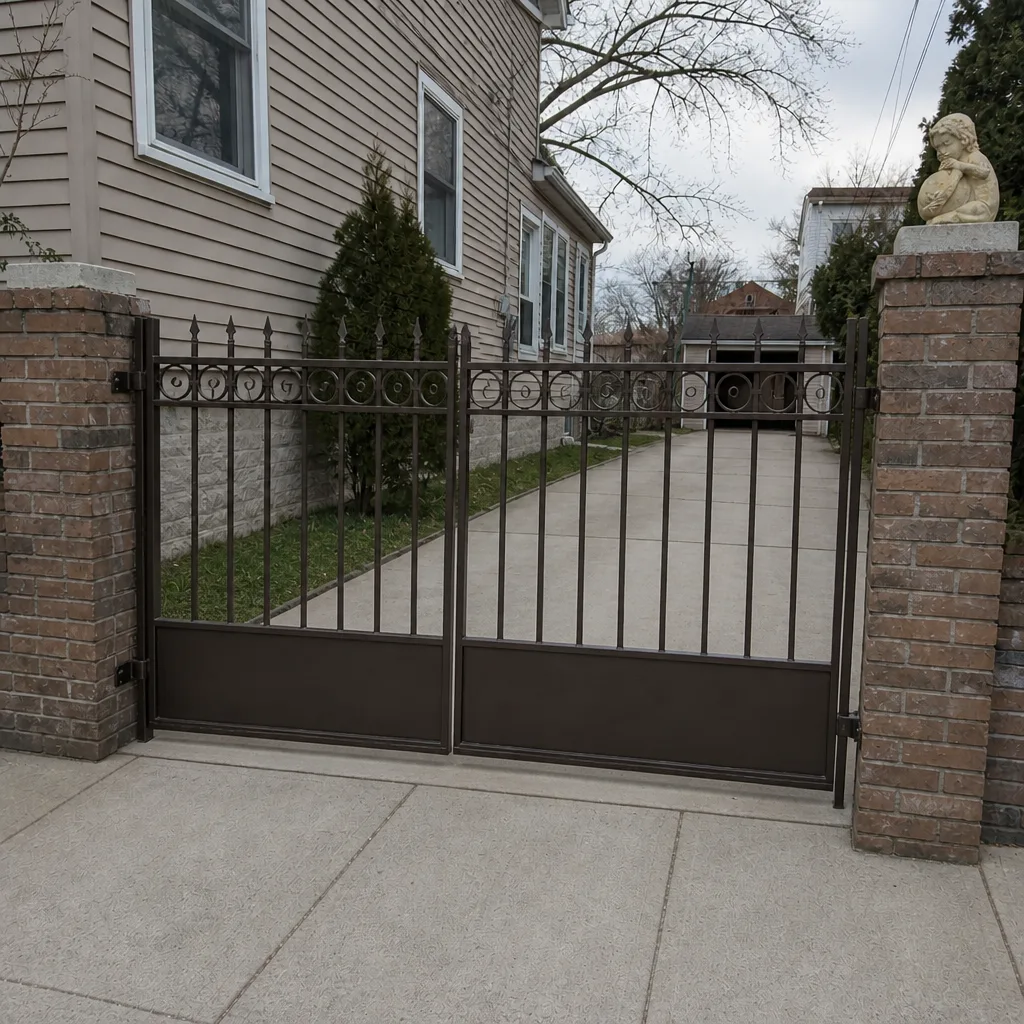
See the difference
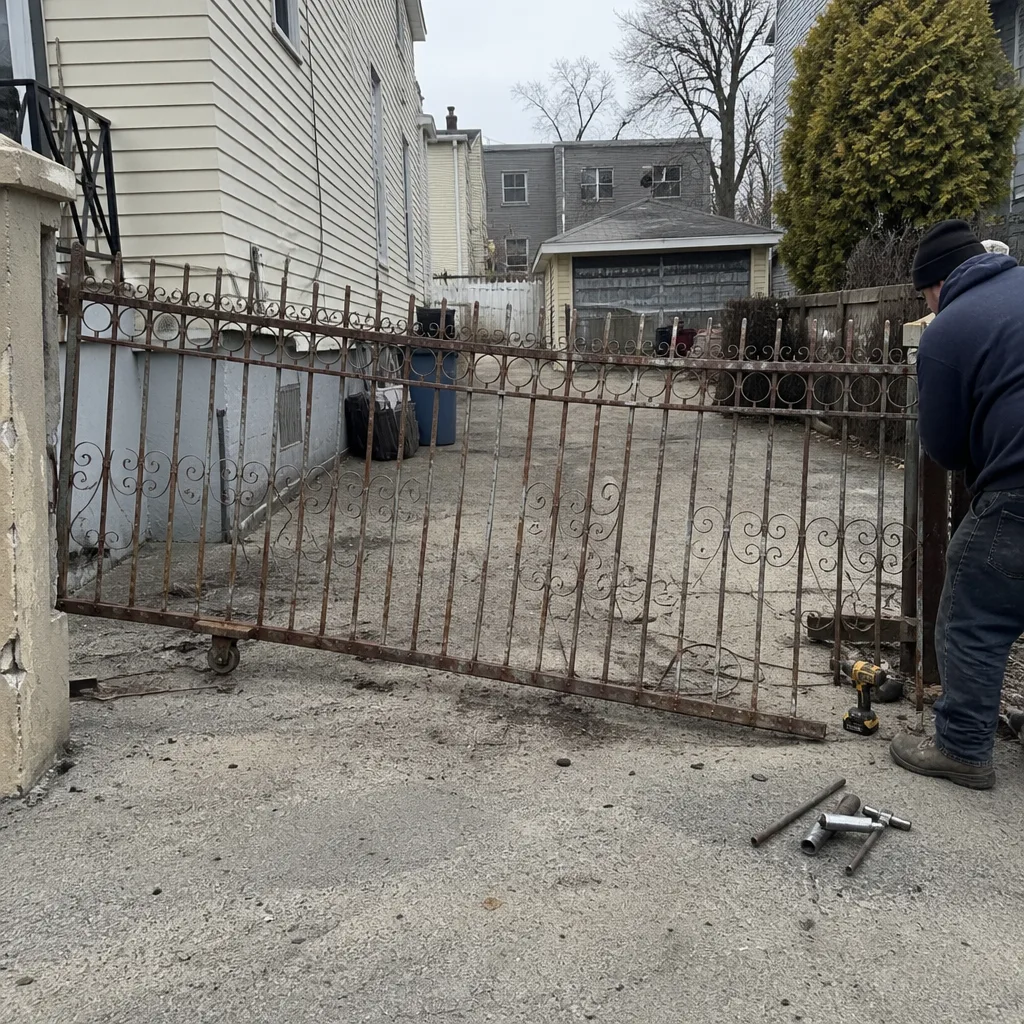 Before
 After
 Before
 After
 Before
 After
When to Call a Professional
Call a professional when the fault is in the operator, the control board, the sensor wiring, the motor, or any of the mechanical components you can’t safely reach. Call when the gate reverses at random points, when it completely fails to respond, when the noise is coming from inside the operator housing rather than the hinges, or when the property owner isn’t the one living at the gate and the fault is a liability question. Call when the gate is a powered model and the safety devices aren’t behaving, because a malfunctioning safety beam on an automated gate can cause severe injury. Call when there’s any doubt about what’s causing the problem. The free estimate means the cost of asking is zero, and the cost of guessing wrong can be a part replacement you didn’t need. Gate Repair Jersey City offers free estimates in Jersey City. Call (855) 701-9639.
Frequently Asked Questions
A gate reverses because it’s detecting an obstruction, real or false. That could be a misaligned safety beam, a binding hinge, a limit switch misreading the position, or a control board fault. In itself, a reversal is the safety feature working as designed. It’s dangerous only if it happens on a gate that’s supposed to close onto a driveway (such as with kids or pets present), or if the reversal is masking a deeper mechanical fault that could cause a hinge or gearbox failure. Have a technician rule out the mechanical fault before you assume it’s just a sensor issue. Call (855) 701-9639 for an exact quote; estimates are free.
Costs depend entirely on the failure chain and the specific operator, so we don’t publish a price list for a reason. A limit switch adjustment and a control board replacement are very different jobs, and the diagnosis determines which one you’re paying for. That’s why we don’t quote before we look at the gate. We measure and quote on site, and the written estimate sets the final price before any work starts. Call (855) 701-9639 for an exact quote; estimates are free.
Yes, in most cases. We answer 24/7 and dispatch Sunday through Friday, 7am to 7pm. Same-day service is routine on gate repair. Give us the brand and a short description of the symptom when you call, and we can usually give you a real arrival window on the call. Call (855) 701-9639 to book.
A specialist, in most cases. Gate repair is a narrow trade, and the failure chains we’ve walked through don’t exist in most general repair work. A handyman working on gates occasionally will default to the symptom rather than the cause, and the most expensive mistakes we see come from exactly that pattern: adjusting the force setting, replacing the control board, or “fixing” the safety sensors when the actual fault is a binding hinge. Our technicians have up to 15 years of experience across the gate trade specifically, and we work on LiftMaster, FAAC, BFT, Mighty Mule, Linear, Viking, Ghost Controls, DoorKing, and Elite systems.
A gate that’s stuck open is a security and safety issue, not just an inconvenience. Call a gate technician. We can usually diagnose and repair a stuck-open gate on the same visit. We answer 24/7 and dispatch Sunday through Friday, 7am to 7pm. Call (855) 701-9639.
No. Any fault at the control board, the motor, or the internal wiring needs a technician. There’s mains voltage and low-voltage wiring both in that housing, and a wrong move can injure you, damage the operator, or void the warranty. What you can do safely is check the remote, the safety sensors, the power supply, and any visible damage, and then have a specialist take over from there. Call (855) 701-9639 for a diagnostic estimate.
The Bottom Line
Gate problems are less mysterious than they seem. Five failure modes cover nearly every symptom, and the failure chains that connect them are predictable. Reversals point to safety sensors, binding hardware, or limits. Grinding points to wear in the mechanical path. Slow response points to power, sensor input, or motor load. Partial opening points to a limit switch or a mid-cycle obstruction. Dead-on-command points to the supply, the safety devices, or the board. Learn to read the symptom before you call anyone, and the diagnosis gets faster. Then let a gate specialist handle the actual repair, because the operator and the control board are not a place for guesswork. If you’re in Jersey City and a gate is misbehaving, Gate Repair Jersey City handles the repair and diagnosis on all major brands. Call (855) 701-9639. We answer 24/7. Fast dispatch from 7am to 7pm, Sunday through Friday, and every estimate is free.
Written by the team at Gate Repair Jersey City.