
Last updated November 15, 2026
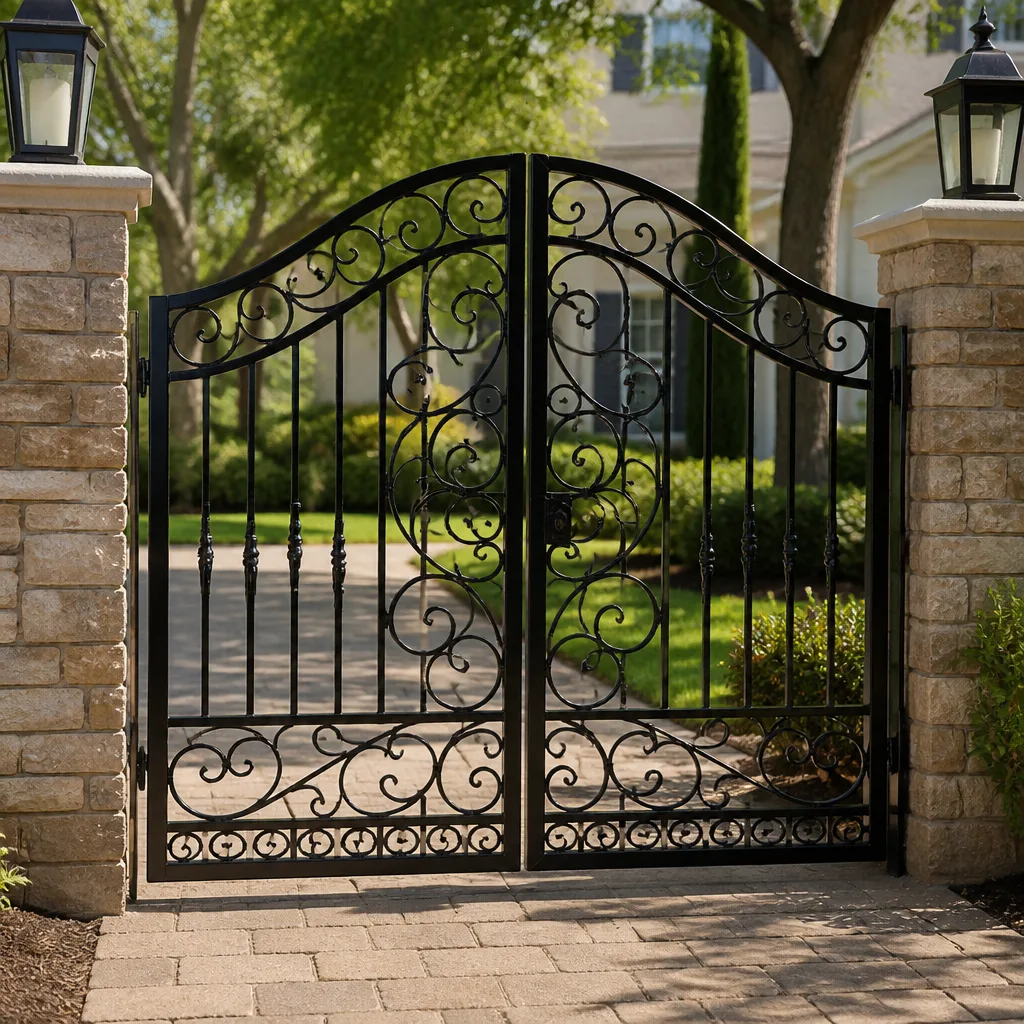 Wrought iron
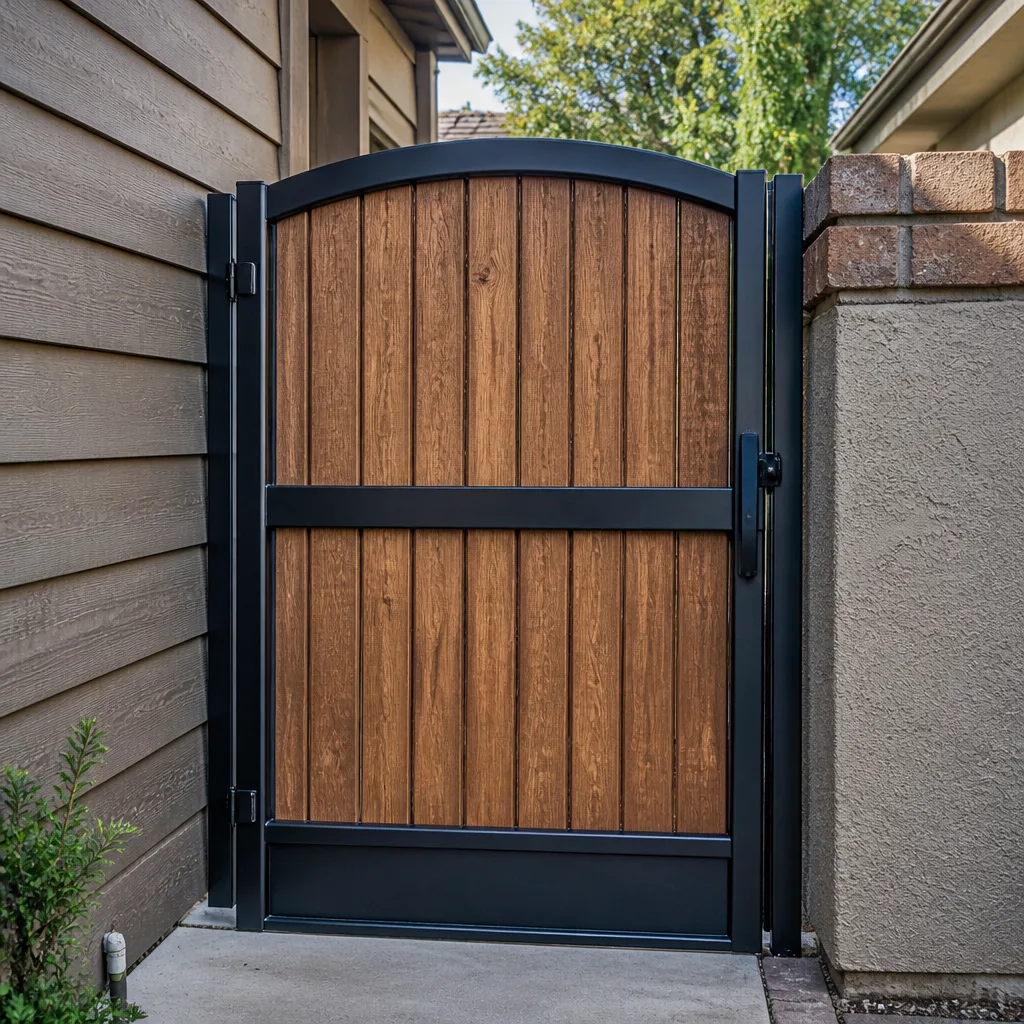 Wood & steel frame
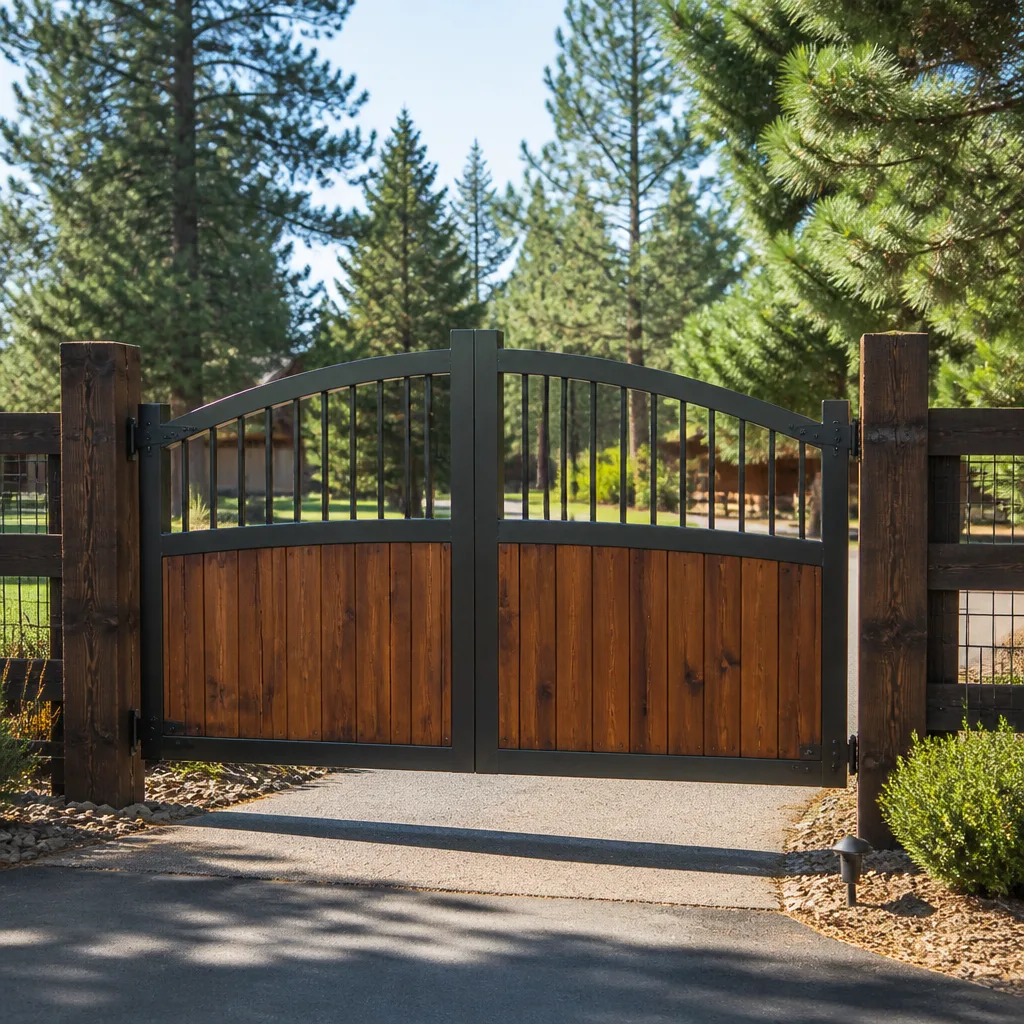 Farm & ranch
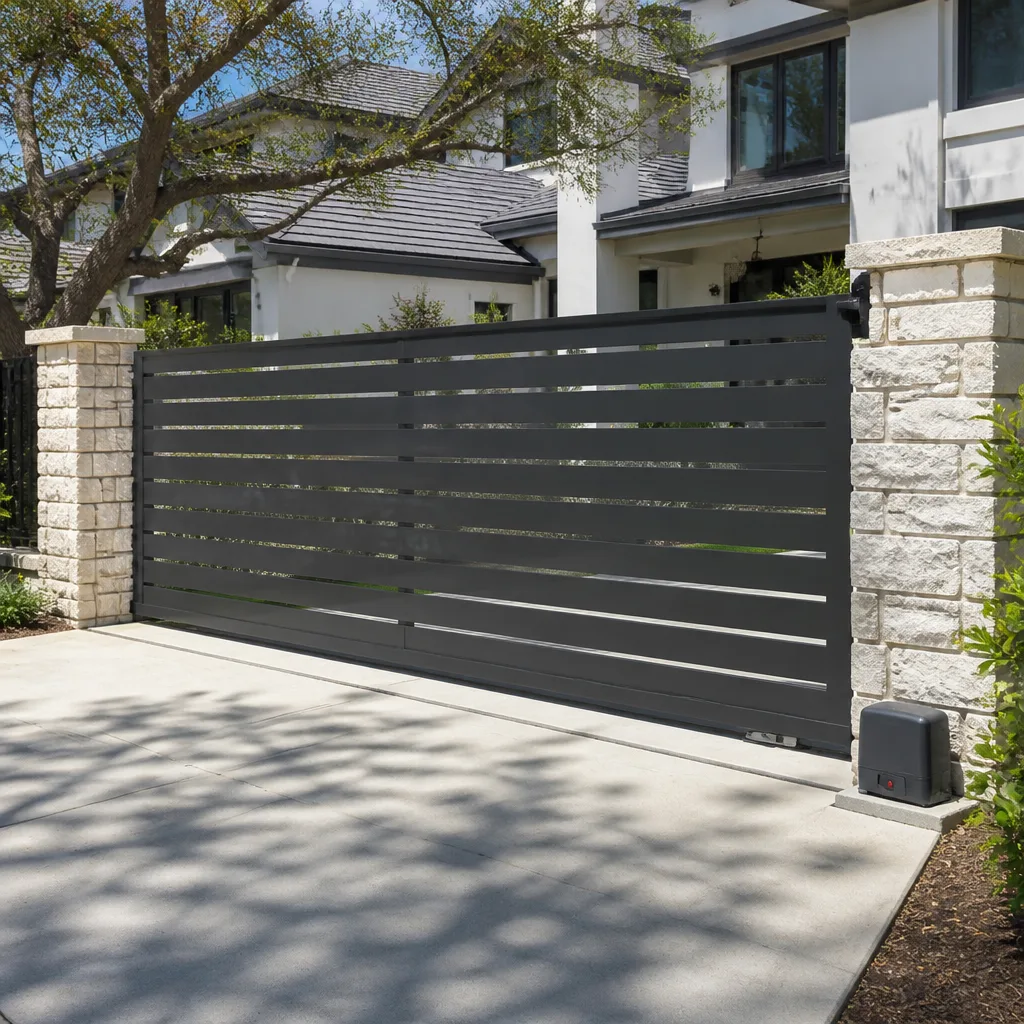 Sliding driveway gates
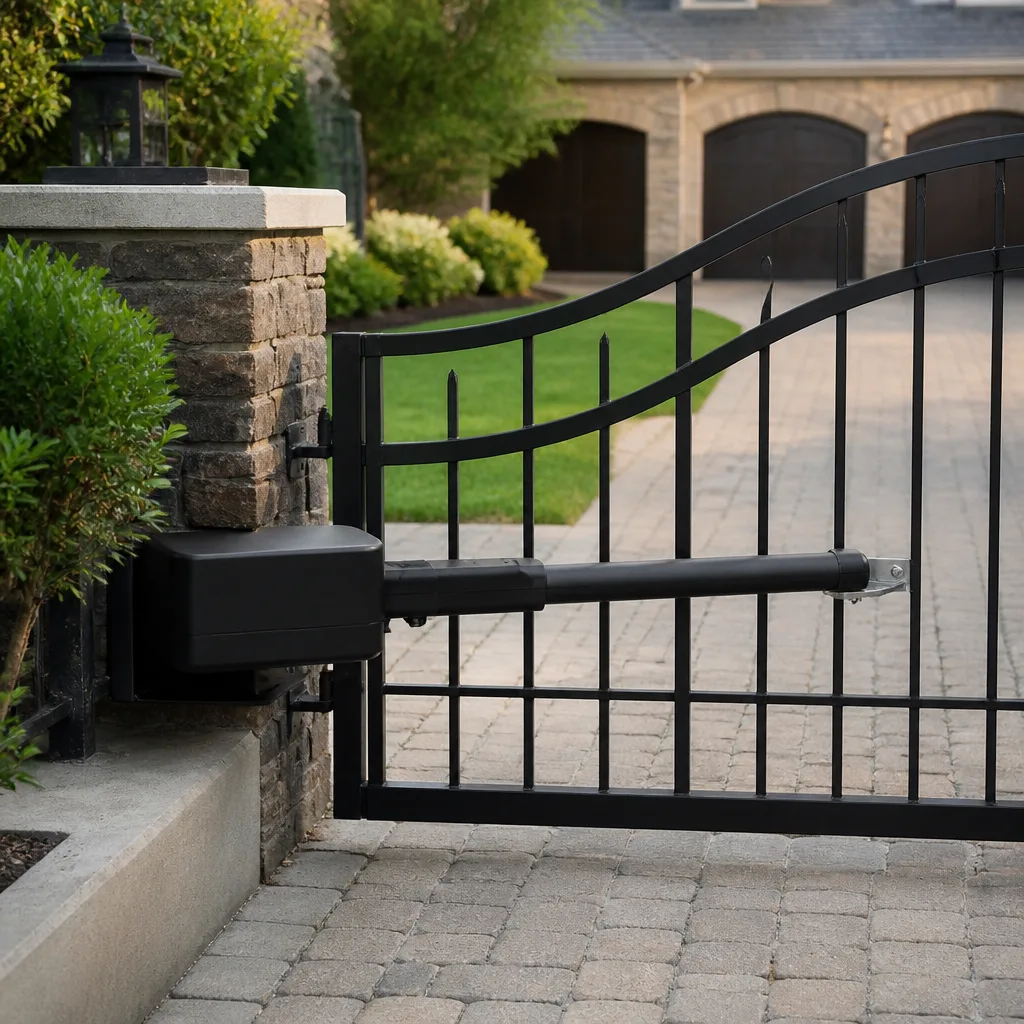 LiftMaster operators
Free on-site gate assessment - hinges, posts, and your LiftMaster or Nice gate operator checked before anything is quoted
The assessment is free and the quote is the invoice.
Get your free estimateSeasonal Gate Repair Care for Jersey City: Year-Round Homeowner’s Guide
Spring is the worst time to discover a hinge cracked over winter, and it’s exactly when most Jersey City homeowners first start opening their gates daily again after months of light use. The damage happened in January and February. April is just when you meet it. Gates fail on a calendar here, not at random, because each season brings a different mechanical threat: road salt migrating up from the sidewalk in winter, humidity swelling wood and loosening hardware in summer, storm debris twisting panels in fall, and freeze-thaw moving posts and hinges in spring. This guide breaks down what to inspect and when for a manual or powered gate in Jersey City, so you catch small problems before they turn into structural ones.
Quick Answer
Seasonal gate care in Jersey City works best when you match the task to the threat: in winter, protect base components from road salt migration; in spring, run a post-winter inspection for freeze-thaw movement before it becomes structural; in summer, recalibrate automated travel limits as heat expands steel and hardware; in fall, secure swinging gates against nor’easter wind loads. Add one non-visible maintenance task per season, and most gates will last years longer than a repair-and-forget approach allows.
Styles & brands we work with
- Wrought iron
- Wood & steel frame
- Farm & ranch
- Sliding driveway gates
- LiftMaster operators
Table of Contents
- Why a Jersey City Gate Ages on a Seasonal Clock
- Winter: Road Salt Migration and the Base Components It Reaches
- Spring: The Post-Winter Inspection Sequence
- Summer: Heat Expansion and Automated Gate Recalibration
- Fall: Storm Prep for Swinging and Sliding Gates
- The Maintenance Task Homeowners Skip Every Season
- A Simple Four-Season Calendar for Jersey City Homeowners
- Common Mistakes to Avoid
Why a Jersey City Gate Ages on a Seasonal Clock
Most gate advice treats maintenance as a repeating checklist: oil the hinges, check the operator, done. That approach misses how a gate in Jersey City actually wears. A gate at the edge of a downtown sidewalk, a row-house lot, or a driveway off a hillside street sits through four distinct environmental phases per year, and each phase stresses a different part of the mechanism.
Winter is the abrasion and corrosion phase. Road salt on sidewalks doesn’t stay on the pavement. It gets tracked, splashed, and carried by melting snow directly onto the bottom rail, hinge plates, and anchor bolts of any gate near a public walk. That’s not just cosmetic damage. Salt holds moisture against steel and against the base of posts, keeping the corrosion process running long after the snow melts.
Spring is the discovery phase. Freeze-thaw cycles that ran through the winter loosened things you couldn’t see: hinge bolts backed out a thread or two, anchor plates shifted a fraction of an inch, wooden posts checked and split. When you start using the gate again in spring, those small movements show up as sag, drag, or a gate that no longer latches cleanly.
Summer is the expansion phase. Steel, aluminum, and vinyl all grow in heat. On a manual gate, that mostly shows up as a slightly stiffer swing. On a powered gate, it can trip a safety sensor or push an operator past its travel limit on a hot afternoon. That’s what makes electric gate repair demand spike in July and August.
Fall is the impact phase. Storm debris, wind loading from nor’easters, and the accumulated damage from the other three seasons all meet at once. Fall is when a gate that survived on borrowed time finally gives out. For property managers and landlords running gate repair in Jersey City across multiple addresses, keeping that seasonal map in mind is the difference between a maintenance budget and an emergency one.
Winter: Road Salt Migration and the Base Components It Reaches
The gate components most damaged by winter in Jersey City are the ones closest to the ground: the bottom rail, the hinge base plates, the post anchor bolts, and the concrete footing itself. Salt doesn’t need direct snowfall to reach them. It arrives in runoff, on boots, and on vehicle tires, and it keeps reacting with steel every time the temperature climbs above freezing and moisture returns.
What actually works against salt migration:
- Physical separation: A raised threshold, curb, or gravel strip between the sidewalk and the gate’s bottom clearance keeps sodium-laden runoff from pooling at the base. This is a structural fix and often the most durable solution.
- Proper drainage grading: Water should flow away from the gate line, not under it. If meltwater puddles at the gate, salt stays in contact with the metal longer and refreezes at night.
- Sacrificial coating: A corrosion-inhibiting coating on exposed steel fasteners, anchor plates, and bottom rails gives salt a layer to attack before it reaches structural metal. It has to be reapplied as it wears, so it isn’t a one-time job.
- Post-winter fastener check: Salt and freeze-thaw together back out bolts. A simple torque check on the anchors after winter is one of the most useful habits you can build.
What’s mostly marketing: spray-on “salt shields” sold as a permanent barrier, and any coating applied without first cleaning existing rust or salt residue off the surface. A coating over a contaminated surface traps the corrosion underneath and often accelerates it. If you’re near a heavily salted sidewalk in Jersey City, budget for a base-component inspection every winter, not an annual spray.
Powered gates with operators at ground level or on a pedestal post need an extra winter check. Salt comes in on the operator housing and on the chain or track, and it accelerates wear on the drive. Brands like FAAC and BFT, both common on commercial and residential automated gates, use chain-driven or articulated-arm designs that benefit from a proper inspection and re-lubrication once the season changes, not after the motor starts straining.
Spring: The Post-Winter Inspection Sequence
Spring inspections should follow a fixed order, because some problems mask others until they’re corrected. If you skip a step, you’ll fix a symptom and miss the cause. Here’s the sequence we recommend for any Jersey City gate when the ground finally thaws.
- Check the footing and posts first. Walk the gate line and look for a post that’s leaning, a footing that’s cracked or risen, or a gap between the anchor plate and the concrete. Freeze-thaw moves posts more than anything else on a gate, and every downstream adjustment depends on the posts being solid.
- Test the gate’s swing (or slide) for binding. Open and close the gate by hand if it’s a manual gate, or disengage the operator on a powered gate. Anywhere the gate drags, catches, or stops is telling you where the alignment has moved.
- Inspect every hinge, roller, and pivot. Look for backed-out bolts, elongated screw holes, worn bushings, and rust bloom at the pivot points. This is the most common post-winter failure point on wooden and steel gates in Jersey City.
- Check the latch and receiver alignment. A latch that used to close smoothly and now needs a lift or a push is a sign the gate has dropped or twisted. Fix the drop before adjusting the latch, or you’ll just move the problem.
- Examine the panels for rust bloom and paint failure. Rust around fasteners and along bottom rails points to salt damage that started in winter and is now surfacing. Clean and treat before the corrosion spreads.
- Test the operator, sensors, and safety reverse (powered gates). Reconnect the operator and run the gate through a full cycle. Check that the safety reverse engages, that the sensors are aligned and free of debris, and that the gate stops where it should. If it doesn’t, you’ve got an electric gate repair issue that’s probably a sensor or limit adjustment, not a motor failure.
On a powered gate, if the motor runs but the gate doesn’t move, or the gate reverses in the middle of travel, resistive safety edges and photocell sensors are the first things to check. Both get fouled or knocked out by winter debris. This is where a gate-only specialist earns their keep: e.g., FAAC and Viking systems diagnose very differently, and a technician familiar with just one won’t see the parallel codes that point to the real cause. If you’re not comfortable with the electrical side, this is exactly the point to bring in a professional. Call (855) 701-9639. We answer 24/7.
Summer: Heat Expansion and Automated Gate Recalibration
Summer is the season most homeowners don’t associate with gate problems, which is why heat-related failures catch people off guard. As metal expands in high heat, a powered gate’s travel limits, which were set in milder temperatures, can drift. On a LiftMaster or Linear residential operator, the gate suddenly stops short of the latch or reverses before it retracts. In most cases, that’s not a motor failure. It’s a limit adjustment issue.
What to watch for in summer on a powered gate:
- Gate stops short of closed or fully open: typically heat-related expansion past the set travel limit. Recalibration brings it back.
- Reverses mid-travel: a sensor misalignment, an obstruction, or a limit that needs re-teaching, not a burned-out motor.
- Operator runs hot or cycles into thermal shutdown: the drive may be straining because the gate’s manual swing has become harder with heat-expanded hinges or rollers. Fix the mechanical drag first.
- Chain or articulated arm noise: expansion of the track or wear on the drive chain can cause grinding that a proper service visit will identify quickly.
- Sensor beam trips on direct sun: some photocell receivers are heat and glare sensitive. Repositioning the sensor or a quick nulling check fixes it.
If your operator is a Viking or a Linear, the recalibration procedure is different from a FAAC or BFT. That’s not a detail most general repair services know. Working across nine brands (LiftMaster, FAAC, BFT, Linear, Viking, Ghost Controls, DoorKing, Elite, and Mighty Mule) is why we can tell which brand recalibrates trivially and which needs a factory-level adjustment, without guessing.
One task homeowners skip in summer: checking and re-greasing the moving surface of the hinges, rollers, and slide track. Because nothing visibly breaks, it feels optional. But dry rollers and hinges are the number one mechanical cause of operator strain in summer, and the operator strain is what leads to motor replacement. In the trade, that’s the single most expensive summer mistake we see.
Fall: Storm Prep for Swinging and Sliding Gates
Fall is the season to make a gate survive what’s coming. Jersey City gets the kind of wind events, nor’easters and inland storm tracks both, that push hard on a swinging gate still in its open or half-open position. A gate caught broadside in a strong gust either twists its hinges, slams into the stop, or wrenches a post out of frozen ground. Prepping for storm load before the wind arrives is one of the most useful seasonal tasks you can add.
- Lock automated gates in the closed position during storm warnings. Closed is the safest position for a swinging gate in high wind. If your operator has a manual release, know where it is and how to use it before you need it.
- Inspect the hinges and hold-open mechanism for slack. Any wobble now becomes a stress point in a gust. Bolt and pivot tightness gets tested by storm wind loading far harder than by daily use.
- Trim vegetation back from the gate swing. Overgrown bushes and tree limbs near a swing path become an anchor point for wind-driven debris and can stop a gate’s return mid-swing.
- Clear the track on sliding gates. Storm debris in a sliding gate’s track is a common cause of a gate coming off its track after a wind event. Debris removal before the storm is easier than fixing a derailed gate after it.
- Check fasteners, brackets, and anchor plates one last time. A gate held by snug bolts handles wind loading far better than one held by bolts backed out a quarter turn from the summer heat.
- Secure loose panels and fence sections attached to the gate post. Wind loading transmits through the post to the gate, so any part of the fence that’s already loose increases the load on the gate itself.
If you’re managing rental property around Jersey City, this fall list is the one to have in writing before storm season. It’s usually the difference between a gate that handles a nor’easter and a gate repair call the day after. Our technicians have up to 15 years of experience with both manual swinging gates and heavy automated ones, and fall storm prep is one of the most common seasonal visits we take.
The Maintenance Task Homeowners Skip Every Season
Every season, one maintenance task gets skipped because it’s invisible: checking and adjusting the gate’s minor alignment (the hinge and latch geometry) before it causes a functional failure. It’s not flashy. Nothing breaks during the task. You can’t see it working. But it’s the most consequential item on any seasonal checklist, because misalignment is the upstream cause of almost every hinge failure, latch failure, and operator strain that becomes a real repair.
Here’s why it matters. When a gate drops five millimeters at the latch edge, most people don’t notice until the latch stops catching. By then, the stress has already moved through the top hinge, the bottom hinge, and quite often the operator arm. That five-millimeter drop becomes a hinge replacement, a latch adjustment, and a limit re-teach, all from the same cause. If someone checks the alignment each season and adjusts it when it’s off by two millimeters, none of that downstream failure happens.
What the alignment check actually involves: open the gate, watch for high spots and low spots in the swing path, check the gap between the gate and its stop, and test the latch without lifting the gate. On a powered gate, disengage the operator and move the gate by hand. Any drag or lift that shouldn’t be there is a sign. If you’re on a schedule and can’t check, a professional visit twice a year (once after winter, once before fall) covers this.
For a homeowner who just wants the gate to keep working, hiring Gate Repair Jersey City twice a year for this check is cheaper than one hinge-and-operator repair, and it’s the cheapest way to keep a good gate in place year-round.
A Simple Four-Season Calendar for Jersey City Homeowners
If you’d rather have the schedule than the theory, here’s the short version. This is the calendar we’d recommend for a manual or automated gate in Jersey City.
- Early Spring (March-April): Full post-winter inspection. Footing and posts, swing test, hinges and rollers, latch alignment, rust inspection, operator test with sensor and safety reverse check.
- Late Spring (May): Clean and treat any rust bloom from winter. Re-apply corrosion coating on bottom rails, fasteners, and anchor plates. Fix any hinge or latch issues caught in the earlier inspection.
- Summer (June-August): Recalibrate the operator’s travel limits in the first heat wave. Re-grease hinges and rollers. Test the safety reverse monthly on powered gates.
- Early Fall (September-October): Full storm-prep sequence before the first big weather system. Lock automated gates for storm warnings. Clear sliding tracks, tighten fasteners, trim vegetation.
- Late Fall (November): Winter prep. Check the base components near the sidewalk, ensure drainage flows away from the gate, and confirm the operator housing is sealed.
- Winter (December-February): Minimal active work. Watch for salt damage after heavy snowfall. Schedule a base-component inspection if the gate sits on or near a salted sidewalk.
On a powered gate, the calendar also drives electric gate repair demand. The pattern we see is consistent: reheating in spring, recalibration in summer, storm recovery in fall. Knowing when each failure is likely to hit lets you do the check proactively instead of reactively. If you need a starting point on the specific brand, our electric gate repair page covers operator-specific failure modes.
Common Mistakes to Avoid
- Treating spring as a fresh start. Spring reveals winter damage; it doesn’t reset the gate. Do the post-winter inspection before you start using the gate heavily again, not after the first thing breaks.
- Spraying “salt-proof” coatings on dirty metal. A coating applied over salt residue or rust traps corrosion underneath. Clean and treat first, then coat, or don’t coat at all.
- Adjusting the latch before fixing the hinge. In a typical drop, the hinge caused the misalignment; adjusting the latch hides the symptom and stresses the top hinge more. Correct the geometry first.
- Ignoring a slightly harder manual swing in summer. Heat-expanded hinges feel stiff because something’s straining. Waiting until the motor fails to fix the mechanical drag is the expensive version of a quick service call.
- Leaving a swinging gate open in a storm. An automated gate left open in a high-wind event is the highest-risk position. Closed is safest during a true storm.
- Only inspecting the parts you can see. The single most consequential seasonal task – gate alignment – is invisible until it fails. Anyone doing a seasonal check should be explicitly asked to check alignment, not just visible wear.
- Calling a generalist for an automated gate. Operators from FAAC, BFT, Linear, and Viking all fail differently. A specialist’s cross-brand familiarity means the diagnosis takes one visit, not three.
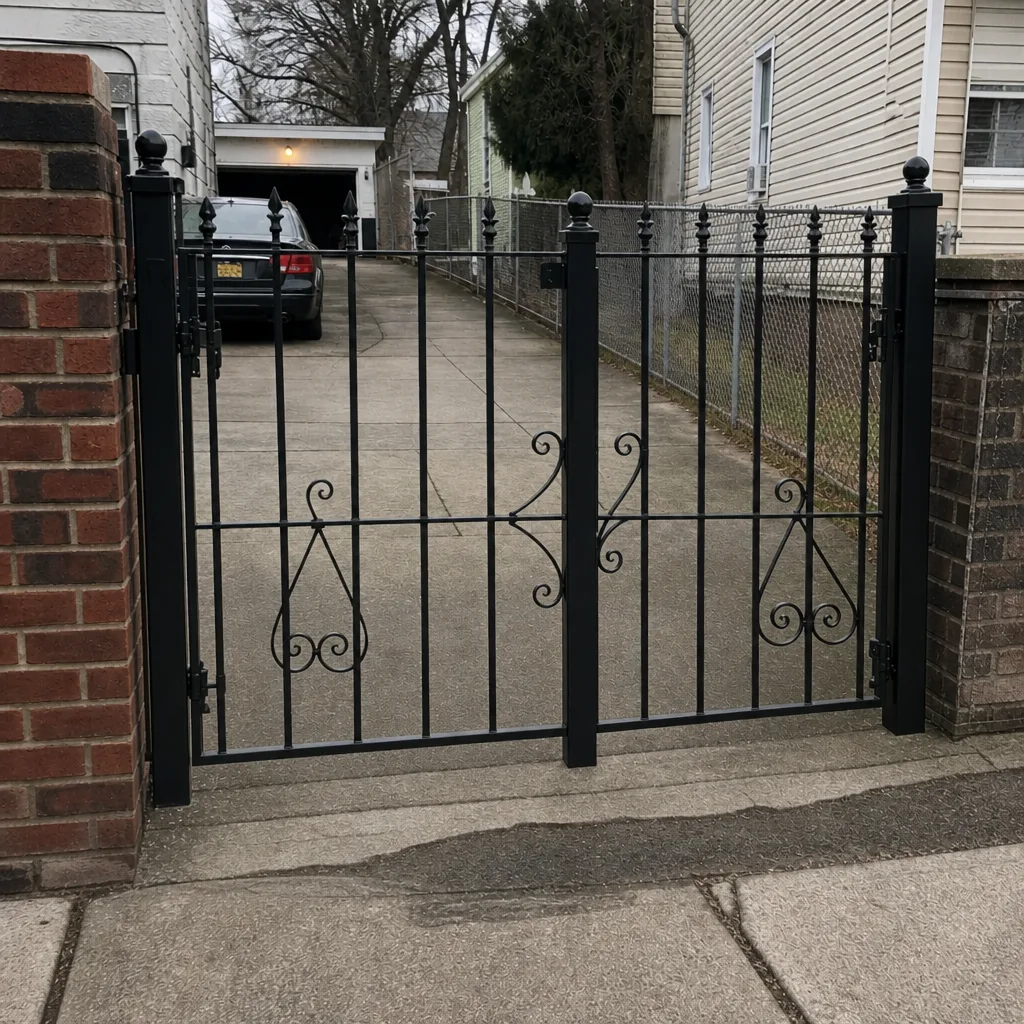
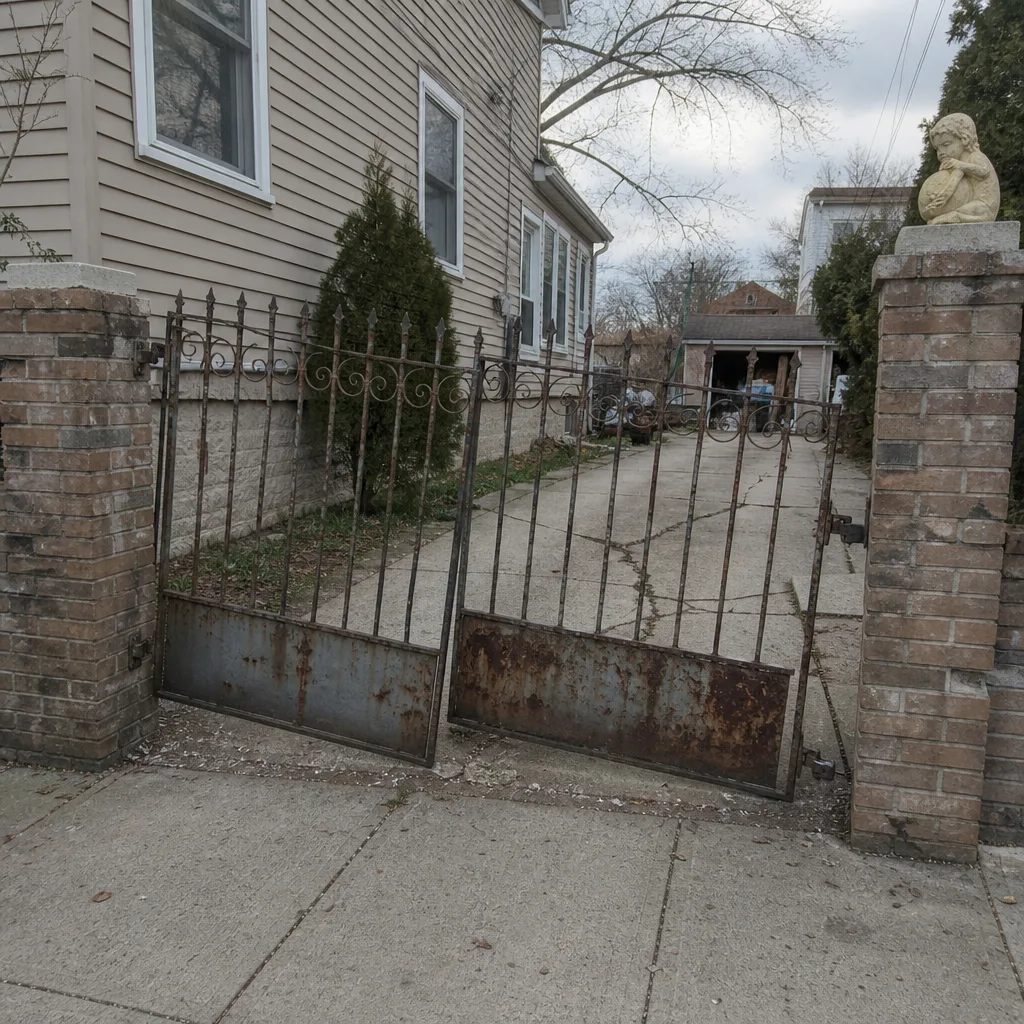
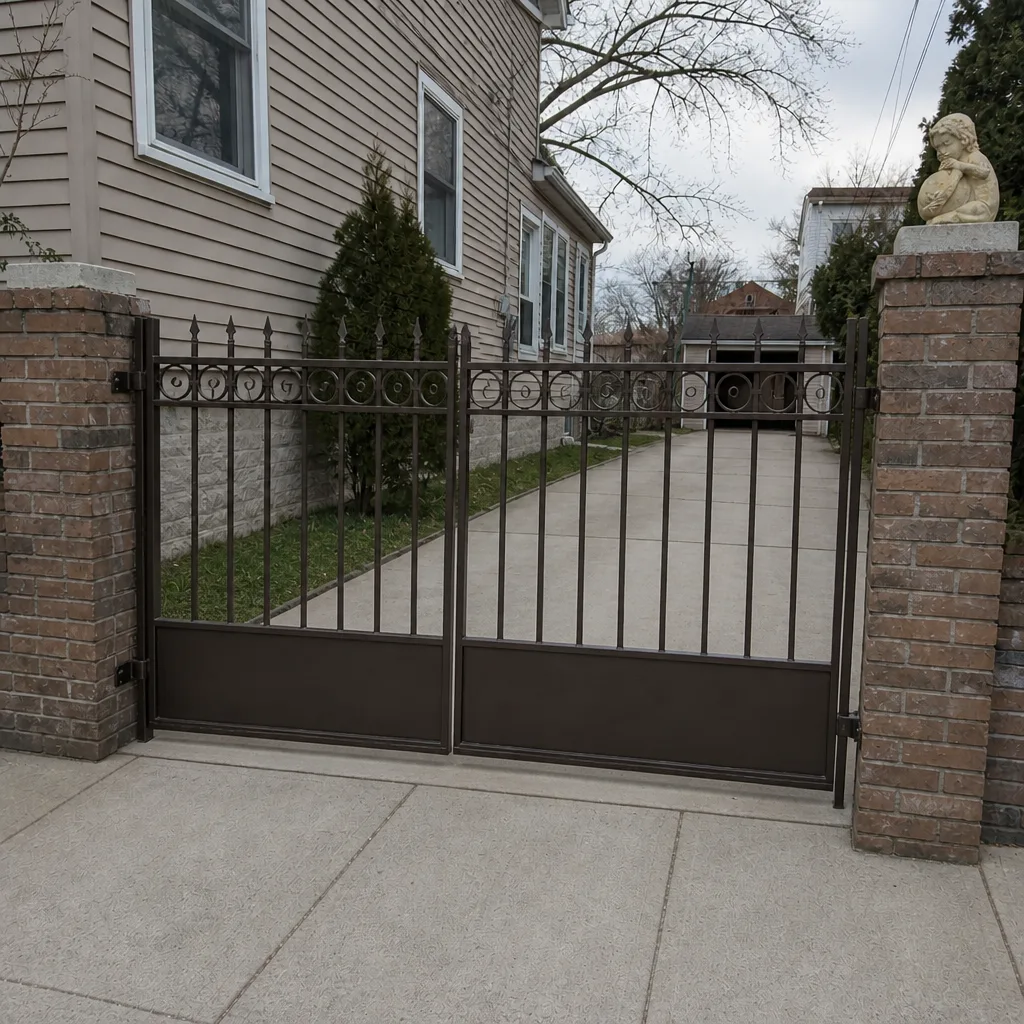
See the difference
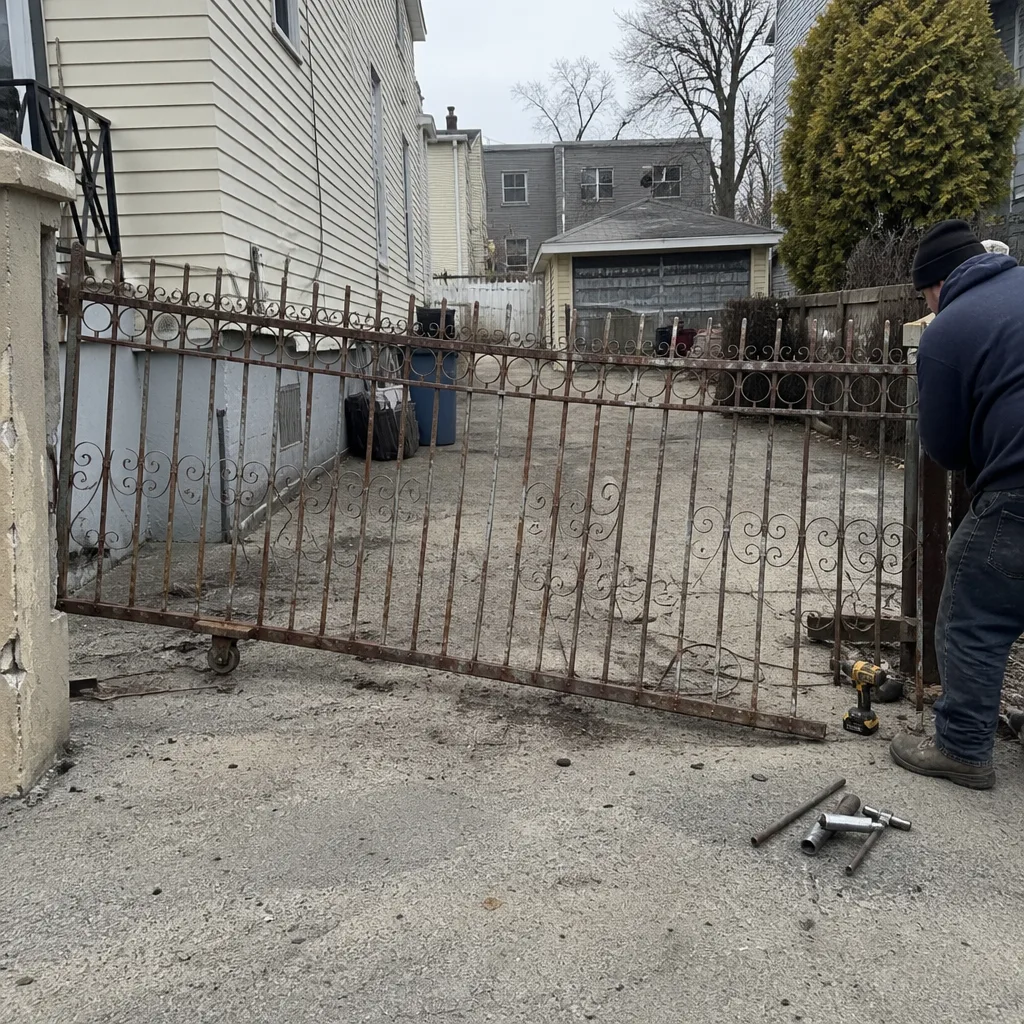 Before
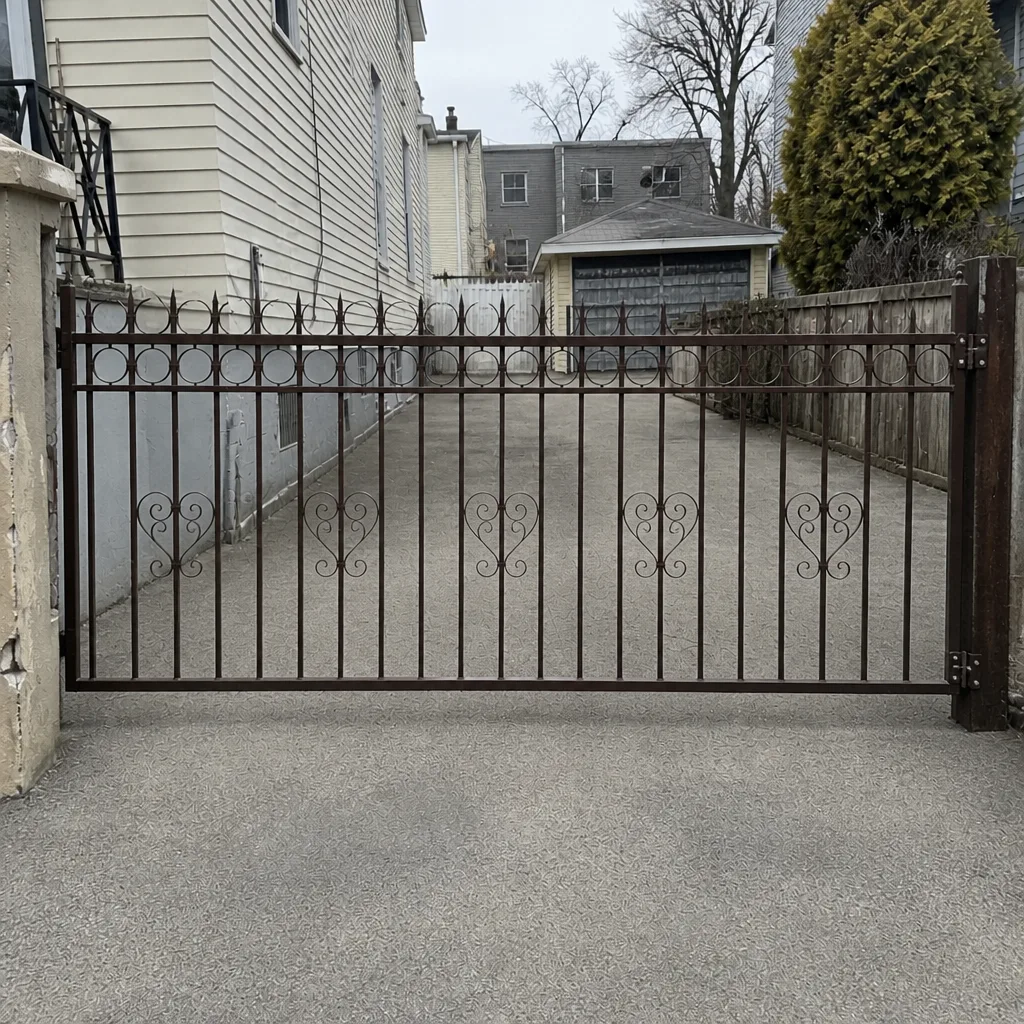 After
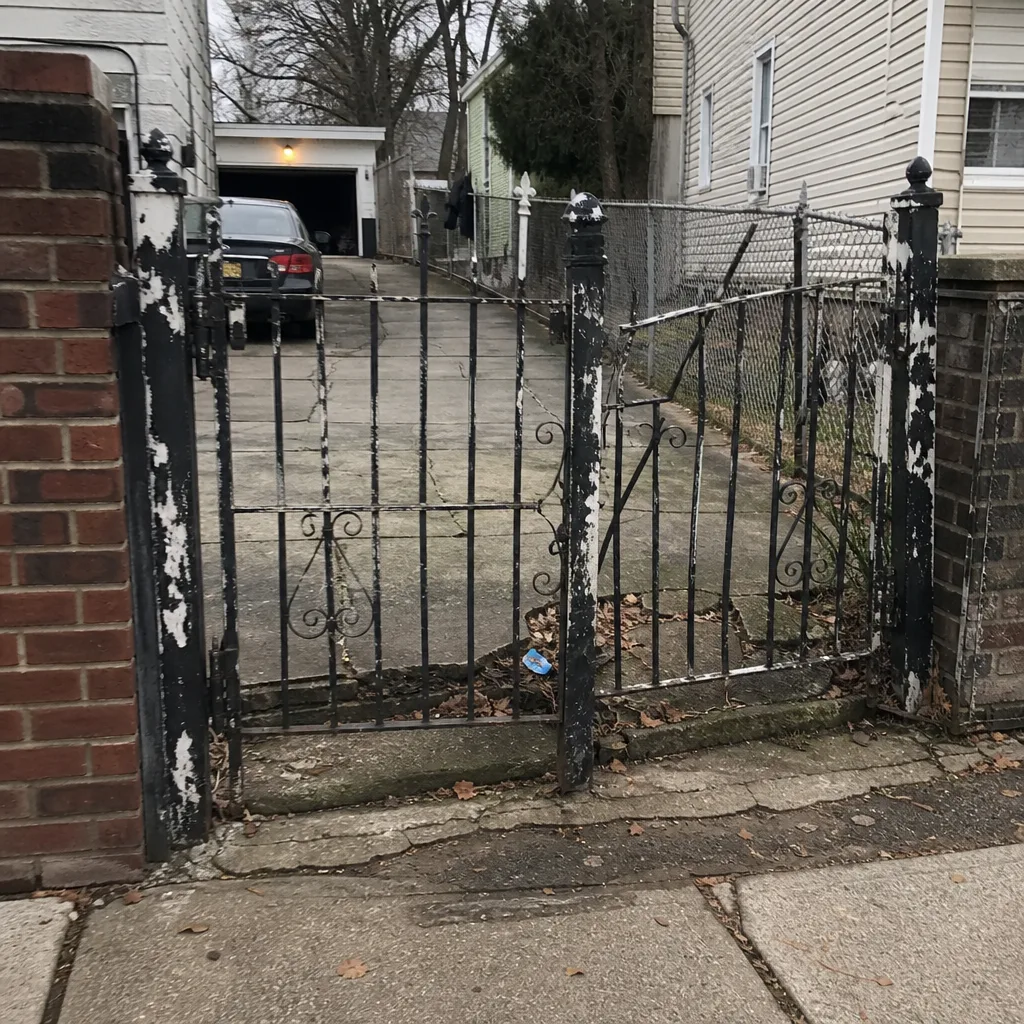 Before
 After
 Before
 After
When to Call a Professional
Some seasonal tasks are homeowner-friendly. Some aren’t. Bring in a specialist when:
- The gate has dropped at the latch edge and no longer latches without lifting.
- A powered gate has stopped responding, reverses mid-travel, or shows a fault code you don’t recognize.
- A post has moved, a footing has cracked, or an anchor plate has pulled away from the concrete.
- A gate has come off its track or off a hinge and won’t close cleanly.
- A storm has bent a panel, twisted a hinge, or moved the gate out of alignment.
On the safety side, any work involving an automated operator’s electrical wiring, power supply, or sensor circuit should be handled by a trained technician. Don’t open an operator housing to diagnose a fault unless you know the system’s electrical layout, and don’t defeat a safety reverse or a photocell to make a gate close. Both are the most common causes of gate injuries and they’re both easy to avoid with a proper diagnosis.
Gate Repair Jersey City offers free estimates in Jersey City – call (855) 701-9639. We work on LiftMaster, FAAC, BFT, Linear, Viking, Ghost Controls, DoorKing, Elite, and Mighty Mule systems, and we diagnose before we quote.
Frequently Asked Questions
Twice a year is the right baseline: once in early spring after winter, and once in early fall before storm season. Gates on busy sidewalks near downtown Jersey City benefit from a third mid-winter inspection because road salt contact is continuous. Powered gates should get a monthly safety reverse test on top of the seasonal checks.
Yes, and it’s the most common cause of premature gate failure on sidewalks that get salted. Salt-laden water keeps reacting with steel every time the temperature crosses freezing, and it attacks the bottom rail, hinge base plates, anchor bolts, and footing. Physical separation from runoff and proper drainage work better than spray-on coatings, and a post-winter fastener check catches the damage early.
Heat expansion pushes steel and aluminum past the operator’s set travel limits, and most operators don’t compensate automatically. Recalibration fixes it in most cases. If the gate reverses mid-travel instead of stopping short, that’s more often a sensor alignment issue or a resistive safety edge that needs adjustment, not a motor failure. Call (855) 701-9639 for an exact diagnosis – estimates are free.
Closed. A closed gate handles wind loading much better than an open one because it doesn’t catch the gust broadside. If your automated gate has a manual release, know where it is and how to use it before the storm arrives, and lock the gate in the closed position for the duration.
Checking the gate’s alignment every season, which is the invisible task that prevents most hinge, latch, and operator failures downstream. It’s not visible while it’s working, which is why homeowners skip it, and it’s the single change that most lengthens a gate’s service life. If you can’t check it yourself, schedule a twice-yearly visit and ask explicitly for an alignment check.
Lubrication, debris removal, and a visual inspection are all homeowner-friendly. Anything that involves the operator’s electrical wiring, sensor circuits, power supply, or safety reverse should be done by a trained technician, and any post or footing movement should be evaluated by a professional before you use the gate normally. For safety, don’t defeat safety reverses or photocells to make a gate close. When in doubt, call an electric gate specialist. Call (855) 701-9639. We answer 24/7.
The Bottom Line
A gate in Jersey City ages on a seasonal clock, not a monthly one. Winter brings road salt migration to the base components, spring reveals the freeze-thaw damage, summer tests operator travel limits as metal expands in heat, and fall loads everything new on top of the damage already there. The task most homeowners skip in every season is the invisible one: gate alignment. It’s also the one that prevents most hinge, latch, and operator failures before they start. Follow the four-season calendar, know when each failure is likely to hit, and call a gate specialist before a small seasonal issue becomes a structural one. If you’re in Jersey City and you’d rather not track the calendar yourself, Gate Repair Jersey City keeps it simple with a scheduled twice-a-year visit and free estimates. For brand-specific diagnostics or a seasonal inspection, reach out through our gate repair page or call us directly.
Written by the team at Gate Repair Jersey City.
Ready to get your gate on a seasonal schedule? Call (855) 701-9639 for a free estimate. We answer 24/7. Fast dispatch from 7am to 7pm, Sunday through Friday. We service LiftMaster, FAAC, BFT, Linear, Viking, Ghost Controls, DoorKing, Elite, and Mighty Mule systems in Jersey City.