
Last updated November 15, 2026
 Wrought iron
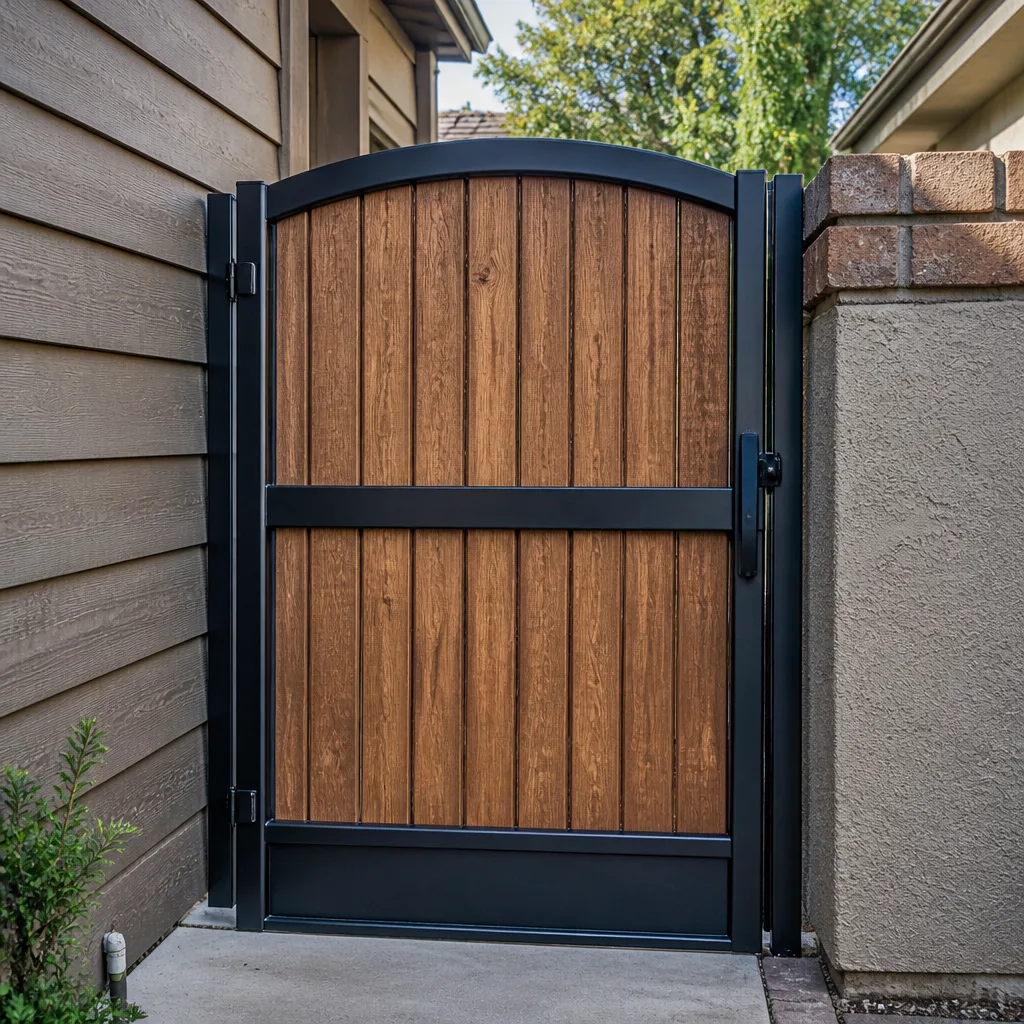 Wood & steel frame
 Farm & ranch
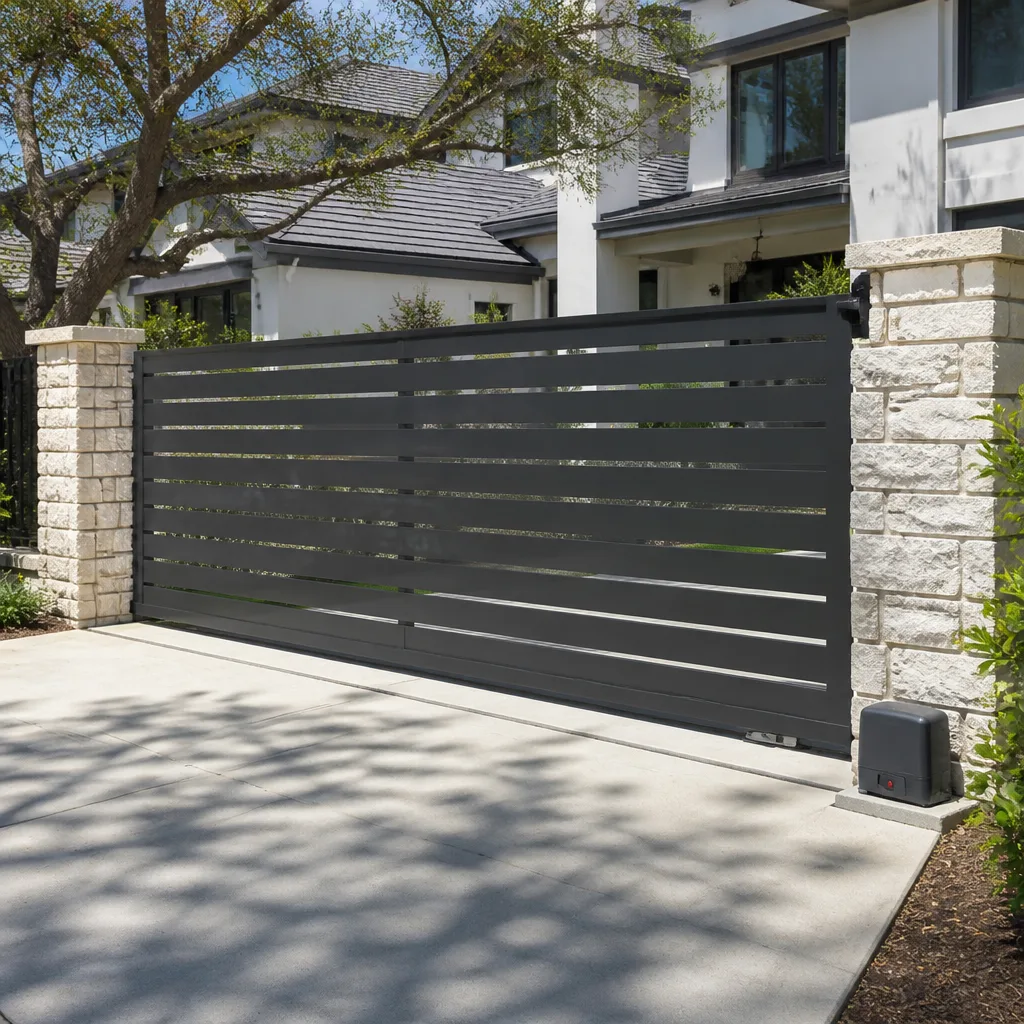 Sliding driveway gates
 LiftMaster operators
Free on-site gate assessment - hinges, posts, and your LiftMaster or Nice gate operator checked before anything is quoted
The assessment is free and the quote is the invoice.
Get your free estimateGate Repair Maintenance Schedule: What to Do and When
Most gate maintenance advice you’ll find online was written for a mild climate that isn’t Jersey City’s. The standard “lubricate every six months and check the hinges” routine doesn’t account for freeze-thaw cycling, road salt drift off the highway approaches, or the humid summers that push control boards harder than dry heat ever does. A gate here wears on a different timeline than the one printed in most operator manuals. This guide gives Jersey City property owners a calendar built around how gates actually age in this city: separate tracks for swing, slide and overhead gates, a month-by-month schedule, the maintenance tasks that pay back the most, and the early-warning signs that separate a small fix from a large one.
Quick Answer
The best gate maintenance schedule in Jersey City is built around your gate type and drive system, not a generic checklist. In practice that means a full inspection twice a year (late fall before the first hard freeze and early spring after the last one), lubrication every three to four months on moving parts, and a quick visual and audio check every few weeks between those visits. Powered gates need their control board, battery backup and safety edges checked in summer humidity, and every gate in Jersey City benefits from a post-freeze inspection each spring because frost heave shifts hinges, posts and tracks more than most homeowners expect.
Styles & brands we work with
- Wrought iron
- Wood & steel frame
- Farm & ranch
- Sliding driveway gates
- LiftMaster operators
Table of Contents
- Why Generic Maintenance Advice Fails in Jersey City
- Swing Gate Maintenance: The Interval That Actually Works
- Slide Gate Maintenance: Different Failures, Different Schedule
- Overhead Gate Maintenance: The Track and Balance Check
- A Month-by-Month Jersey City Gate Calendar
- The Three Tasks That Add the Most Longevity per Dollar
- Building a Gate Log That Pays Off Later
- Early-Warning Signs Between Scheduled Visits
Why Generic Maintenance Advice Fails in Jersey City
Most operator manuals and gate maintenance checklists are written by manufacturers who test their equipment in controlled conditions, not in a city where the ground freezes and thaws repeatedly through a single winter. Jersey City sits in a climate band where the ground can go through several freeze-thaw cycles in a bad January, and every one of those cycles nudges a gate post, a hinge plate or a track anchor a fraction of an inch out of alignment. Do that ten or twenty times over a winter and a gate that ran dead straight in November will bind, sag or drag by March. The manual never mentions this because the manual wasn’t written for this city.
The second local factor is road salt drift. Gates near the highway approaches and the busier avenues pick up a fine salt film through the winter, and that film gets into pivot points, rollers, chains and hinge pins. It doesn’t destroy a gate in one season, but it accelerates wear on any unpainted or under-greased surface. By the time a homeowner notices stiffness, the damage is already in motion.
The third is summer humidity. Control boards, safety-edge sensors and battery backups in powered gates don’t love months of high humidity. Moisture finds its way into junction boxes and connectors, and it’s the most common reason a LiftMaster or FAAC operator that worked fine in June starts throwing codes in August. If you want the full picture of what failures look like across the seasons, our gate repair page covers the most common ones we diagnose.
Swing Gate Maintenance: The Interval That Actually Works
Swing gates have the fewest moving parts but the most stress concentrated on each one. Every open and close cycle loads the hinges, the operator arm and the post anchors, and in Jersey City that load runs through a full winter of freeze-thaw ground movement. The result is that gate intervals shift seasonally. A swing gate that hangs true in October will often be out of alignment by the end of February, and if it’s not corrected quickly the operator has to work harder to overcome the bind.
Here’s the swing-gate schedule that holds up in this city:
- Every 3 to 4 months: Lubricate hinges, pivot points and the operator arm or arm linkage. Use a grease rated for outdoor use that stays put in cold weather; light oils wash off too fast in the rain.
- Every 4 to 6 months: Check post and hinge-plate fasteners. Any loose anchor bolt should be torqued back to spec and checked again next visit; repeated loosening signals ground movement under the post.
- Twice a year (late fall and early spring): Full swing test. Open and close the gate by hand with the operator disengaged and listen for grinding, which tells you the hinge bearings or bushings are going.
- Every spring: Re-check post plumb and gate sag. Freeze-thaw will have moved the post; if it’s out of plumb by more than a degree or two, the operator will wear faster until it’s corrected.
If your gate runs a LiftMaster or Elite swing operator, add a check of the arm and limit switches to the twice-yearly inspection. These operators are reliable, but a limit that drifts out of adjustment forces the motor to push against the stop every cycle, and that shortens motor and gear life. On a well-aligned swing gate we can usually tell within seconds of watching it run whether the limit is off.
Slide Gate Maintenance: Different Failures, Different Schedule
Slide gates fail in different places than swing gates, so they need their own maintenance track. Instead of hinge strain and post sag, the primary wear points are the track, the rollers or trolley, the guide roller and the operator’s chain or rack. In Jersey City, the single biggest maintenance issue on a slide gate is what collects in the track: grit, dead leaves, ice and salt residue. A slide gate that runs on a dirty track wears its rollers flat and forces the motor to work harder on every cycle.
Here’s the slide-gate routine:
- Every 2 to 4 weeks year-round: Clear debris from the track and the ground-level guide. This is the highest-payback task on any slide gate and takes minutes.
- Every 3 months: Lubricate the rollers, trolley and guide roller with a grease that won’t collect grit. Chain-driven operators should get a chain-specific lubricant at the same time.
- Every 6 months: Check the track for wear grooves, bent or lifted sections, and any concrete settling at the ends. Frost heave is the usual culprit in this climate.
- Every 6 months: Test the safety edges or reversing sensors. A slide gate is heavy and its operator can generate serious force; a safety edge that’s slow to respond is a genuine hazard.
- Every 12 months: Inspect the operator’s internal components: the motor mount, the limit cams and, on FAAC and BFT slide operators, the encoder or magnetic limit sensing setup. If your gate has ever rolled slightly past its stop or reversed mid-travel, the encoder is usually the reason.
Because so much of what goes wrong with slide gates lives inside the operator and its power wiring, this is the work that most benefits from a specialist’s eye. Our electric gate repair page covers the electrical side in more depth.
Overhead Gate Maintenance: The Track and Balance Check
Overhead gates share more with garage doors than with the other two gate types, and their maintenance schedule is dominated by track and balance checks. An overhead gate that runs smoothly one month can start climbing at an angle the next, and the first sign is usually a slight hesitation as the gate comes up or a grinding sound near a track bracket. Overhead gates don’t have the same freeze-thaw exposure as a swing or slide gate because the track is mounted rather than grounded, but the humidity does work on the springs, hinges and operator.
The overhead schedule:
- Every month: Visual run check: open and close, watching for hesitation, tilting, or any spot on the track where the gate drags.
- Every 3 months: Lubricate hinges, rollers and the operator drive. Do not oil the springs; spring maintenance and adjustment is a job for a trained technician because these components are under heavy tension and can injure anyone working on them without the right tools.
- Every 6 months: Check the track alignment, brackets and fasteners, and confirm the balance of the gate. A well-balanced overhead gate should hold its position partway up when you let go of it.
- Every 6 months: Test the reversing safety and, if your operator has one, the photo-eye setup.
If you’re not sure what type of gate you have or which schedule applies, a professional inspection will tell you in one visit.
A Month-by-Month Jersey City Gate Calendar
The generic “every six months” advice misses the seasonal swing in this climate entirely. Here’s how we’d schedule a year in Jersey City, keeping the seasonal logic explicit so you can adapt it to your specific gate:
- January – February: Deep-cold months are the highest stress period for swing and slide gates. Do a visual and audio check every two weeks, listen for grinding or hesitation, and keep the slide track clear of ice. Don’t do heavy maintenance in freezing temperatures; let the gate run smoothly and book a full inspection for spring.
- March: Pre-thaw prep: clear drainage around any gate post or track foundation. If you’ve seen water pooling, this month is when to fix it.
- April: The post-freeze inspection. This is the single most important visit of the year for a swing gate. Re-check post plumb, hinge alignment, gate sag and track condition. Any alignment correction now prevents the operator from fighting a bind all summer.
- May: Spring cleaning and lubrication: clean tracks, grease moving parts, inspect the operator’s exterior and clear any debris from the control box area.
- June: Pre-humidity check on the powered side. Look at the control board, safety edges and battery backup for any signs of moisture, and test the safety reverse. This is the moment to catch a sensor that’s about to fail in July.
- July – August: The heaviest humidity months. Mid-summer check on the control board area, test the limit switches, and watch for erratic opening or closing, which is often a moisture-related sensor issue.
- September: Pre-winter prep starts. Lubricate everything, verify all fasteners, test the operator. This is also the month to correct any alignment issue before the first freeze.
- October: Final pre-winter inspection. Clear the slide track. Check post anchors. Test the battery backup under load, since a battery that can’t hold voltage in November won’t hold it in January.
- November: First-hard-freeze prep: confirm everything is greased, tight and aligned, and that your operator has a functional backup if the power goes out.
- December: Watch-list month. If you’ve never noticed a problem before, this is when a swing gate will abruptly start dragging on one side or a slide gate will hesitate as it starts to move.
If you’d rather not track this yourself, booking the two annual inspections (April and October) covers most of the real risk. Everything else is quick visual and clearing work you can do between visits. We work on gates across Jersey City and see this calendar play out the same way season after season.
The Three Tasks That Add the Most Longevity per Dollar
Not all maintenance spends the same. Ranked by payback, here are the three tasks we’d do first on any gate in Jersey City:
- Clear and clean the track (slide gates) or the hinges and pivot points (swing gates). This is the cheapest, highest-return task on any gate. Debris in a slide track grinds the rollers flat; grit in a swing hinge accelerates bushing wear. Cleaning costs almost nothing and directly extends the life of the parts most expensive to replace. It’s first because it’s free and it prevents the most expensive downstream failures.
- The spring post-freeze alignment check. Correcting a post, hinge or track that moved through the winter is cheap as a maintenance task and expensive as a repair once it has stripped a gearbox or destroyed a roller. Swing and slide gates both benefit, and a gate that’s aligned runs with far less motor stress all summer. If you do nothing else this year, book this one.
- The summer battery and control-board check. A battery backup that’s quietly failed won’t show up until the power goes out and your gate stays open or closed for hours. A control board that’s already moist and failing throws increasingly erratic behavior in the humid months and can eventually take the operator offline. Catching a failing battery or moisture problem in June is far cheaper than replacing the board or the battery in July when it’s actually failed.
Where the ROI drops off: cosmetic upgrades, motor replacement as a maintenance item, and anything sold as a “package” without a specific issue behind it. We recommend against replacing operators that are working correctly. If your gate is running well, keep maintaining it.
Building a Gate Log That Pays Off Later
A gate log is one of the most useful things you can keep about your property, and almost nobody does it. When a gate problem needs diagnosing, the history of what’s been adjusted, when, and what the gate was doing at the time shortens diagnosis and can save a return visit. A written log also holds value at resale: a buyer or a property manager who can see a service history knows the gate has been tracked, not neglected.
Here’s a simple format that works for a single-family gate or a multi-unit building:
- Date and odometer-style entry number: a simple numbered list keeps entries easy to search later.
- Task performed and by whom: “track cleaned,” “hinges greased,” “post alignment corrected.” Include whether you did it or a technician did.
- Observations: anything that felt off. Was the gate slow to open? Grinding? Reversing too early? These notes matter more than people expect.
- Photos of anything unusual: a bent track, a rust spot, a sagging corner. A photo dated the same day makes future diagnosis dramatically easier.
- Brand and model of the operator: if you’re running a Mighty Mule or a DoorKing operator, noting the model once saves a scramble later. Recording the make is also what lets us confirm quickly that we work on your system.
- Repair history with dates and parts: a technician working on a gate benefits enormously from knowing that, say, the trolley rollers were replaced and the motor was checked eight months ago.
Give a copy of the log to any technician who works on the gate. It’s the single thing that most reduces the chance of a wasted first visit.
Early-Warning Signs Between Scheduled Visits
Most expensive gate repairs announce themselves weeks in advance with small, quiet signals. The problem is that homeowners miss them because they’re not sure what’s normal. Here’s the short list we’d watch for:
- New grinding or scraping: metal-on-metal grinding means a bearing or bushing is failing. That’s a cheap part now and a motor replacement later if it’s ignored.
- Grinding or hesitation on a slide gate: usually the track or a roller. Clean first, then check the rollers.
- Slow opening or closing: a slowdown is often a misaligned gate that the operator is fighting. Catch it early and it’s an adjustment; wait and you may be replacing the gearbox.
- Reversing before it reaches the stop: on a powered gate this is usually a safety edge or limit switch issue. A reversing gate isn’t a nuisance; it’s a canary.
- Grinding in cold weather that clears in the afternoon: classic early bushing failure or grease that’s stopped lubricating at low temperature. Re-grease with cold-rated product.
- New sounds at specific positions in the travel: a thump at a specific angle or a click near the end of travel points to one component, and that narrows the repair.
- A gate that sags, drags or swings freely when it shouldn’t: a hand-test that’s easier or harder than it was last month is a real signal, on either a swing or overhead gate.
If you notice any of these, don’t wait for the next scheduled inspection. That’s what turns a small repair into a large one.
Common Mistakes to Avoid
- Following the manual’s schedule exactly. Manufacturer intervals are a starting point, not a plan. The ground under your gate moves with the seasons more than the manual accounts for. If your gate is in Jersey City, the seasonal calendar in this guide is closer to what your gate actually needs.
- Skipping the post-freeze inspection. This is the single most expensive mistake a swing-gate owner can make, because a sagging post that would cost little to correct will eventually cost far more when the operator has to work against it.
- Over-greasing and under-cleaning. Grease that isn’t cleaned off first collects grit and actually causes wear. Clean before you grease, always, and don’t overdo it on the track or rollers.
- Ignoring small noises and small hesitations. The gate doesn’t usually fail without a warning. A slight new click or a slower open is usually the cheapest repair you’ll ever get to do. Waiting on it is what turns it into a motor or gearbox job.
- Letting a slide track fill with grit and leaves. In this city the debris comes fast, especially if there are trees nearby. Every couple of weeks matters far more than a single deep clean twice a year.
- Trying to adjust overhead gate springs yourself. The springs on an overhead gate are under heavy tension and can seriously injure anyone working on them without the proper tools and training. Leave them to a professional.
- Not writing anything down. A gate with no service history is a black box to the next technician. Keeping the log in this guide turns every future repair into a faster, cheaper job.
See the difference
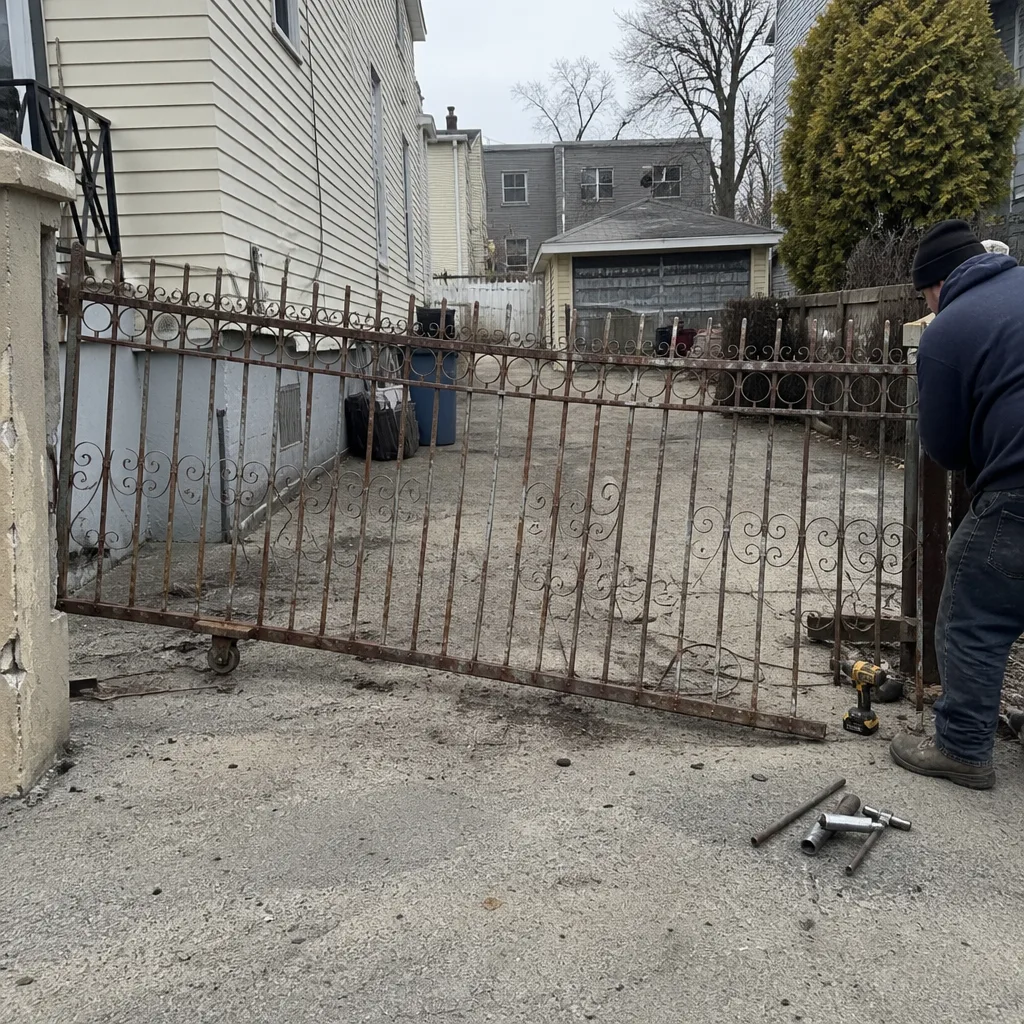 Before
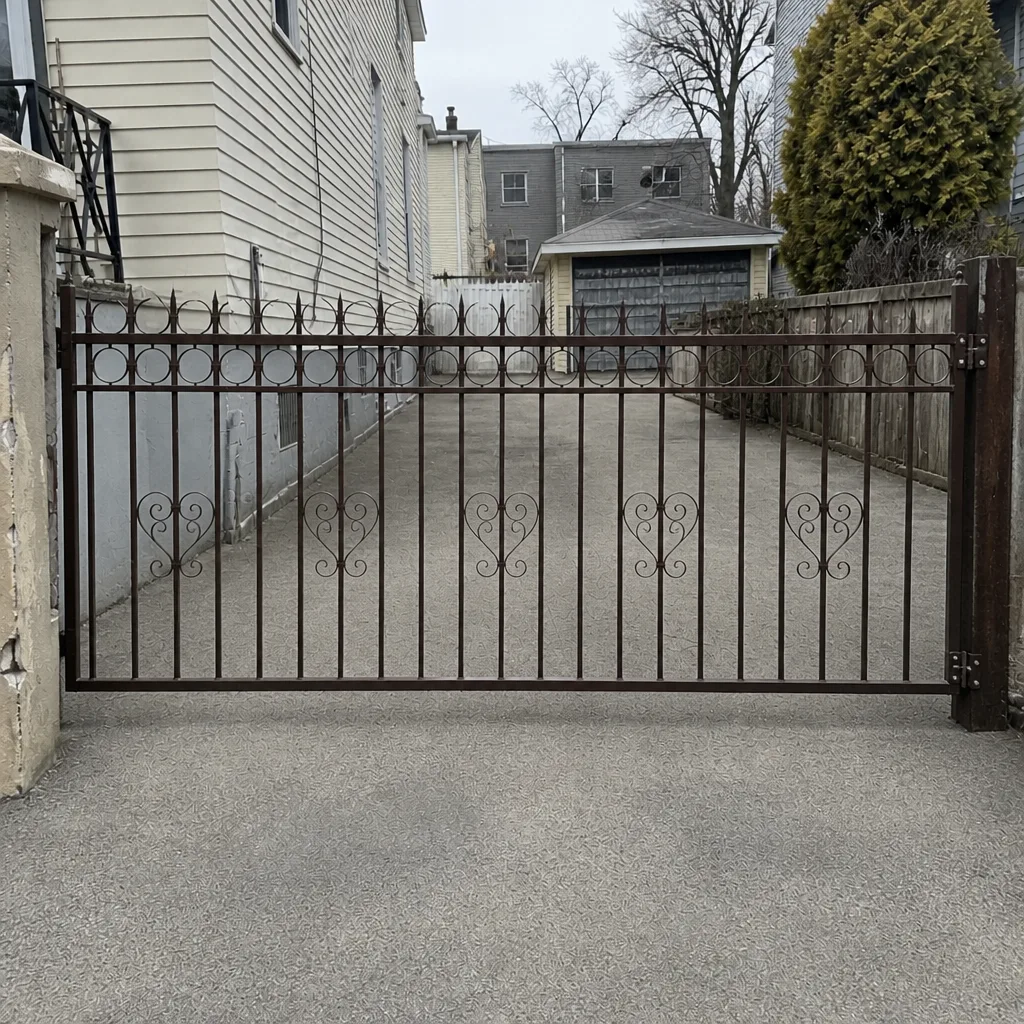 After
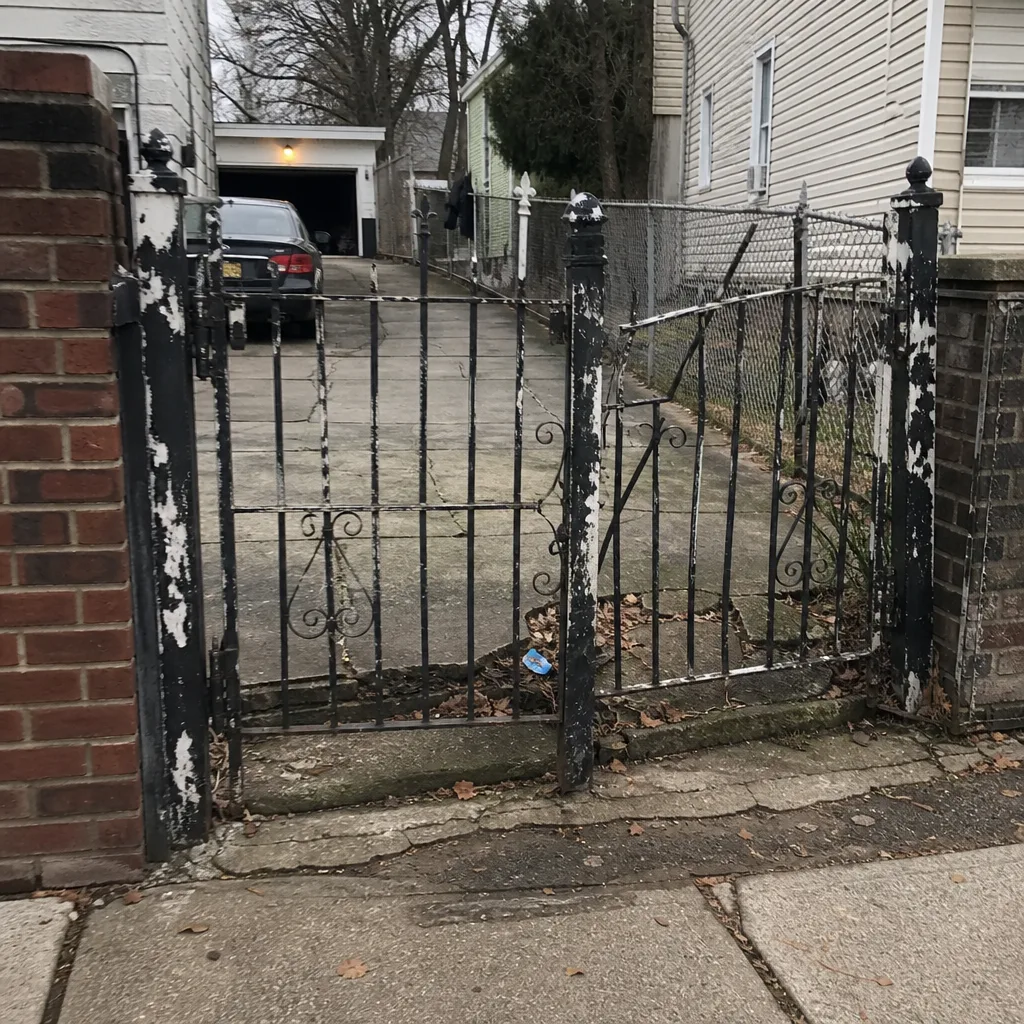 Before
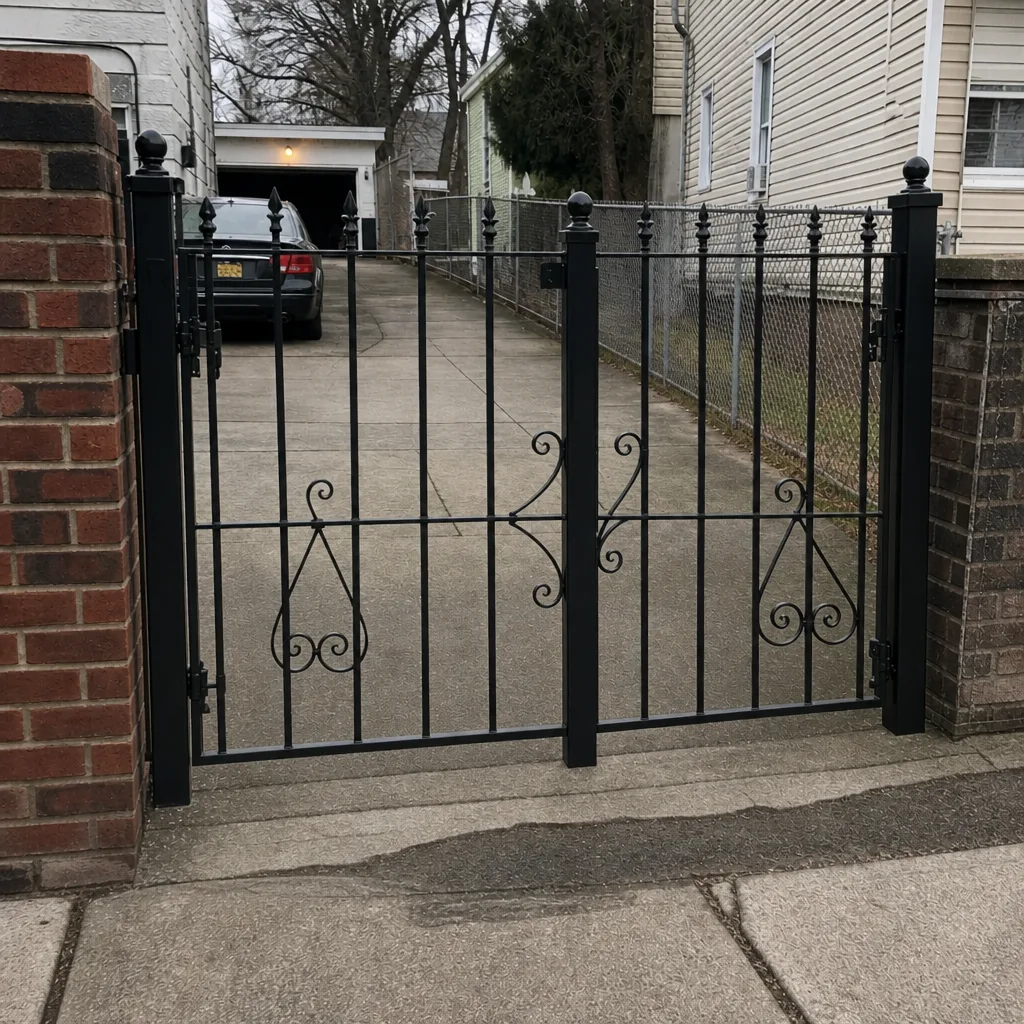 After
 Before
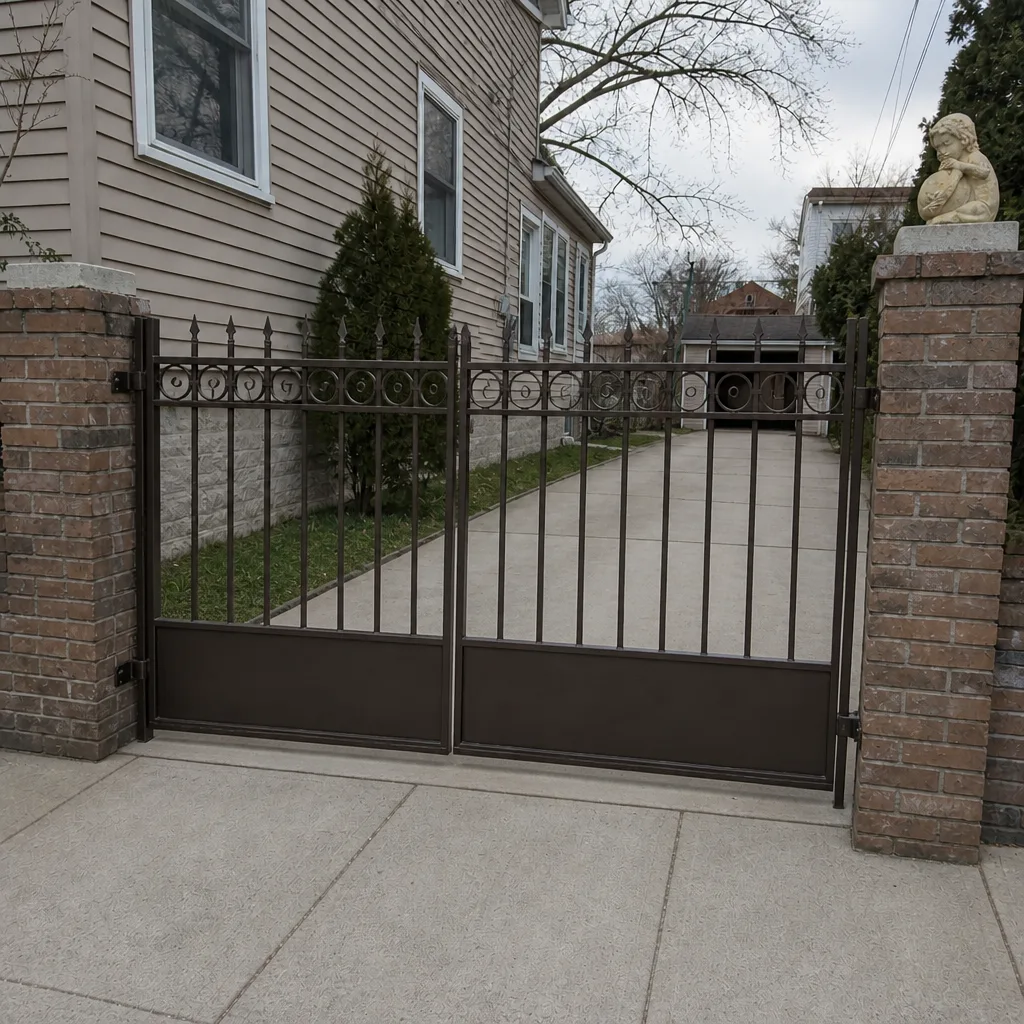 After
When to Call a Professional
Some maintenance you can handle yourself: cleaning the slide track, keeping the log, clearing debris, visual checks. Some you shouldn’t touch. Call a professional when: you hear grinding that doesn’t clear after greasing; the gate changes direction mid-travel, fails to reverse on an obstacle, or reverses every time it hits the stop; a post or hinge plate is loose and doesn’t hold its torque; the operator throws error codes or behaves erratically; the battery backup fails its test; or an overhead gate’s spring or balance is in question. Electric and automated gate work involves mains voltage, and the heavy panels and tracks on a powered gate can cause serious injury if they fail while someone’s working on them. A trained technician with the right tools and the right diagnosis is the safe path on any of these. Our technicians have up to 15 years of experience diagnosing gates across the full range of manual and powered systems.
Gate Repair Jersey City offers free estimates in Jersey City. Call (855) 701-9639. We answer 24/7. Fast dispatch from 7am to 7pm, Sunday through Friday.
Frequently Asked Questions
Twice a year for a full professional inspection, plus a quick visual and audio check every few weeks between visits. The best two inspection months in this climate are late fall (October) and early spring (April), because that’s when the winter freeze-thaw cycle does most of its work and when catching alignment issues prevents the operator from wearing faster. Lubrication intervals run every three to four months on moving parts. Call (855) 701-9639 for a free estimate and we’ll tell you exactly what your specific gate needs.
Each gate type wears on its own components, so the schedules don’t transfer. Swing gates need regular hinge, pivot and post-alignment checks, and the spring post-freeze inspection matters most. Slide gates need the track cleared every two to four weeks, plus regular roller, trolley and safety-edge checks. Overhead gates need monthly visual run checks and twice-yearly track, balance and safety-reverse tests, with no spring work ever done by the homeowner. Different failures, different intervals.
Yes to some, no to others. Cleaning, debris clearing, lubrication, quick visual checks and keeping the log are all safe to do yourself. Anything involving the operator’s electrical side, mains wiring, spring adjustment, or the safety systems on a powered gate should be done by a trained technician. If you notice grinding, reversing, hesitation or a change in the way the gate runs, call (855) 701-9639. Estimates are free, and the diagnosis is what saves you the return visit.
Ranked by payback: first, cleaning the track and pivot points; second, correcting a post-freeze misalignment before the operator runs against it; third, checking battery and control-board condition in the humid summer months. Those three tasks add the most life per dollar spent on any gate. Cosmetic upgrades and motor replacements sold as “maintenance” rank at the bottom.
We work on gate and gate-operator equipment from LiftMaster, FAAC, BFT, Linear, Viking, Ghost Controls, DoorKing, Elite and Mighty Mule. That cross-brand coverage means that when your gate is behaving oddly, we diagnose the actual failure rather than turning you down for the brand. Work on a Mighty Mule or a FAAC operator is treated the same way: we diagnose first, then quote. Call (855) 701-9639 for a free estimate.
Every entry should have a date, what was done, who did it, and any observations about how the gate felt or sounded at the time. Include the operator brand and model, any replaced parts with dates, and photos of anything that looked unusual. Keep the log with the property so any future technician, buyer or property manager can see the gate’s service history. It’s a genuinely useful document, and one that holds real value.
The Bottom Line
A gate maintenance schedule that works in Jersey City is built around three local realities: freeze-thaw ground movement in winter, salt drift on the road-adjacent approaches, and humid summer air on every powered control board. Swing, slide and overhead gates each need their own maintenance track because they fail in different places. Twice-yearly inspections (April and October), a clear slide track every couple of weeks, and a gate log that records what was done will keep almost any gate running far past the point where a neglected one would be replacing parts. The single cheapest task is the one you do before it becomes a repair: catching the small grind, the slight hesitation, the changed sound at the end of travel. For repair, electric gate repair or a full read on what’s failing, start with a proper diagnosis.
Contact
For free estimates on gate repair, electric gate repair or maintenance in Jersey City, call (855) 701-9639. We answer 24/7. Fast dispatch from 7am to 7pm, Sunday through Friday. Our technicians have up to 15 years of experience with manual and automated gate systems across all nine major brands, and every job starts with a diagnosis and a written estimate before any work begins.
Written by the team at Gate Repair Jersey City.